

A baby puree blender is any blender that can turn small batches of cooked fruit, vegetables and grains into a smooth, lump-free texture, and for most families a compact personal blender or a mid-size countertop jar does the job without a dedicated baby food machine. You don’t need a special appliance labeled “baby.” You need the right jar size for your batch, enough power to break down fibrous foods, and parts that are easy to clean every single day.
This guide walks through what actually matters when you blend food for an infant: how to match the jar to how much you make, how to get the texture right for each stage, which mistakes cause grainy or watery purees, and when a bigger blender starts to make sense. Along the way we point to three blenders from our research that fit different kitchens and budgets.
What makes a blender good for baby puree
Baby food is a small-batch job. In the first weeks of solids, a baby might eat one to two tablespoons at a meal. Even when you cook ahead, a typical batch is one or two cups of steamed sweet potato, carrots, peas or apples. Big 64-ounce pitchers struggle with that. The blades sit at the bottom of a wide jar, the food gets flung up the sides, and you end up stopping every few seconds to scrape it back down.
That’s why small jars win early on. A narrow cup keeps the food packed around the blades, so it circulates and smooths out fast. Personal blenders with blend-and-store cups add a second benefit: you can blend, cap and refrigerate in the same container, which means fewer things to wash. Short of a dedicated baby food maker, it’s the simplest setup.
The bella Rocket Blender 6-Piece Set with Stacking Cups is built around that idea. It’s a small personal blender sold as a six-piece set with stacking cups, and it lists around $19.99 in our product data with a 4.8-star average rating. For parents who make a few portions at a time and want something they can pull out of a cabinet in seconds, the cup-based format is a natural fit.

BELLA
Personal Blender for Smoothies and Frozen Berries: BELLA Rocket Blender 6-Piece Set
The BELLA Rocket Blender blends ice, seeds, and frozen berries with a 240-watt motor and stainless steel blade, while its biggest advantage is compact, stackable storage. It suits busy smoothie makers and small-kitchen users who want portable 13.5-ounce cups and simple fill, press, and twist operation.
Pros and Cons
Pros
- It handles ice, seeds, and frozen berries with a 240-watt motor and four-tip stainless steel blade.
- The two lidded 13.5-ounce cups support portable individual servings.
- Stackable accessories save storage space between uses.
- The straightforward three-step operation avoids complicated controls.
Cons
- The 13.5-ounce cups limit batch size, so larger households may need multiple blending cycles.
- The base and blade require hand wiping because only the cups and lids are dishwasher-safe.
BELLA Personal Blender for Smoothies and Frozen Berries: BELLA Rocket Blender 6-Piece Set
BELLA
Personal Blender for Smoothies and Frozen Berries: BELLA Rocket Blender 6-Piece Set
The BELLA Rocket Blender blends ice, seeds, and frozen berries with a 240-watt motor and stainless steel blade, while its biggest advantage is compact, stackable storage. It suits busy smoothie makers and small-kitchen users who want portable 13.5-ounce cups and simple fill, press, and twist operation.
$19.99 at AmazonEditors' Favorite
Color: Oatmilk Size: 1.7 Cup (Pack of 1) Dimensions: 4.46 x 4.46 x 12.84 inches Weight: 2.55 pounds Product Group: Kitchen Binding: Kitchen
Shop NowGetting the texture right for each stage
Texture changes as your baby grows, and the blender is how you control it. Pediatric guidance in the U.S. generally points to starting solids around 6 months, once a baby shows readiness signs like good head control and interest in food. Ask your pediatrician about timing for your own child. Once you start, the texture usually moves through three rough stages.
Stage 1: thin and completely smooth
First purees should be silky, with no visible bits. Steam or boil the food until a fork slides through with zero resistance, then blend with a splash of the cooking water, breast milk or formula. Start with about 2 tablespoons of liquid per cup of cooked food and add more a teaspoon at a time. Blend longer than you think you need. Thirty to sixty seconds in a small jar is common for root vegetables. If you can see flecks, keep going.
Stage 2: thicker with soft texture
Around the time your baby handles smooth purees well, many parents thicken things up and leave tiny soft pieces. Use less liquid and pulse instead of running the motor continuously. Short bursts of one to two seconds let you stop at the exact texture you want. This is where a blender with a pulse function or simple push-to-blend control is handy, because you’re in charge of every second.
Stage 3: mashed and lumpy
Later on, purees become more of a mash. Honestly, a fork or a potato masher does half of this work. The blender’s role shrinks to quick pulses for tougher foods like cooked meat, lentils or chickpeas, which can be hard to break down by hand. Not every batch needs a motor at this point.
Choosing jar size and power
Two numbers matter most when you’re comparing blenders for baby food: how much the jar holds and how much power the motor has. They pull in different directions. Small jars give better results with small batches, while more wattage helps with fibrous foods like peas, green beans, kale and frozen fruit.
Jar size
If you make food fresh every day or two, a cup that holds a few portions is plenty. If you batch-cook once a week and freeze, you’ll want more room, because blending four cups of squash in a tiny cup means running three or four rounds. A 32-ounce cup sits in the middle. It’s big enough for a weekly batch of one food and still small enough that a cup of carrots doesn’t get lost at the bottom.
Power
Peas and green beans have skins that can leave a gritty feel if the motor is weak. Higher wattage helps shear those down. That said, power isn’t everything. A strong motor in a huge pitcher can still do worse with a small batch than a modest motor in a snug cup.
The iCucina Smoothie Blender lands in that middle zone. Its listing describes a 1000W personal blender with two 32-ounce portable cups and lids, and it’s marketed for ice crushing, bean grinding and frozen fruit drinks. For baby food, the two 32-ounce cups mean you can blend one food, cap it, and blend a second without washing in between. It lists near $79.99 in our data with a 4.8-star average rating, so it costs more than a basic cup blender. The trade-off is more power for tougher vegetables and for the smoothies you’ll keep making long after the puree phase is over.

ICUCINA
1000W Smoothie Blender for Ice and Frozen Fruit, ICUCINA iCucina Personal Blender
The iCucina Smoothie Blender makes smoothies, protein shakes, frozen drinks, and ground beans with a 1000W motor that reaches 25,000 rpm for strong ice crushing. Buy it if you want a compact countertop blender with two portable cups, dishwasher-safe parts, and included cleaning tools.
Pros and Cons
Pros
- The 1000W motor handles ice, frozen fruit, smoothies, shakes, and frozen cocktails.
- The two included cups support separate servings or drink preparation for two people.
- BPA-free Tritan construction is shatter-resistant and suited to regular portable use.
- Dishwasher-safe components and dedicated cleaning tools make maintenance easier.
Cons
- The listing gives conflicting cup capacities, stating 32 oz in the title and 37 oz in the feature details, so confirm the size before buying.
- The product data does not specify the blender's weight or provide independent review details.
ICUCINA 1000W Smoothie Blender for Ice and Frozen Fruit, ICUCINA iCucina Personal Blender
ICUCINA
1000W Smoothie Blender for Ice and Frozen Fruit, ICUCINA iCucina Personal Blender
The iCucina Smoothie Blender makes smoothies, protein shakes, frozen drinks, and ground beans with a 1000W motor that reaches 25,000 rpm for strong ice crushing. Buy it if you want a compact countertop blender with two portable cups, dishwasher-safe parts, and included cleaning tools.
$79.99 at AmazonEditors' Favorite
Color: Brushed Black Size: 1000W Dimensions: 8 x 5.4 x 5.4 inches Weight: 6.5 Pounds Product Group: Kitchen Binding: Kitchen
Shop NowCommon mistakes that ruin a batch
Most puree problems come down to cooking, liquid or blending time, not the blender itself. Here are the ones that come up most often.
Undercooking is the big one. If a carrot is still firm, no blender will make it perfectly smooth. Cook vegetables until they’re very soft, then let them cool slightly before blending so steam doesn’t build pressure in a sealed cup. Personal blenders that blend upside down with a sealed lid shouldn’t be filled with hot food straight off the stove. Let it cool first.
Adding too much liquid at once is next. You can always thin a puree, but you can’t easily thicken one without adding more food. Go slowly. A teaspoon at a time.
Overfilling the jar is another. Packing a cup past its max line stops the food from moving, and the blades just spin a pocket of air. Fill to about two-thirds and blend in rounds if needed.
Skipping the scrape is a quieter mistake. Stop once or twice, scrape the sides with a silicone spatula, and blend again. It takes ten seconds and removes most stray lumps.
Last, cleaning too late. Dried sweet potato on a blade assembly is a chore. Rinse the cup and blades right after use, then wash with warm soapy water. Check each product’s manual before putting any part in a dishwasher.
Storing and freezing homemade purees
Batch cooking only pays off if storage is safe and simple. Many families portion purees into ice cube trays, where each cube holds roughly 1 ounce, then pop the frozen cubes into a labeled freezer bag. That makes it easy to thaw two or three cubes for a meal instead of an entire jar.
For the fridge, most guidance suggests using fresh homemade purees within a couple of days, and frozen ones within a few months. Label everything with the food and the date. When you serve, spoon a portion into a separate bowl rather than feeding straight from the storage container, since saliva on the spoon can spoil the rest. And a standard reminder from pediatric sources: no honey before age 1.
Glass containers and glass blender jars appeal to many parents here. Glass doesn’t hold onto smells or the orange tint from carrots and squash the way some plastics can, and it’s easy to see whether it’s truly clean.
When a countertop blender makes more sense
A personal blender covers the first months well. As your baby eats more, and especially if you cook for siblings or adults at the same time, a full countertop jar starts to earn its counter space. You can blend a big pot of soup, then set aside a portion for the baby before seasoning the rest. Same appliance, one cleanup.
The TALIA Smoothie Blender is a countertop model listed with a 48-ounce glass jar, 6 stainless steel blades and a 750W motor, and it’s marketed for smoothies, frozen fruit and nut butter. The glass jar suits parents who’d rather not blend warm food in plastic, and 48 ounces handles a large weekly batch in one go. The limitation is the flip side of that size: with a single cup of food, a wide jar can leave puree splashed on the walls, so you’ll scrape more often or add a little extra liquid. It lists around $44.99 in our data with a 4.8-star average rating. If you’re comparing materials, our guide to the best glass blender covers more options.

TALIA
Smoothie and Ice-Crushing Blender: TALIA 750W Countertop Blender with 48oz Glass Jar
The TALIA countertop blender crushes ice and blends frozen fruit for smoothies, shakes, icy drinks, and nut butter, with a 750W motor and six stainless steel blades as its biggest advantage. It suits families and daily smoothie makers who need a 48oz glass jar for multiple servings in one batch.
Pros and Cons
Pros
- A 750W all-copper motor provides dependable power for smoothies, frozen fruit, ice, and harder ingredients.
- The six-blade stainless steel assembly supports smooth blending and nut butter preparation.
- The 48oz glass jar offers enough capacity for multiple servings.
- The detachable blade base and removable lid simplify cleaning.
Cons
- The product data does not list variable speed settings, so buyers seeking precise blending control should confirm the controls before purchase.
- The thick glass jar may feel heavier than a comparable plastic blender jar.
TALIA Smoothie and Ice-Crushing Blender: TALIA 750W Countertop Blender with 48oz Glass Jar
TALIA
Smoothie and Ice-Crushing Blender: TALIA 750W Countertop Blender with 48oz Glass Jar
The TALIA countertop blender crushes ice and blends frozen fruit for smoothies, shakes, icy drinks, and nut butter, with a 750W motor and six stainless steel blades as its biggest advantage. It suits families and daily smoothie makers who need a 48oz glass jar for multiple servings in one batch.
$44.99 at AmazonEditors' Favorite
Color: Silvery Size: Medium Dimensions: 6 x 6.5 x 15.8 inches Product Group: Kitchen
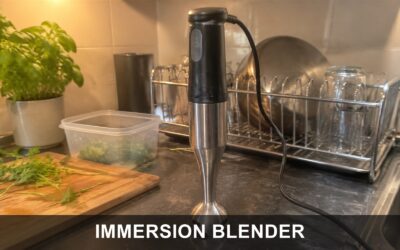
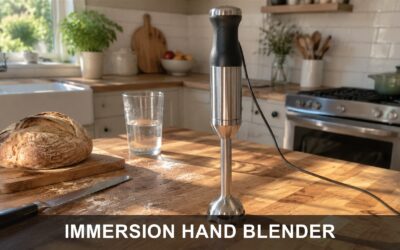
Shop NowThere’s also a third route worth knowing about. An immersion blender lets you puree directly in the pot or in a tall cup, which is handy for tiny portions. See our roundups of the best hand blender and the best stick blender if that sounds more like your routine. For small kitchens, the best mini blender and best small blender lists are good next stops, and the best cheap blender guide helps if budget is the main concern.
FAQ
Can I use a regular blender to make baby food?
Yes. Any blender that can make a smooth texture works, as long as the batch is big enough to reach the blades. Small personal blenders tend to do better with small amounts, while full-size blenders suit big batches. Add a little liquid and scrape the sides to help either type.
How smooth should a first baby puree be?
Completely smooth, with no visible pieces or grit. It should drip slowly off a spoon. Blend cooked food with a bit of water, breast milk or formula until it’s silky, then thicken gradually as your baby gets comfortable with solids.
Is a baby food maker better than a blender?
A baby food maker usually steams and blends in one unit, which saves a step. A blender doesn’t steam, but it keeps working for smoothies, sauces and soups after the puree stage ends. If you already steam food on the stove, a blender is often the more flexible buy.
Should I blend food hot or cold?
Let cooked food cool to warm before blending, especially in a sealed personal cup. Hot food builds steam pressure in a closed container, which can force the lid off. Vented countertop jars handle warm food more easily, but cooling first is the safer habit.
How much baby puree should I make at once?
That depends on how often you want to cook. Many parents blend 2 to 4 cups of one food, freeze it in 1-ounce cube portions, and rotate several foods through the week. Start small while your baby is still trying new flavors so less goes to waste.
Write Your Review
No reviews yet. Be the first to share your experience!