

A juicer that separates pulp is any machine that pushes the juice through a screen or press and sends the fibrous leftovers to a separate container, so your glass gets liquid and the waste goes elsewhere. Cold press (slow, squeezing) juicers and manual hand-crank juicers do this best, while blenders keep the fiber in the cup.
This guide explains how pulp separation actually works, which juicer styles give you the smoothest glass, and what to check before you buy. We’ll also walk through three real options from the HomeWhisk product database, with details taken only from their listings.
How a juicer separates pulp from juice
Every juicer has to break open the cell walls of produce. What differs is what happens next. In a masticating or cold press machine, a slowly turning auger crushes the produce against a strainer. Juice drips through the tiny holes, and the dry fiber is pushed out a separate outlet. In a manual press, you squeeze the produce by hand and the same idea applies: liquid passes through, fiber stays behind.
Centrifugal juicers use a fast spinning basket instead. They separate pulp too, but they move quickly, so the pulp that ends up in the glass is often wetter and the foam is thicker. If your goal is a clear, smooth drink, slow pressing usually wins.
Kilixin sells a hand-crank model built around this principle. Its listing describes a stainless steel manual wheatgrass juicer that handles leafy greens, baby kale, spinach, apples, pomegranates, celery and ginger. Hand cranking is slow. But it’s quiet, needs no outlet and has few parts.

Kilixin
Manual Wheatgrass and Leafy Green Juicer for Cold-Pressed Juice, Kilixin Stainless Steel Hand Crank B0DRGVL1XS
This Kilixin manual juicer extracts juice from wheatgrass, leafy greens, fruits, and vegetables without electricity, with stainless steel construction as its biggest advantage. It suits home users and travelers who want compact, hand-cranked juicing and easy disassembly for cleaning.
Pros and Cons
Pros
- Stainless steel construction is suited to frequent manual juicing.
- The hand crank works without a power outlet, making the juicer portable and flexible.
- The compact design is easier to store and carry than many powered juicers.
- The parts come apart for more thorough cleaning.
Cons
- Apples can clog or produce less juice unless they are crisp, peeled, cut small, and added in small quantities.
- It is not designed for sugarcane.
Kilixin Manual Wheatgrass and Leafy Green Juicer for Cold-Pressed Juice, Kilixin Stainless Steel Hand Crank B0DRGVL1XS
Kilixin
Manual Wheatgrass and Leafy Green Juicer for Cold-Pressed Juice, Kilixin Stainless Steel Hand Crank B0DRGVL1XS
This Kilixin manual juicer extracts juice from wheatgrass, leafy greens, fruits, and vegetables without electricity, with stainless steel construction as its biggest advantage. It suits home users and travelers who want compact, hand-cranked juicing and easy disassembly for cleaning.
$73.99 at AmazonEditors' Favorite
Color: Silver Size: Standard Dimensions: 4 x 8 x 8 inches Product Group: Kitchen Binding: Kitchen
Shop NowWhat “separates pulp” really means for your glass
No juicer removes every last bit of fiber. A fine strainer gives you a thinner drink, and a coarser one lets small particles through. Still, the gap between a press and a blender is huge. A blender grinds everything and keeps it all in the cup. A juicer takes the fiber out.
Pulp in the glass versus pulp in the bin
The pulp bin is where the dry fiber collects. A bigger bin means fewer stops during a long session. It also means you can see how dry the leftovers are. Wet, clumpy pulp is a sign that juice stayed behind.
Why some people want less pulp
Plenty of households simply prefer a thinner texture. Others are cooking with the juice, making cocktails or using it as a base for dressings, where fibers get in the way. If that sounds like you, look at the strainer and the pulp outlet before anything else. You can compare more styles in our guide to the best juicer for juicing.
Manual juicers: simple pulp control
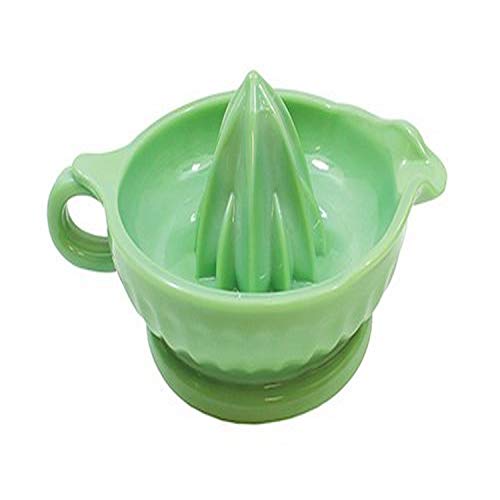
A hand juicer is the easiest way to see pulp separation in action. You press, the juice runs out and the rind or fiber stays put. The Tablecraft juicer with a handle is listed at 8.375 inches by 6.125 inches by 2.375 inches, in green, and sells for about $22.99 in our database. That’s a compact footprint, and the low price makes it a cheap way to find out whether you like hand pressing.
The listing doesn’t spell out what the tool is designed to squeeze, so check the product page before you count on it for anything beyond what the title says. It earns a 4.2 rating on the listing. Its limit is obvious: it’s a small tool for small jobs, not a way to process a week of greens.
Tablecraft
Manual Juicing for Everyday Kitchens: Tablecraft Juicer with Handle, Green Jadeite Glass
The Tablecraft Juicer with Handle provides a dedicated manual juicing tool with dishwasher-safe cleanup as its biggest advantage. It suits shoppers seeking a green jadeite glass juicer that is easy to clean and fits a defined countertop footprint.
Pros and Cons
Pros
- Dishwasher-safe construction makes routine cleanup simpler.
- The handle supports more controlled manual juicing.
- The green jadeite glass styling coordinates with Tablecraft's jadeite glass collection.
- The compact dimensions make its storage requirements easy to plan.
Cons
- The product is offered in green, so shoppers wanting a transparent juicer need the separate clear-glass version.
- A product weight is not provided, making portability difficult to assess before purchase.
Tablecraft Manual Juicing for Everyday Kitchens: Tablecraft Juicer with Handle, Green Jadeite Glass
Tablecraft
Manual Juicing for Everyday Kitchens: Tablecraft Juicer with Handle, Green Jadeite Glass
The Tablecraft Juicer with Handle provides a dedicated manual juicing tool with dishwasher-safe cleanup as its biggest advantage. It suits shoppers seeking a green jadeite glass juicer that is easy to clean and fits a defined countertop footprint.
$22.99 at AmazonEditors' Favorite
Color: Green Size: 8.375" x 6.125" x 2.375" Dimensions: 6.5 x 6.5 x 3.625 inches Product Group: Kitchen Binding: Kitchen
Shop NowChoosing between cold press and manual
Speed and volume are the deciding factors. A cold press machine feeds produce in continuously. A manual juicer asks for muscle and patience. If you juice a glass a few times a week, a manual unit is plenty. If you’re making enough for a household, the motorized route saves your wrists.
Feed chute size
A wide chute means less chopping. SUSTEAS lists a 5.3-inch extra large feed chute on its cold press juicer. That’s wide enough to take bigger pieces of fruit without cutting them into small sticks, which saves prep time.
Cleaning
Pulp separation only works if the strainer stays clear. Rinse the strainer right after juicing, before the fiber dries. The SUSTEAS listing calls the unit easy to clean, which matters because a mesh screen is the part that clogs.
Common mistakes when you want less pulp
The first mistake is overloading the chute. Pushing produce in faster than the auger can handle forces juice out the pulp side. Go slow. The second is skipping prep on fibrous items such as celery and ginger. Cut stringy stalks into shorter lengths so they don’t wrap around the screw.
The third mistake is expecting a juicer to remove everything. If you want a glass with no particles at all, pour it through a fine mesh sieve. It takes ten seconds. And if you’d rather pay less, our list of the best budget juicer picks and the best juicer for under 100 dollars are a good place to start.
Finally, don’t mix up juicers and blenders. A blender and juicer combo keeps the fiber, which is great for smoothies and not so great if pulp is the problem.
When to move up to a motorized cold press
If you’ve been hand pressing and the effort is wearing on you, it’s time. A motorized unit also makes sense when you juice leafy greens often. Greens are light and need steady pressure, and a slow auger extracts more from them than a fast spinning blade. Our guides to the best juicer for leafy greens and the best juicer for green juice go deeper.
The SUSTEAS Cold Press Juicer lists at about $71.99 with a 4.2 rating. It’s the one in this group that fits the bill for a household that wants juice and pulp handled by a machine rather than by hand.

SUSTEAS
Cold Press Juicing with Whole Fruits: SUSTEAS 5.3-Inch Feed Chute Masticating Juicer
The SUSTEAS cold press juicer extracts juice from fruits and vegetables with its 5.3-inch feed chute, reducing the need for pre-cutting. It suits home juicers who want simple one-button operation, integrated assembly, and easier cleanup.
Pros and Cons
Pros
- The extra-large feed chute can reduce cutting work for many fruits and vegetables.
- The 550ml juice cup and 470ml pulp cup support longer juicing sessions between emptying.
- One-button operation makes starting and reversing the juicer straightforward.
- The streamlined bowl and strainer are designed for easier rinsing.
Cons
- The manufacturer advises avoiding lemons and other acidic fruits because they may cause rotor corrosion.
- The product data does not specify its materials or weight, so portability and long-term construction are harder to assess.
SUSTEAS Cold Press Juicing with Whole Fruits: SUSTEAS 5.3-Inch Feed Chute Masticating Juicer
SUSTEAS
Cold Press Juicing with Whole Fruits: SUSTEAS 5.3-Inch Feed Chute Masticating Juicer
The SUSTEAS cold press juicer extracts juice from fruits and vegetables with its 5.3-inch feed chute, reducing the need for pre-cutting. It suits home juicers who want simple one-button operation, integrated assembly, and easier cleanup.
$71.99 at AmazonEditors' Favorite
Color: White Size: 5.1 Dimensions: 8.82 x 16.84 x 23 inches Weight: 7.5 pounds Product Group: Kitchen Binding: Kitchen
Shop NowGetting the smoothest juice from any machine
Technique matters as much as the hardware. Start with produce that’s cold, since chilled fruit and vegetables press more cleanly. Wash everything, trim off any damaged spots and cut pieces to fit the chute without forcing them. Alternate soft and hard items. A handful of spinach followed by a chunk of apple pushes the greens through and leaves the screw cleaner.
Match the produce to the method
Leafy greens and herbs do best in a slow press or a hand-crank unit built for them, like the Kilixin model above, which names spinach, baby kale and wheatgrass in its title. Firm items such as apples, celery and ginger work in almost any style. Soft fruit with lots of flesh, like ripe pomegranate arils, can clog a fine screen, so feed it slowly. If you’re after citrus alone, our best juicer for lemons page covers tools made for that job.
Strain, rest, then drink
Even a good juicer leaves a thin layer of foam. Let the glass sit for a minute, skim the top and pour through a sieve if you want a clear result. Fresh juice is best the same day. Store any extra in a sealed jar, filled to the top, in the fridge.
What to look for before you buy
Start with how much you plan to juice. Then check four things: the strainer type, the size of the pulp container, how many parts need washing and the price. A lower price often means more manual work. A higher price buys convenience. Neither is wrong. It depends on whether juicing is a daily habit or an occasional treat. If health is your reason for buying, read our best juicer for health guide for a wider view.
FAQ
Which type of juicer separates pulp best?
Cold press (masticating) juicers generally do the best job. The slow auger presses produce against a strainer and sends dry fiber out a separate outlet. Manual presses work on the same idea, only by hand.
Can a blender separate pulp?
No. A blender grinds everything and keeps the fiber in the drink. You’d need to strain it through a nut milk bag or fine sieve, which is slow and messy compared with a juicer.
Will a juicer remove all the pulp?
Not entirely. Small particles pass through most strainers. If you want an extra-smooth glass, pour the juice through a fine mesh sieve after juicing.
Is a manual juicer worth it?
For small batches, yes. A hand-crank or hand-press unit is quiet, cheap and easy to store. It isn’t the right choice if you plan to juice large amounts every day.
What should I do with the leftover pulp?
Dry pulp can go into soups, muffins, veggie broth or compost. Wet pulp means the machine is leaving juice behind, so slow down the feed rate or cut produce smaller.








Write Your Review
No reviews yet. Be the first to share your experience!