

A juicer that removes pulp is, in most kitchens, a slow masticating (cold press) juicer, because it presses juice through a screen and pushes the dry fiber out a separate chute. Citrus juicers can also leave pulp behind if they have a strainer. Fast centrifugal machines can do it too, but they usually leave a little more foam and fine solids in the glass.
This guide explains how pulp gets separated, what to look for if you want a smooth glass, and which of the three juicers in our research fit the job. We haven’t handled these machines ourselves. We’re a research team, so everything below comes from the product listings and general juicing know-how.
How a juicer removes pulp
Every juicer splits produce into two streams: liquid and fiber. The fiber is the pulp. Where the split happens decides how smooth your juice is. In a masticating juicer, a slow auger crushes the produce against a fine screen. Juice drops through, and the squeezed fiber travels to the end of the auger and exits through a pulp outlet. Because the auger turns slowly, the fiber tends to come out drier and the juice tends to carry less foam.
Centrifugal juicers shred produce on a fast spinning basket. Juice flies through the mesh by force. They’re quick, but the fine mesh can let small particles pass, and the juice often sits with a layer of foam on top.
Citrus juicers work differently again. You press a halved lemon, lime or orange onto a reamer, and a strainer catches seeds and larger pulp. Pulp level then depends on the strainer, not on the motor.
Screen fineness matters most
The finer the screen, the less pulp passes into the cup. A coarse screen gives a thicker, more rustic juice. If you hate texture, check whether the listing mentions the strainer or filter, and plan to run the juice through a fine mesh sieve anyway. That extra step takes ten seconds and catches almost everything.
Feed speed and pulp
Pushing produce in too fast overloads the auger and sends wetter pulp out the exit. Slow, steady feeding gives you more juice and cleaner separation. Cut produce into pieces that fit the chute so nothing jams.
Masticating juicers for whole fruits and vegetables
If you want smooth juice from apples, carrots, celery and leafy greens, a slow masticating model is the usual answer. The Zulay Kitchen Juicer Machine is a cold press slow masticating juicer with a 5-inch wide feed chute, built for whole fruits and vegetables. The wide chute means less chopping before you juice, and the listing also points to stainless steel blades and a high juice yield. It’s priced at $59.99 and rated 4.2 stars.
A wide chute is a real time saver. A narrow chute means cutting produce into thin sticks, while a 5-inch opening can take a whole small apple. The trade-off is size: a wider chute usually means a bigger machine on the counter.

Zulay Kitchen
Cold Press Slow Juicer for Whole Fruits and Vegetables: Zulay Kitchen Masticating Juicer with 5-Inch Wide Feed Chute
This Zulay Kitchen masticating juicer cold presses whole fruits and vegetables through a 5-inch wide feed chute with a built-in pre-cut system that slices produce automatically, so you skip chopping prep entirely. Buy it if you juice daily and want higher yield with less oxidation, without spending twenty minutes on prep and cleanup each morning.
Pros and Cons
Pros
- The wide chute plus automatic pre-cut system removes the prep step that stops most people from juicing on weekday mornings.
- Cold press masticating extraction delivers higher yield and better nutrient retention than fast centrifugal juicers.
- Fast teardown and simple part shapes make cleanup realistic to do right after juicing instead of leaving it in the sink.
- Quiet operation makes early morning and late night juicing practical in apartments or shared spaces.
Cons
- Masticating juicers push produce through slowly by design, so filling a large pitcher takes noticeably longer than a centrifugal machine.
- Fibrous greens and stringy produce like celery or kale stems can still wrap the auger and require a mid-session clear on any single-auger juicer.
Zulay Kitchen Cold Press Slow Juicer for Whole Fruits and Vegetables: Zulay Kitchen Masticating Juicer with 5-Inch Wide Feed Chute
Zulay Kitchen
Cold Press Slow Juicer for Whole Fruits and Vegetables: Zulay Kitchen Masticating Juicer with 5-Inch Wide Feed Chute
This Zulay Kitchen masticating juicer cold presses whole fruits and vegetables through a 5-inch wide feed chute with a built-in pre-cut system that slices produce automatically, so you skip chopping prep entirely. Buy it if you juice daily and want higher yield with less oxidation, without spending twenty minutes on prep and cleanup each morning.
$59.99 at AmazonEditors' Favorite
Color: Black - 5" Wide Chute Size: 15.2 x 13.5 7.88 inches Dimensions: 15.2 x 13.5 x 7.88 inches Weight: 8.95 pounds Product Group: Kitchen
Shop NowCompact options for smaller kitchens
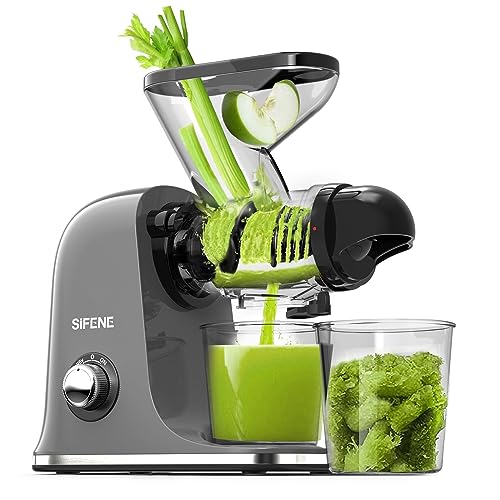
Not everyone has room for a full-size auger juicer. The SIFENE Mini Slow Masticating Juicer is a compact slow juicer with a dual feed chute and a quiet motor. Per its title, it comes in gray. The dual chute gives you a choice between feeding larger pieces and thinner items like celery or ginger. At $44.99 with a 4.2 rating, it’s the budget pick of the three.
A quiet motor helps if you juice early in the morning. Slow juicers are generally quieter than centrifugal ones anyway, but a smaller motor can be even gentler on the ears.
What a mini juicer gives up
Smaller machines typically hold less juice and pulp at a time, and you may need to empty the pulp more often when you make a big batch. If you’re juicing for one or two people, that’s fine. For a family pitcher, you’ll feel it.
SIFENE
Cold Press Juicing for Small Kitchens: SIFENE Mini Slow Masticating Juicer with Dual Feed Chute and Quiet Motor
The SIFENE Mini runs slow masticating extraction through a dual feed chute, so long celery stalks go down one opening while chopped fruit drops through the other and cuts your prep work. It suits daily juicers in apartments, dorms, and RV kitchens who want a quiet countertop unit with dishwasher safe parts instead of a full size machine.
Pros and Cons
Pros
- The reverse function clears clogs from stringy produce without a full teardown of the auger housing.
- Two feed openings let you load mixed produce shapes without pre cutting everything to one size.
- Compact enough to store in a cabinet between uses rather than living on the counter.
- Cleaning brush is included, so the strainer screen gets scrubbed properly from day one.
Cons
- Masticating extraction is slower than a centrifugal juicer, so a large morning batch takes real time at the chute.
- The mini build limits batch capacity, meaning more stops to empty containers when juicing for more than one person.
SIFENE Cold Press Juicing for Small Kitchens: SIFENE Mini Slow Masticating Juicer with Dual Feed Chute and Quiet Motor
SIFENE
Cold Press Juicing for Small Kitchens: SIFENE Mini Slow Masticating Juicer with Dual Feed Chute and Quiet Motor
The SIFENE Mini runs slow masticating extraction through a dual feed chute, so long celery stalks go down one opening while chopped fruit drops through the other and cuts your prep work. It suits daily juicers in apartments, dorms, and RV kitchens who want a quiet countertop unit with dishwasher safe parts instead of a full size machine.
$44.99 at AmazonEditors' Favorite
Color: Gray Size: Compact Dimensions: 4.13 x 11.2 x 10.24 inches Weight: 4.299014109 pounds Product Group: Kitchen Binding: Kitchen
Shop NowWhen citrus is the goal
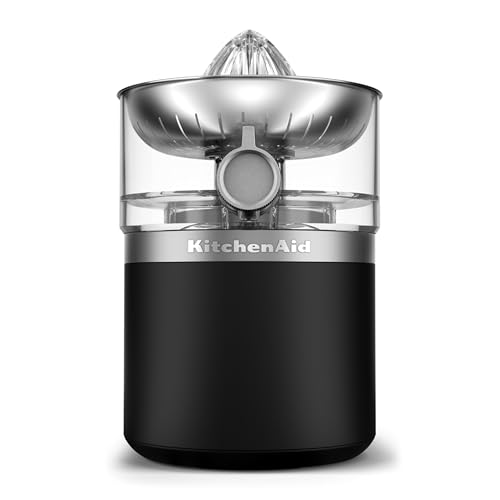
Lemon, lime and orange juice is a different task. You don’t need an auger for it, and a slow juicer wastes time on a single orange. The KitchenAid Go Cordless Citrus Juicer (model KCJR161BM) is battery included, so there’s no cord to deal with. It’s a citrus-only tool, not a general juicer, and it’s priced at $119.99 with a 4.2 rating. We can’t confirm from the listing how it handles pulp, so treat it as a convenience pick and strain the juice if you want it clear.
For more on squeezing citrus, our guide to the best juicer for lemons goes deeper.
KitchenAid
Cordless Countertop Citrus Juicing Anywhere: KitchenAid Go KCJR161BM Battery-Powered Juicer with Auto-Reversing Reamer
This battery-powered citrus juicer extracts juice from grapefruits, lemons, limes, and oranges using an auto-reversing reamer, and its removable 12V MAX battery lets you juice at any counter, island, or table without hunting for an outlet. Buy it if you juice citrus often and want a machine you can move freely around the kitchen with dishwasher-safe parts that clean up in minutes.
Pros and Cons
Pros
- Cord-free operation means the juicer can live in a cabinet and come out to any work surface without rearranging appliances for outlet access.
- The auto-reversing action improves extraction compared with a fixed-spin reamer, so fewer lemons go to waste on a batch of dressing.
- A stainless steel sieve catches seeds and pulp and resists the staining and warping that plastic strainers develop from citrus acid.
- Everything ships in one box including the battery and USB charging cable, so there is nothing extra to buy before the first use.
Cons
- Battery power limits continuous run time, so large juicing sessions may require a recharge partway through.
- The 16 oz reservoir is modest if you juice for a crowd, meaning you'll empty and restart during big batches.
KitchenAid Cordless Countertop Citrus Juicing Anywhere: KitchenAid Go KCJR161BM Battery-Powered Juicer with Auto-Reversing Reamer
KitchenAid
Cordless Countertop Citrus Juicing Anywhere: KitchenAid Go KCJR161BM Battery-Powered Juicer with Auto-Reversing Reamer
This battery-powered citrus juicer extracts juice from grapefruits, lemons, limes, and oranges using an auto-reversing reamer, and its removable 12V MAX battery lets you juice at any counter, island, or table without hunting for an outlet. Buy it if you juice citrus often and want a machine you can move freely around the kitchen with dishwasher-safe parts that clean up in minutes.
$119.99 at AmazonEditors' Favorite
Color: Black Matte Dimensions: 7.87 x 6.46 x 10.35 Inches Weight: 3.99 pounds Product Group: Kitchen Binding: Kitchen
Shop NowCleaning up: why it matters for pulp
Pulp left in the screen is the number one reason juice quality drops over time. Fine mesh clogs with dried fiber, and a clogged screen forces the auger to work harder while letting less juice through. Rinse the parts right after you finish, use the cleaning brush if one comes with your model, and let everything air dry. Quick habit, big payoff.
If your juicer lists stainless steel blades or an easy-to-clean design, as the Zulay Kitchen listing does, that’s a plus. Fewer crevices means less scrubbing. Still, no machine cleans itself, and you’ll want a minute at the sink after each batch.
What to do with leftover pulp
Dry pulp is not trash. Stir carrot or apple pulp into muffin batter, pancakes or oatmeal. Vegetable pulp works in broth, veggie burgers or compost. It’s free fiber, so use it.
How much pulp is normal?
It varies by produce, and by how ripe it is. Overripe fruit gives a thicker, pulpier juice, while firm produce separates more cleanly. A cold glass of juice also settles over time, so a little sediment at the bottom after an hour is normal and doesn’t mean the machine failed. Give it a stir or a quick strain before you drink.
It varies by produce. Juicy fruit like oranges leaves little behind, while carrots and celery leave a lot. If the pulp comes out dripping wet, the machine is leaving juice behind, and slowing your feed rate often helps.
Common mistakes that leave more pulp in your glass
Most pulp complaints come from technique, not the machine. A few habits are worth fixing.
Feeding too fast
Rushing overloads the screen. Feed in pieces at a steady pace and let the auger clear each one.
Skipping the strainer step
Even a good machine lets a little fiber through. Pour juice through a fine mesh sieve if you want it truly smooth. It’s the cheapest upgrade there is.
Juicing soft produce without balance
Soft fruit like bananas or ripe peaches turns to puree, not juice. Pair soft items with firm ones like apples or cucumbers, and the screen won’t clog.
Letting the screen dry out
Dried pulp is hard to rinse. Clean the screen right after juicing, with a brush, under running water.
When to upgrade your juicer
Consider a different machine if your juice keeps coming out cloudy or foamy, if the pulp exits soaking wet, or if prep time is the reason you’ve stopped juicing. A wider chute cuts prep. A slow auger cuts foam. If budget matters, start with our look at the best budget juicer and the best juicer for under 100. Want more room to grow? See the best juicer under 200.
If greens are your main use, the best juicer for leafy greens andbest juicer for green juice pages cover the picks that handle them well. For general buying advice, try the best juicer for juicing.
FAQ
What kind of juicer removes the most pulp?
Slow masticating juicers usually give the cleanest separation, since the auger presses fiber against a fine screen and pushes it out a separate chute. Using a fine mesh sieve afterward removes nearly all the rest.
Is a juicer with a pulp container worth it?
Yes, for longer sessions. A separate pulp container lets you keep juicing without stopping to empty the machine. Smaller juicers may need emptying more often.
Can I make pulp-free juice without a juicer?
You can blend produce with a little water, then pour it through a nut milk bag or fine sieve. It’s slower and gives a bit less juice, but it works.
Does removing pulp remove the fiber?
Yes. Pulp is the fiber, so smooth juice has less of it than the whole fruit. If you want the fiber, drink the juice with pulp or add the pulp to soups, muffins or smoothies.
Is a citrus juicer or a slow juicer better for lemon juice?
For lemons and limes alone, a citrus juicer is faster and simpler. A slow juicer is better when you also want to juice carrots, apples and greens.








Write Your Review
No reviews yet. Be the first to share your experience!