

The right coffee maker grind depends on the brewer: coarse for percolators and French press, medium for drip machines, medium-fine for pour over, and fine for espresso. Get that match right and most “bitter” or “weak” coffee problems disappear.
This guide walks through each grind size, what it does to your cup, and how to fix a brew that tastes off. We’re a research team, so the advice below draws on standard brewing guidance and the product details listed on each page, not on hands-on use.
Match the grind to the brewer
Water pulls flavor out of coffee at a rate set by surface area. Smaller particles expose more surface and extract fast. Bigger particles extract slowly. Your brewer controls how long the water stays in contact, so the grind has to compensate. A short brew needs fine grounds. A long one needs coarse grounds.
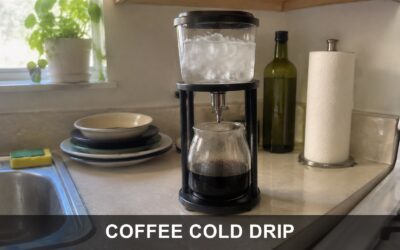
Here’s the usual starting point. Coarse (like sea salt) suits percolators, cold brew and French press. Medium (like sand) suits flat-bottom drip machines. Medium-fine suits cone drippers and pour over. Fine (like table salt) suits espresso. Treat these as starting points, then adjust by taste.
Large batch brewers are a good example of why coarse matters. The Zulay Commercial Coffee Maker is a 100 cup stainless steel percolator urn built for events. Water cycles through the basket for many minutes, so a fine grind would over-extract and clog the basket.

Zulay Kitchen
Large Gatherings: Zulay Kitchen 100-Cup Commercial Coffee Maker with Double-Wall Stainless Steel
The Zulay Kitchen 100-cup commercial coffee maker brews up to 100 five-ounce cups and keeps them hot with double-wall stainless steel insulation. It suits offices, events, hotels, cafés, and hosts serving large groups who need high-volume coffee or hot drinks from one urn.
Pros and Cons
Pros
- The 100-cup capacity handles office meetings, weddings, cafés, and other large gatherings.
- Double-wall construction uses a 430 stainless steel outer layer and 304 stainless steel inner layer for improved heat retention.
- The concealed heating element and heat-and-keep-warm indicator support convenient serving.
- A lifetime guarantee provides added support if the urn develops an issue.
Cons
- The listed five-ounce serving size is smaller than a typical home mug.
- At one cup per minute, brewing a full 100-cup batch can take up to 100 minutes.
Zulay Kitchen Large Gatherings: Zulay Kitchen 100-Cup Commercial Coffee Maker with Double-Wall Stainless Steel
Zulay Kitchen
Large Gatherings: Zulay Kitchen 100-Cup Commercial Coffee Maker with Double-Wall Stainless Steel
The Zulay Kitchen 100-cup commercial coffee maker brews up to 100 five-ounce cups and keeps them hot with double-wall stainless steel insulation. It suits offices, events, hotels, cafés, and hosts serving large groups who need high-volume coffee or hot drinks from one urn.
$139.99 at AmazonEditors' Favorite
Color: Silver Size: 100 Cup Dimensions: 13.8 x 13.8 x 22.2 inches Weight: 9.92080179 pounds Product Group: Kitchen Binding: Kitchen
Shop NowGrind size by brew method
Drip machines
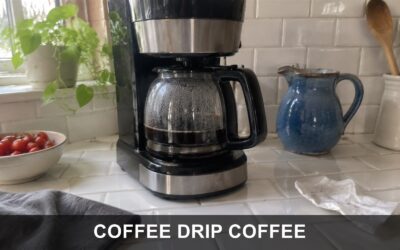
Most automatic drip makers want a medium grind. Too fine and water slows down in the filter, which gives a bitter, flat cup. Too coarse and water rushes through, leaving sour and thin coffee. If your machine uses a cone filter, go slightly finer than for a flat-bottom basket. For recommendations, see our best coffee maker roundup.
Percolators and urns
Percolators recirculate hot water through the grounds. That repeated contact calls for a coarse grind, close to French press. A fine grind slips through the basket holes and leaves sludge in the pot. Coarse also keeps bitterness in check over a long cycle.
Pour over
Pour over sits at medium-fine. You control the pour, so you also control the contact time. If the water drains in under two minutes, grind a bit finer. If it drags past four minutes, go coarser. A scale helps, because a steady ratio makes every other change easier to read.
Espresso and fine-grind brewers
Espresso pushes water through a compact bed in about 25 to 30 seconds, so the grind is fine and uniform. Portable machines work the same way in principle. The Twokylin Portable Espresso Machine is described as a battery self-heating coffee maker priced around $44.99, which makes it a travel option rather than a countertop replacement. Check the maker’s instructions for which grind and capsule or grounds it accepts.

Twokylin
Portable Espresso for Home, Office, and Travel: Twokylin Battery Self-Heating Coffee Maker
The Twokylin Portable Espresso Machine heats 80 ml of room-temperature water to 194°F in about five minutes, giving you self-heated espresso without a kettle. It suits campers, commuters, and home users who want one-touch brewing from ground coffee or compatible capsules.
Pros and Cons
Pros
- Built-in heating reaches 194°F from room-temperature water in about five minutes.
- Supports ground coffee plus large and small compatible capsules.
- Lightweight 1.58-pound construction is convenient for camping, hiking, office use, and travel.
- Food-grade ABS and stainless steel provide a practical combination of portability and everyday durability.
Cons
- The machine is not compatible with the Nespresso Vertuo series.
- Cold-water brewing is limited to about four shots per full charge.
Twokylin Portable Espresso for Home, Office, and Travel: Twokylin Battery Self-Heating Coffee Maker
Twokylin
Portable Espresso for Home, Office, and Travel: Twokylin Battery Self-Heating Coffee Maker
The Twokylin Portable Espresso Machine heats 80 ml of room-temperature water to 194°F in about five minutes, giving you self-heated espresso without a kettle. It suits campers, commuters, and home users who want one-touch brewing from ground coffee or compatible capsules.
$44.99 at AmazonEditors' Favorite
Color: BLACK Size: Standard Dimensions: 13.5 x 3.5 x 3.5 inches Product Group: Kitchen
Shop NowGrind fresh if you can
Coffee starts losing aroma soon after grinding. Whole beans keep their flavor far longer than pre-ground. If you brew every day, a grinder at home pays off quickly. Burr grinders give more even particles than blade grinders. Even particles mean even extraction. Blade grinders chop unevenly, so you get fines and boulders in the same dose.
A manual grinder is the cheapest way to try it. The SuperCook Pour Over Coffee Maker Set includes a coffee scale and a manual coffee grinder, priced around $59.90. That’s a handy bundle if you want to weigh your dose and set the grind yourself. Hand grinding takes a minute or two, so it suits one or two cups, not a crowd.

SuperCook
Pour Over Coffee Brewing Set with Grinder and Scale, SuperCook Manual Coffee Maker Kit
This SuperCook pour over set prepares measured coffee with a gooseneck kettle, manual grinder, digital scale, and timer in one kit. It suits coffee enthusiasts and gift buyers who want the core tools for controlled manual brewing without assembling a separate setup.
Pros and Cons
Pros
- The all-in-one kit includes a kettle, dripper, server, cups, grinder, scale, spoon, and filters.
- The gooseneck spout and thickened handle support controlled pouring.
- The grinder's external coarseness adjustment is easier to access during brewing.
- The gift box suits coffee-focused weddings, birthdays, anniversaries, and housewarmings.
Cons
- The grinder, scale, and paper filters are not dishwasher safe.
- The product data does not provide a total set weight, so storage and portability are difficult to assess.
SuperCook Pour Over Coffee Brewing Set with Grinder and Scale, SuperCook Manual Coffee Maker Kit
SuperCook
Pour Over Coffee Brewing Set with Grinder and Scale, SuperCook Manual Coffee Maker Kit
This SuperCook pour over set prepares measured coffee with a gooseneck kettle, manual grinder, digital scale, and timer in one kit. It suits coffee enthusiasts and gift buyers who want the core tools for controlled manual brewing without assembling a separate setup.
$59.90 at AmazonEditors' Favorite
Color: Black Size: Coffee PRO Dimensions: 3.9 x 8 x 4.5 inches Product Group: Kitchen Binding: Unknown Binding
Shop NowSome machines grind for you. If you’d rather skip a separate grinder, read our guide to the best coffee grinding coffee maker options.
Common grind mistakes
Using one grind for every brewer is the big one. Pre-ground “all purpose” coffee is a compromise, and it’s rarely ideal for anything. Another mistake is changing three things at once. Change the grind alone, brew, taste, then adjust again.
Old beans cause trouble too. Stale coffee tastes flat no matter how you grind it. And water quality matters. Hard or heavily chlorinated water can mask good extraction. Fix the grind first, then look at beans and water. Our best coffee beans for a drip coffee maker page covers bean choices, and the best coffee for a drip coffee maker guide helps with roasts.
Reading the cup
Sour, sharp, thin: under-extracted, so grind finer. Bitter, dry, harsh: over-extracted, so grind coarser. Muddy with sediment: too fine for the filter. Weak but not sour: use more coffee or less water.
When to change your setup
If you’ve dialed in the grind and the coffee still disappoints, the machine may be the limit. Weak heating, uneven water spread and small baskets all hurt extraction. Look at your options for hot coffee or iced coffee if you want something more specific to your habits.
Keep your brewer clean as well. Oils and mineral scale build up and alter flavor, which can look like a grind problem. Descale on the schedule in the manual.
How to dial in a new grind step by step
Start with a recipe that stays fixed. For drip, a common ratio is about 1 gram of coffee to 16 grams of water, which works out to roughly 60 grams of coffee per liter. Weigh the beans, grind them, and brew. Write down what you did, even if it’s just a note on your phone.
Taste the result before touching anything. If it’s sour or thin, move the grinder one step finer. If it’s bitter or drying, move one step coarser. One step at a time. Brew again with the same dose and the same water. After two or three cups you’ll land on a setting that tastes balanced, and you can leave it alone until you change beans.
Roast level shifts the answer a little. Dark roasts are more soluble and often taste better with a slightly coarser grind. Light roasts are dense and can handle a finer one. Fresh beans also release more gas, so a bag that’s just a few days off roasting may bloom heavily and behave differently from one that’s three weeks old.
Clean-up and storage
Grounds hold on to oils, and those oils go rancid. Wipe out the hopper or hand grinder now and then, and brush the burrs. Store beans in an airtight container away from heat and light. Don’t keep them in the freezer door, where temperature swings add moisture. Buy amounts you can use in two to three weeks.
Filters matter too
Paper filters trap oils and fines, giving a cleaner cup. Metal mesh lets more through, so you get a heavier body and more sediment. A mesh basket usually pairs better with a slightly coarser grind. A thick paper filter can slow drainage, which is another reason to avoid going too fine.
Choosing a grinder or brewer for your habits
Think about how many cups you make and how often. One cup a day suits a hand grinder and a pour over dripper. Four or more cups suits an electric grinder or a machine with a built-in one. Big gatherings suit a large urn, as long as you grind coarse and brew a full batch rather than a partial one.
Budget matters, but so does patience. A portable espresso maker is a fun extra for travel, while a countertop drip machine handles weekday mornings. Our best Mr. Coffee maker and best cup coffee maker pages are good next stops if you’re shopping for a simple everyday brewer.
FAQ
What grind size should I use in a regular coffee maker?
Medium, about the texture of sand. That works for most flat-bottom automatic drip machines. If the coffee tastes bitter, go a little coarser. If it tastes sour, go a little finer.
Can I use pre-ground coffee?
Yes. Look for a bag labeled for drip or for your brew method. It won’t stay as fresh as beans ground just before brewing, but it’s perfectly workable.
What grind is best for a percolator?
Coarse. The water passes through the grounds repeatedly, so coarse grounds avoid over-extraction and keep sediment out of the pot.
Is a blade or burr grinder better?
Burr grinders produce more uniform particles, which gives more even extraction. Blade grinders are cheaper but uneven. If you grind for pour over or espresso, a burr grinder is worth it.
Why does my coffee taste bitter even with the right grind?
Check water temperature, brew time and dose. Too much contact time, water that’s too hot, or a dirty machine can all cause bitterness. Also check bean freshness and roast level.



Write Your Review
No reviews yet. Be the first to share your experience!