

Choosing a juicer small enough for a crowded counter comes down to one question: what do you actually plan to juice? If it’s lemons, limes and oranges, a hand-held citrus squeezer takes almost no space at all. If it’s carrots, apples and leafy produce, you’ll need a motorized machine, and even the compact ones take up a spot on the counter.
This guide helps you decide how much juicer you really need, what “small” means in practice, and which of three real products from our database fits each job. We haven’t handled any of these in a kitchen. This is research based on the listings, so we stick to what the product titles state.
What “small” really means for a juicer
Size claims on juicers are slippery. A manufacturer can call a machine compact because it’s smaller than a commercial unit, yet it can still eat up a good chunk of counter. So start with your own measurements: the width of the free counter space, the height under your upper cabinets, and the cabinet shelf where the juicer would live between uses.
There are really three footprints. A hand-held squeezer fits in a drawer. A countertop citrus machine needs a permanent or semi-permanent spot. A centrifugal extractor needs a spot plus room for its feed chute, pulp container and juice jug. Knowing which category you’re shopping in saves a lot of frustration.
Hand-held squeezers
These are the smallest option by far. You halve a lemon, press it into the cup and squeeze. No cord, no motor, almost no cleanup. They only handle citrus, though. Don’t expect to juice a carrot with one.
Countertop citrus machines
These use a motor to spin or press a halved fruit against a reamer. They’re faster than hand squeezing when you’ve got a pile of oranges to get through, but they’re single-purpose too.
Centrifugal extractors
This is the broad-use category. A fast-spinning cutting disc shreds produce and flings the juice through a mesh. They handle firm fruit and vegetables, but they’re the bulkiest of the three.
The smallest option: a hand-held citrus squeezer
If your juicing is mostly lemon in the water, lime over tacos or a morning glass of orange juice, start here. The iStarcas Lemon Squeezer is listed as a citrus juicer built to be effective at squeezing out juice. It’s priced at $11.99 and carries a 4.9 rating in our product database. At that price it’s an easy experiment.
The trade-off is effort. You supply the force, so a bag of twenty limes will tire your hand. For occasional use, though, nothing else on this page takes up less room.

iStarcas
Fold-Flat Citrus Press for Lemons, Limes and Oranges: iStarcas Lemon Squeezer with Built-In Pip Catcher
This hinged manual squeezer presses citrus halves inward from the sides rather than crushing them flat, so a two-handed sideways pivot pulls juice from even firm, stubborn lemons. Buy it if you juice citrus often but have no drawer space to spare, since the slimline body folds completely flat between uses.
Pros and Cons
Pros
- Handles hard, resistant lemons that flatten-style presses struggle to fully drain.
- Works across lemons, limes, small oranges and other citrus rather than a single fruit size.
- Seed and pulp filtering is built in, so no separate strainer is needed for cocktails or vinaigrettes.
- Flat-folding storage suits small kitchens and crowded utensil drawers.
Cons
- The sideways two-handed motion is a different technique than a standard press, so expect a short adjustment period.
- Large navel oranges and grapefruit may exceed what a lemon and lime sized press can comfortably hold.
iStarcas Fold-Flat Citrus Press for Lemons, Limes and Oranges: iStarcas Lemon Squeezer with Built-In Pip Catcher
iStarcas
Fold-Flat Citrus Press for Lemons, Limes and Oranges: iStarcas Lemon Squeezer with Built-In Pip Catcher
This hinged manual squeezer presses citrus halves inward from the sides rather than crushing them flat, so a two-handed sideways pivot pulls juice from even firm, stubborn lemons. Buy it if you juice citrus often but have no drawer space to spare, since the slimline body folds completely flat between uses.
$11.99 at AmazonEditors' Favorite
Color: Yellow Dimensions: 9.84 x 4.09 x 1.18 inches Weight: 0.48942622164 Pounds Product Group: Kitchen Binding: Kitchen
Shop NowHow to match a juicer to what you drink
Different produce asks different things of a machine. Citrus has a soft interior and bitter pith, so the best citrus tools press gently and leave the peel alone. Hard produce like carrots and apples needs a sharp, fast cutting system. Leafy greens are the hardest of all, because they don’t have much juice to give and tend to get pushed through rather than shredded.
Think about volume
One glass a day is a different job from a family pitcher on weekends. Small machines are fine for the first. For the second, a bigger feed chute and a stronger motor save real time, even though they cost you counter space.
Think about cleanup
Here’s where small juicers can surprise you. A tiny machine with many tiny parts can take longer to wash than a larger one with a few big parts. A manual squeezer wins on this front. Rinse it and you’re done.
If you want to compare more models by budget or purpose, our roundups of the best budget juicer and the best juicer for under 100 dollars are good next stops.
When a full-size centrifugal juicer is worth the space
Sometimes a small appliance isn’t the right answer. If you want carrot, apple, cucumber or celery juice regularly, a manual squeezer can’t do the job. A centrifugal machine can, and the GDOR Powerful 1200W Juicer is a good example of the type. Its title lists a 3.2 inch feed chute, a titanium enhanced cutting system, a full copper motor, dual speeds and a BPA-free build. It’s $49.99 with a 4.9 rating.
Be honest with yourself about size, though. A 1200W machine with a 3.2 inch chute isn’t a pocket appliance. The larger chute means less chopping before you juice, which is a real convenience, but the body needs a permanent home. It’s worth it only if you’ll use it several times a week.
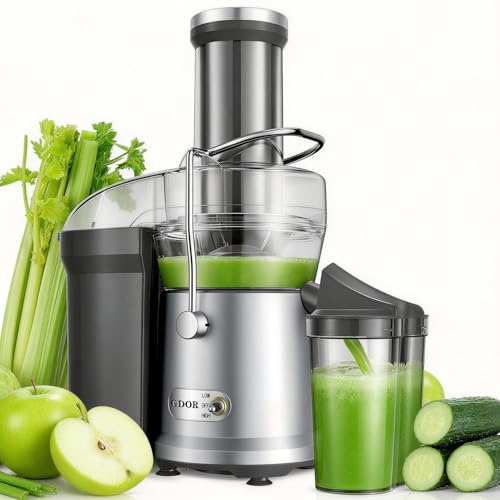
GDOR
Whole-Fruit Juicing Without Prep Work: GDOR 1200W Centrifugal Juice Extractor with 3.2" Feed Chute and Titanium Cutting Disc
This centrifugal extractor pushes whole apples, carrots, and celery stalks through a 3.2-inch chute and separates juice in seconds using a 1200W copper motor and titanium-reinforced cutting disc. Buy it if you juice hard produce on weekday mornings and want to skip the chopping board entirely, since every detachable part goes straight into the dishwasher afterward.
Pros and Cons
Pros
- Copper motor construction resists the overheating and burnout that kills cheaper plastic-geared juicers.
- Wide chute plus dual speeds covers both soft citrus and dense root vegetables on one machine.
- Culinary-grade stainless micro mesh filter pairs with the titanium disc for a fuller extraction on fibrous greens.
- Detachable components clean up in the dishwasher instead of by hand-scrubbing the mesh.
Cons
- Centrifugal juicers spin fast enough to aerate and warm the juice, so it separates faster than cold-press output and is best drunk immediately.
- Leafy greens like kale yield less here than on a masticating juicer, even at the higher speed setting.
GDOR Whole-Fruit Juicing Without Prep Work: GDOR 1200W Centrifugal Juice Extractor with 3.2" Feed Chute and Titanium Cutting Disc
GDOR
Whole-Fruit Juicing Without Prep Work: GDOR 1200W Centrifugal Juice Extractor with 3.2" Feed Chute and Titanium Cutting Disc
This centrifugal extractor pushes whole apples, carrots, and celery stalks through a 3.2-inch chute and separates juice in seconds using a 1200W copper motor and titanium-reinforced cutting disc. Buy it if you juice hard produce on weekday mornings and want to skip the chopping board entirely, since every detachable part goes straight into the dishwasher afterward.
$49.99 at AmazonEditors' Favorite
Color: Silver Size: Large Dimensions: 12 x 7 x 17 inches Product Group: Kitchen
Shop NowDual speeds and why they matter
Many centrifugal models offer two speeds, and the GDOR title mentions them. The usual idea is that a lower speed suits softer produce while a higher speed suits harder items. That’s general guidance, not a promise about this specific machine, so check the manual before you run anything dense through it.
Soft produce
Berries, grapes and citrus segments don’t need much force. Running them slowly keeps splashing down.
Hard produce
Carrots and apples are the classic fast-speed items. Cut them to fit the chute and feed them steadily.
For more on vegetable-focused machines, see our guides to the best juicer for health and the best juicer for green juice.
For heavy citrus use: a countertop machine
A step up from the hand squeezer is an electric citrus juicer. The YUANHAO Commercial Electric Citrus Juicer Machine is listed with a commercial label, a 4.9 rating and a $139.97 price. That’s the most expensive of the three, and it’s the least “small” in spirit. The commercial name suggests it’s meant for repeated, higher-volume use, like a cafe or a big household that drinks a lot of orange juice.
The title doesn’t give dimensions or capacity, so we can’t say how much counter it takes. Look at the full listing before buying, and measure your space. If you only squeeze a few lemons a week, this is overkill. If you’re juicing citrus every morning for several people, the motor will spare your wrists.

YUANHAO
Commercial Citrus Juicing for Juice Bars and Cafes: YUANHAO Electric Citrus Juicer Machine with 3 Reamers
This stainless steel electric citrus juicer runs a 1400 RPM commercial motor with three interchangeable reamers, extracting oranges, lemons, limes, and grapefruits back to back without the fatigue of hand pressing. Juice bars, cafes, and restaurants working through high fruit volumes daily will get the most from its metal gear drive and acid-resistant build.
Pros and Cons
Pros
- The 1400 RPM motor runs at a lower noise level, which matters in an open cafe or front-of-house setup.
- One-button operation means any staff member can run it without training.
- Non-skid feet keep the machine planted when you apply pressure to a large grapefruit.
- Ribbed reamer design separates juice from pulp for a smoother pour with less straining.
Cons
- At this size and weight class, it is built as a permanent station fixture rather than something you stow in a cabinet between uses.
- It is a citrus-only machine, so it will not process apples, carrots, greens, or any non-citrus produce.
YUANHAO Commercial Citrus Juicing for Juice Bars and Cafes: YUANHAO Electric Citrus Juicer Machine with 3 Reamers
YUANHAO
Commercial Citrus Juicing for Juice Bars and Cafes: YUANHAO Electric Citrus Juicer Machine with 3 Reamers
This stainless steel electric citrus juicer runs a 1400 RPM commercial motor with three interchangeable reamers, extracting oranges, lemons, limes, and grapefruits back to back without the fatigue of hand pressing. Juice bars, cafes, and restaurants working through high fruit volumes daily will get the most from its metal gear drive and acid-resistant build.
$139.97 at AmazonEditors' Favorite
Color: Silver and Black Dimensions: 8.267716527 x 8.267716527 x 16.929133841 inches Weight: 11.0231131 pounds Product Group: Kitchen Binding: Kitchen
Shop NowCommon mistakes when buying a compact juicer
Most regrets come from the same few errors. Avoid them and you’ll be much happier with whatever you pick.
Buying for a diet you don’t have
Plenty of people buy a juicer in January and put it away by March. Start with the cheapest tool that matches what you already drink. You can always upgrade.
Ignoring storage
A juicer that lives in a cabinet gets used less often than one on the counter. If you can’t leave it out, pick something light and easy to pull down, or go manual.
Expecting one machine to do everything
Citrus tools are great at citrus and poor at carrots. Centrifugal machines do vegetables well but aren’t the neatest with a lemon. Match the tool to the job.
If you’re juicing mainly lemons, our best juicer for lemons page goes deeper. And if budget is the main limit, set a firm ceiling before you browse, because the price gap between a squeezer and a full extractor is wide.
When to upgrade from a small juicer
You’ve outgrown a hand squeezer when your hand aches before the pitcher is full, or when you start wanting vegetable juice. You’ve outgrown a basic citrus machine when you want variety. And you might downsize a big machine when it sits unused because cleanup feels like a chore.
Honest answer: most households end up with two tools. A cheap squeezer for lemons and limes, plus one larger machine for the occasional vegetable run. That combination costs less than a single premium unit and covers nearly everything. Our best juicer for the price guide can help you pick the larger half.
A quick way to decide
Write down the three things you juice most often. If all three are citrus, buy the squeezer and stop there. If two or more are vegetables or apples, plan for a centrifugal machine and clear a permanent spot. If you squeeze citrus in bulk for guests or a small business, the commercial citrus machine is the one that fits. Short on space and unsure? Start small. A drawer-size tool teaches you how much you really juice before you commit to anything bigger.
FAQ
What is the best small juicer for lemons and limes?
A hand-held citrus squeezer is the smallest and cheapest choice. The iStarcas Lemon Squeezer in this guide is listed at $11.99 with a 4.9 rating. For daily high-volume citrus, an electric citrus machine saves effort.
Can a small juicer handle carrots and apples?
Not a citrus squeezer. Hard produce needs a motorized juicer with a cutting system, such as a centrifugal model. Those are bigger, so check your counter space first.
Is a bigger juicer always better?
No. A bigger motor and wider chute are handy for volume, but they take more room and more cleanup. If you juice a glass a day, a smaller tool is often the better fit.
How do I know if a juicer will fit my kitchen?
Measure your free counter width and the height under your cabinets, then compare with the dimensions on the full product listing. Product titles don’t always include size, so don’t rely on the name alone.
Is a commercial citrus juicer too much for home use?
It can be. A commercial model like the YUANHAO is built for repeated use, which suits heavy daily squeezing. For a few lemons a week, a hand squeezer is cheaper and far more compact.








Write Your Review
No reviews yet. Be the first to share your experience!