

TL;DR — A quality santoku knife lasts a lifetime — realistically 20 to 40+ years of home use — because the blade steel does not “wear out.” Sharpening removes only a fraction of a millimeter of metal over years, so a well-cared-for knife slowly narrows but stays usable for decades. Lifespan is decided almost entirely by care, not brand: hand washing, proper cutting boards, regular honing and sharpening, and safe storage. Abuse (dishwashers, glass boards, cutting bones or frozen food) can ruin a knife in months. For picks, see our best santoku knife guide.
The HomeWhisk editorial team researches kitchen equipment by analyzing manufacturer specifications, steel metallurgy, and aggregated user reviews from major retailers and knife communities like Reddit’s r/chefknives. Our conclusions reflect how the tools actually hold up over time.

“How long do santoku knives last?” is usually asked by someone deciding whether a knife is a good investment or wondering if their years-old blade is due for replacement. The honest answer surprises people: a good santoku is closer to a lifetime tool than a consumable, but only if it is maintained. A neglected knife of the same quality can be junk within a year. This guide covers realistic lifespans, what actually shortens them, and the specific habits that keep a knife performing. If you are shopping, our best santoku knife and best chef knife guides cover the picks.

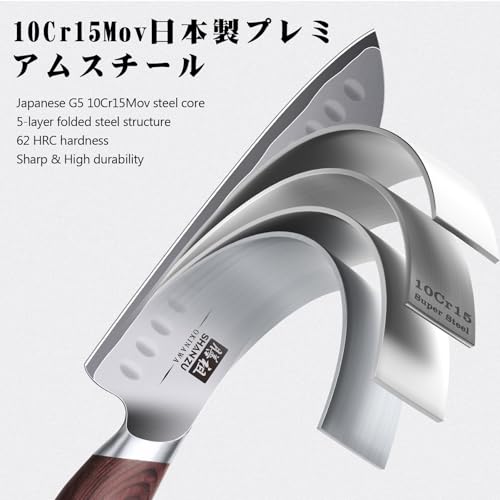
SHAN ZU
7-Inch Santoku Knife for Precision Slicing and Chopping: SHAN ZU 10Cr15Mov High Carbon Stainless Steel Chef Knife
This 7-inch Santoku glides through vegetables, meat, and fish with a 12-degree edge and 62 HRC Japanese steel that holds its sharpness through heavy prep. Buy it if you want a rust-resistant, comfortable-gripping knife for daily home cooking without spending on premium brands.
Pros and Cons
Pros
- The hardened 62 HRC steel edge retains sharpness through repeated cutting sessions.
- The Pakkawood handle resists cracking from thermal expansion and grips securely when wet.
- The laminated, rust-resistant blade handles moisture and corrosion for reliable everyday cooking.
- The 7-inch Santoku shape suits versatile tasks from slicing to chopping vegetables and meat.
Cons
- The 7-inch blade is shorter than a standard 8-inch chef knife, which limits work on large cuts of meat or big produce.
- The thin 12-degree edge needs careful handling and regular honing to avoid chipping.
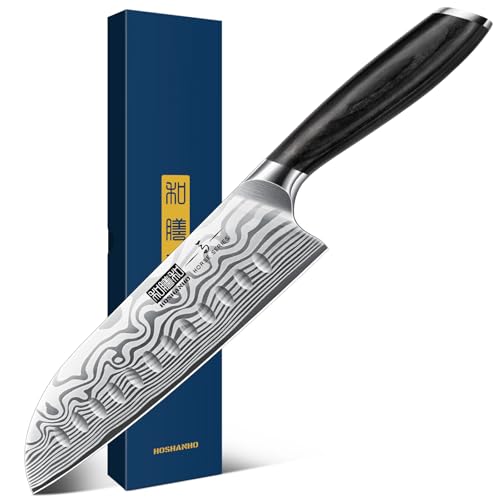
HOSHANHO
7-Inch Santoku for Fast Vegetable and Fish Prep: HOSHANHO High Carbon Powder Steel Kitchen Knife
This 7-inch santoku uses a 62 HRC high carbon powder steel blade ground to a 15-degree edge, so it slices fish, meat, and produce with minimal pressure and holds that edge through long prep sessions. It suits home cooks and chefs who do daily vegetable work and want a hard, slice-focused blade with a pakkawood handle rather than a general-purpose Western chef knife.
Pros and Cons
Pros
- 62 HRC powder steel delivers noticeably better edge retention than standard kitchen knife steel.
- Balanced 7-inch blade width and weight make it easy to control for slicing and shredding.
- Pakkawood handle resists moisture and stays comfortable through repeated hand-finishing.
- Arrives in a presentation gift box, so it needs no extra packaging as a gift.
Cons
- Steel this hard is more prone to chipping if used on bone, frozen food, or hard cutting surfaces.
- The high hardness also makes it slower to resharpen at home without quality whetstones.
KYOKU Santoku Knife - 7" - Shogun Series - Japanese VG10 Steel Core Forged Damascus Blade - with Sheath & Case

KYOKU
Santoku Knife - 7" - Shogun Series - Japanese VG10 Steel Core Forged Damascus Blade - with Sheath & Case
Check price on AmazonSHAN ZU 7-Inch Santoku Knife for Precision Slicing and Chopping: SHAN ZU 10Cr15Mov High Carbon Stainless Steel Chef Knife
SHAN ZU
7-Inch Santoku Knife for Precision Slicing and Chopping: SHAN ZU 10Cr15Mov High Carbon Stainless Steel Chef Knife
This 7-inch Santoku glides through vegetables, meat, and fish with a 12-degree edge and 62 HRC Japanese steel that holds its sharpness through heavy prep. Buy it if you want a rust-resistant, comfortable-gripping knife for daily home cooking without spending on premium brands.
Check price on AmazonThis is a 7-inch Santoku knife built for everyday slicing, dicing, and chopping of vegetables, fish, and boneless meat.
The 12-degree double-bevel edge and 62 HRC Japanese 10Cr15Mov steel produce thin, accurate cuts and hold their edge through heavy prep.
Five layers of laminated stainless steel and a Pakkawood handle resist rust, moisture, and cracking, giving stable control when wet.
The shorter 7-inch blade offers less reach than an 8-inch chef knife on large ingredients.
Best for home cooks wanting a durable, sharp Santoku for daily prep.
HOSHANHO 7-Inch Santoku for Fast Vegetable and Fish Prep: HOSHANHO High Carbon Powder Steel Kitchen Knife
HOSHANHO
7-Inch Santoku for Fast Vegetable and Fish Prep: HOSHANHO High Carbon Powder Steel Kitchen Knife
This 7-inch santoku uses a 62 HRC high carbon powder steel blade ground to a 15-degree edge, so it slices fish, meat, and produce with minimal pressure and holds that edge through long prep sessions. It suits home cooks and chefs who do daily vegetable work and want a hard, slice-focused blade with a pakkawood handle rather than a general-purpose Western chef knife.
Check price on AmazonA 7-inch Japanese-style santoku built for cooks who do heavy vegetable, fish, and boneless meat prep and want cleaner cuts with less force.
The 15-degree edge on 62 HRC powder steel bites into tomato skin and fish without tearing, while scalloped hollows keep thin slices from clinging to the blade.
Precision-forged high carbon powder steel, nitrogen-cooled for corrosion resistance, paired with a hand-finished pakkawood handle at a moderate blade weight and width for daily control.
Hard steel trades toughness for edge retention, so bones, frozen items, and glass or stone boards can chip the edge.
Best for home cooks and chefs who prep produce daily and will maintain a hard, slice-focused Japanese blade.
The Real Lifespan: Decades, Not Years
The steel in a santoku blade does not degrade with use. What people call “wearing out” is really two separate things: loss of sharpness (temporary and reversible) and loss of metal from sharpening (permanent but extremely slow).
Every time you sharpen on a whetstone, you remove a tiny amount of steel — on the order of hundredths of a millimeter for routine touch-ups. Even sharpening every couple of months, it takes many years to visibly narrow a blade. A 180mm santoku might lose a few millimeters of blade height over 20-30 years of regular sharpening. Long before the knife becomes unusably narrow, most owners have simply retired it by choice, not necessity.
So the practical answer: a quality santoku lasts 20-40+ years, effectively a lifetime, and many outlast their original owner. The determining factor is not the price tag or the brand — it is care. A mid-range stainless santoku that is looked after will outlast a premium knife that is thrown in the dishwasher and used on a glass board.
What Steel Quality Actually Changes
Steel quality does not change whether the knife lasts — it changes how often you interact with it and how the edge behaves.
- Hardness (HRC): Japanese santoku knives are typically hardened to 58-61 HRC, harder than German stainless (around 55-57 HRC). Harder steel holds its edge longer between sharpenings and takes a finer, more acute edge. The trade-off is brittleness: harder steel chips more easily if you twist it, cut bone, or drop it.
- Stainless vs. carbon: Stainless (VG-10, AUS-10, X50CrMoV15) resists rust and needs little attention. High-carbon steels get sharper and are easier to sharpen but must be dried immediately and often oiled, or they rust — a maintenance burden that, if ignored, genuinely shortens the knife’s life.
- Edge retention vs. toughness: Premium powdered steels like SG2/R2 (62+ HRC) hold an edge remarkably long but are the most chip-prone. A softer German blade dulls faster but is far more forgiving of clumsy technique and easier to bring back on a rod.
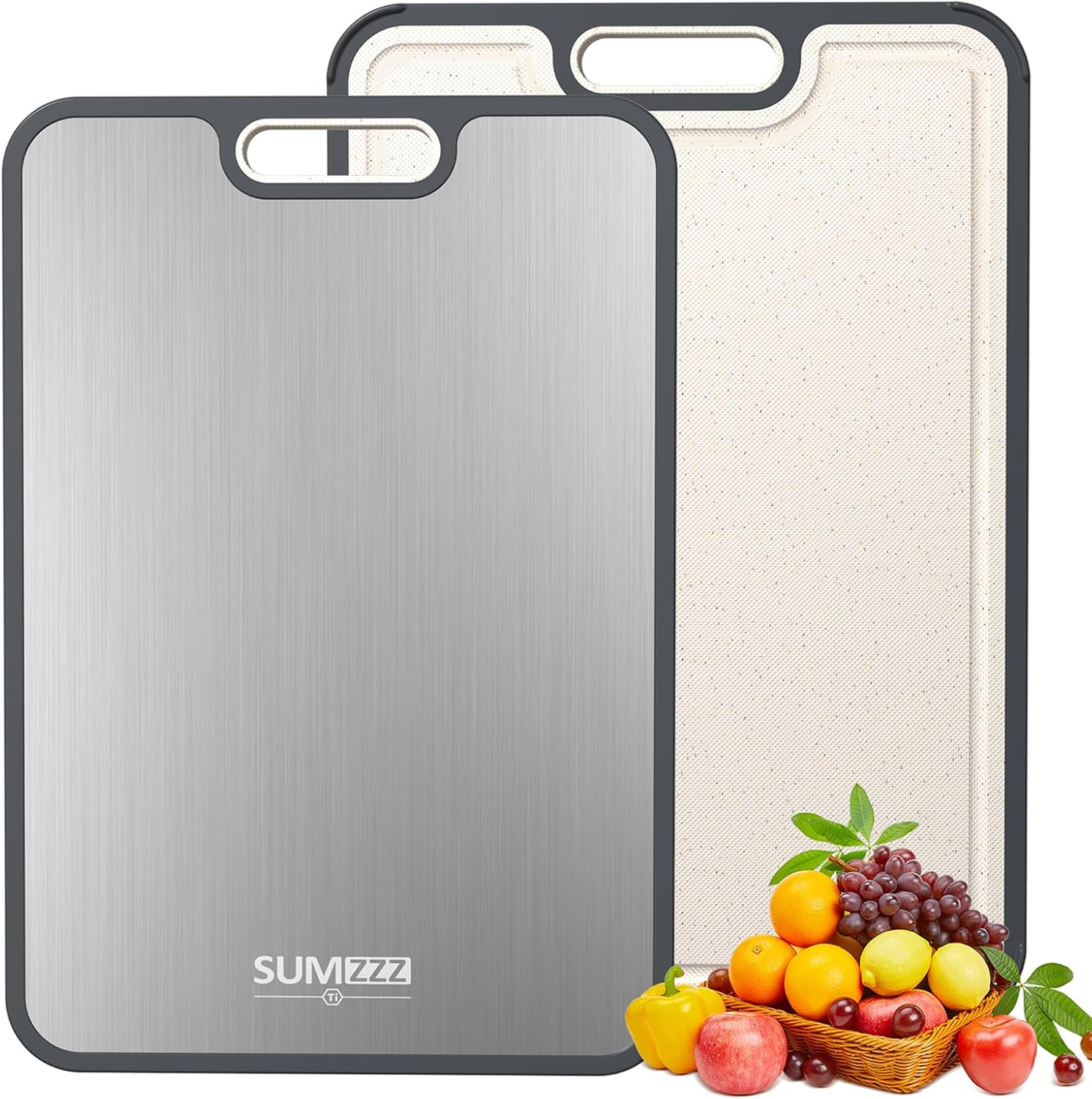
None of this caps the lifespan. A harder knife just needs sharpening less often but more careful handling; a softer knife needs more frequent honing but tolerates abuse better. Both can last decades. Our best knife sets guide notes the steel type for each option if you want to weigh this yourself.
What Actually Kills a Santoku Knife
These are the real failure modes, roughly in order of how often they end a knife’s life early:
1. Chipping the edge. Cutting bones, frozen food, hard squash, or accidentally hitting a plate or the sink. Hard Japanese steel is especially vulnerable. Small chips can be ground out; large ones may end the knife. 2. The dishwasher. High heat, harsh detergent, and blades banging against racks and cutlery dull, chip, and corrode edges — and destroy wooden handles. This is the single most common avoidable cause of premature death. 3. The wrong cutting board. Glass, granite, ceramic, and stone boards wreck an edge with every stroke and cause micro-chipping. 4. Rust and corrosion. Mostly a carbon-steel problem, but even stainless spots if left wet for long periods or exposed to salt and acids without rinsing. 5. Bad sharpening. Pull-through “V” sharpeners with carbide teeth aggressively grind away steel and leave a ragged edge, taking years off a blade far faster than a whetstone.
Avoid those five and a santoku essentially never fails from normal cooking. The rust point is worth emphasizing: our best santoku knife picks lean stainless precisely because it removes the most common neglect failure.
How to Care for a Santoku So It Lasts a Lifetime
Care is simple and takes seconds a day:
1. Hand wash and dry immediately. Warm water, a little soap, a soft sponge, then dry with a towel. Never leave it soaking or air-drying in a rack of acidic food residue. 2. Cut only on wood or soft plastic. End-grain wood boards are gentlest on the edge. Keep the knife off glass, stone, and metal. 3. Hone before or after use. A honing rod (or ceramic rod for harder Japanese steel) realigns the microscopic edge that folds over during cutting — this is not sharpening, it is maintenance, and it dramatically extends time between real sharpenings. 4. Sharpen on a whetstone periodically. Every few months for regular use. A 1000-grit stone to set the edge and a 4000-6000-grit to refine it. Japanese santoku knives typically take a 15-16 degree per side angle; German steel around 20 degrees. 5. Store it protected. A magnetic strip, in-drawer tray, blade guard, or block. Loose in a drawer, the edge bangs against other tools and dulls.
Follow this and the blade’s life is measured in decades. A honing rod is the highest-leverage habit — most “dull” knives are just misaligned, not worn.
Santoku vs. Other Knives: Does Type Affect Lifespan?
Different Japanese knife types have similar potential lifespans but different practical wear patterns:
- Santoku / Gyuto (chef’s): General-purpose, used daily, sharpened regularly — decades of life with care. See our best chef knife guide for the gyuto’s Western cousin.
- Nakiri (vegetable): Flat edge, only touches soft produce and boards, so it dulls slowly and rarely chips — very long-lived.
- Bread knife (serrated): Serrations cannot be honed and are hard to sharpen at home, so many owners replace them rather than maintain them — often the shortest-lived by usable life despite the steel being fine. See our best bread knife guide.
- Boning / fillet knives: Thin, flexible blades used near bone and joints, so they chip and bend more; careful use is key. See our best boning knife and best fillet knife guides.
The santoku sits in the sweet spot: heavily used but on forgiving materials, and fully sharpenable, so a good one genuinely lasts a lifetime.
Frequently Asked Questions
How long does a santoku knife typically last?
With proper care, a quality santoku lasts 20 to 40 years or more — effectively a lifetime of home cooking. The blade steel does not wear out; sharpening removes only a fraction of a millimeter of metal at a time, so the knife narrows extremely slowly. Lifespan is decided by care, not price: hand washing, using wood or plastic boards, honing regularly, and sharpening on a whetstone keep it going for decades. Abuse like dishwashers, glass boards, or cutting bone can ruin the same knife in months.
How often should I sharpen a santoku knife?
For typical home use, a full sharpening on a whetstone every two to four months is plenty, while daily honing on a rod keeps the edge aligned in between. Frequency depends on use and steel: a knife used several times a day needs sharpening more often than one used weekly, and softer German steel dulls faster than hard Japanese steel. Let the knife tell you — when honing no longer restores easy slicing through a tomato skin, it is time to sharpen.
Does a santoku knife wear out from being sharpened too much?
Not within any realistic timeframe. Each sharpening removes only hundredths of a millimeter of steel, so even frequent whetstone sharpening takes many years to visibly narrow the blade. A santoku sharpened regularly for 20-30 years might lose a few millimeters of height and still cut perfectly. The exception is aggressive pull-through carbide sharpeners, which grind away far more metal and leave a poor edge — those genuinely shorten a knife’s life and are best avoided in favor of a whetstone or ceramic rod.
When should I replace my santoku knife?
Replace it only when damage cannot be repaired: a large chip or broken tip that grinding out would leave the blade misshapen, a crack in the steel, or a blade sharpened down so far over decades that its geometry is compromised. A dull knife is not a reason to replace — that is what sharpening fixes. Likewise, surface stains or minor scratches are cosmetic. Most owners “replace” a santoku because they want an upgrade, not because the old one failed.
Can a santoku knife cut meat, and does that shorten its life?
Yes, a santoku handles boneless meat well — chicken breast, steak, fish fillets, pork — and doing so does not shorten its life. What damages the edge is cutting through bone, frozen meat, or cartilage-heavy joints, which can chip hard Japanese steel. For those tasks use a cleaver or boning knife instead. Slicing boneless proteins on a wood or plastic board is exactly what the santoku is built for and will not measurably wear it down.
Is an expensive santoku worth it for longevity?
Not strictly for longevity — a well-maintained mid-range stainless santoku lasts just as long as a premium one, because care matters far more than price. What you pay more for is edge retention (harder steel holds sharpness longer), refinement, fit and finish, and handle comfort, not extra years of life. A budget knife that is hand-washed and sharpened outlives a premium knife that is abused. Spend for the cutting experience and ergonomics you want, and invest the difference in a whetstone and a good cutting board.
The Bottom Line
A santoku knife is closer to a lifetime tool than a consumable: a quality blade lasts 20-40+ years because the steel does not wear out and sharpening removes metal agonizingly slowly. Longevity comes down to care, not cost — hand wash and dry it, cut on wood or plastic, hone before use, sharpen on a whetstone every few months, and store it protected. Avoid the dishwasher, glass boards, and cutting bone or frozen food, and your santoku will very likely outlast every other tool in the kitchen. If you are buying your first or upgrading, start with our best santoku knife guide, and see our best chef knife and best knife sets guides to build out the rest of your kit.



Write Your Review
No reviews yet. Be the first to share your experience!