

Silicone pie pans promise convenience and easy cleanup, but many bakers discover the hard way that not all flexible bakeware delivers on those claims. A flimsy pan that buckles under the weight of filling, or one that leaves your crust tasting like petroleum, can turn a simple dessert into a frustrating experience. Understanding what separates reliable silicone from disappointing products helps you avoid common pitfalls and choose bakeware that actually performs.
The Warping Problem Nobody Warns You About
Thin silicone pans bend and twist when you try to transfer them from counter to oven, spilling filling and creating uneven crusts. This happens because lower-grade silicone lacks the structural integrity to support liquid weight without a supporting framework. You end up needing two hands and a baking sheet underneath just to move your pie safely, which defeats the purpose of choosing flexible bakeware in the first place.
Temperature fluctuations make this worse. Silicone expands when heated, and pans with inconsistent thickness warp unpredictably in the oven. One side of your crust browns faster than the other, or the center stays pale while the edges overcook. Professional-grade silicone uses reinforced edges and uniform thickness to maintain shape under heat, but budget options often skip these features to cut costs.
The structural weakness also affects demolding. When you try to flex a thin pan to release the pie, it collapses inward instead of creating clean separation. You end up with torn crust and a messy presentation. Sturdier pans with fiberglass-reinforced cores provide enough rigidity to flex predictably without losing their shape entirely.
When Silicone Starts Melting
Not all silicone can handle standard baking temperatures. Cheap formulations begin breaking down around 400°F, releasing unpleasant odors and potentially harmful compounds into your food. Pie recipes often call for initial high-heat baking to set the crust, which puts these inferior pans right at their failure threshold. You might not notice visible damage, but the chemical degradation affects both safety and taste.
Food-grade silicone rated for continuous use at 450°F or higher contains stabilizers that prevent this breakdown. The material should be platinum-cured rather than peroxide-cured, a manufacturing distinction that significantly impacts heat tolerance. Peroxide-cured silicone costs less to produce but leaves residual chemicals that volatilize when heated, creating that distinctive plastic smell some bakers associate with all silicone bakeware.
Even high-quality silicone has limits. Direct contact with heating elements or placement under a broiler can cause localized melting or permanent discoloration. The material works best with moderate, consistent heat rather than extreme temperatures or sudden changes. Understanding these boundaries helps you use silicone appropriately rather than pushing it into applications where metal or ceramic would be safer choices.
Why Your Crust Sticks Despite Promises
Silicone manufacturers tout natural non-stick properties, but this only holds true for properly formulated, well-maintained pans. Surface contaminants accumulate over time, creating sticky patches that grab pastry dough. Oil residue, flour buildup, and dishwasher deposits all interfere with the molecular smoothness that makes silicone release food easily. What started as genuinely non-stick becomes progressively worse with each use.
The problem intensifies with sugary fillings. Fruit pies and custards leave caramelized deposits that bond to microscopic surface irregularities. These spots then act as anchors for future batches, creating a cycle of increasing stickiness. Proper cleaning requires more than a quick rinse—you need hot water, degreasing dish soap, and sometimes a baking soda paste to restore the original surface.
Some bakers never achieve good release because they skip the initial preparation. New silicone pans often have manufacturing residue that must be removed before first use. Washing with hot soapy water, then baking the empty pan at 350°F for twenty minutes, burns off these compounds and prepares the surface for food contact. Skipping this step means your first several pies stick regardless of the pan’s actual quality.
The Odor Retention Issue
Silicone’s molecular structure traps volatile compounds, absorbing flavors and smells from previous baking sessions. A pan used for savory quiche retains those onion and cheese notes, affecting the taste of your next apple pie. This cross-contamination becomes particularly noticeable with strong flavors like garlic, fish, or heavily spiced dishes. The porous nature that makes silicone flexible also makes it a sponge for aromatic molecules.
Standard washing doesn’t fully remove absorbed odors. The compounds penetrate beyond the surface layer where soap and water can reach them. Bakers often resort to soaking pans in baking soda solution overnight, or exposing them to direct sunlight for several hours to break down trapped molecules. These methods help but rarely eliminate odors completely once they’ve set in.
Higher-density silicone resists absorption better than softer formulations. Pans that feel almost rubbery and maintain their shape firmly tend to trap fewer odors than those with a softer, more flexible feel. This trade-off between flexibility and odor resistance means you need to match pan characteristics to your intended use. Dedicated sweet-only or savory-only pans prevent cross-contamination better than trying to use one pan for everything.
Choosing Silicone That Actually Works
Weight provides the first quality indicator. A nine-inch silicone pie pan should feel substantial in your hand, not flimsy or insubstantial. Heavier pans use more material and typically include reinforcing elements that prevent the warping and collapsing issues cheaper versions suffer from. The thickness should be uniform across the base and sides, without thin spots or irregular molding.
Temperature ratings appear on packaging or product descriptions. Look for explicit statements about maximum safe temperature, preferably 450°F or higher for standard baking. Vague claims about “oven-safe” without specific numbers often indicate lower-grade silicone that barely meets minimum standards. Platinum-cured silicone should be explicitly stated if present, as manufacturers who invest in this process make it a selling point.
Color matters more than aesthetics suggest. Bright, consistent coloring throughout the material indicates proper pigment dispersion during manufacturing. Splotchy or uneven color, especially with visible streaks or gradients, suggests poor quality control. The material should be opaque rather than translucent—you shouldn’t be able to see light through the sides of the pan when held up.
Smell testing helps identify problematic pans before purchase. High-quality silicone has virtually no odor, or perhaps a faint rubbery scent that disappears after initial washing. Strong chemical smells, anything reminiscent of plastic or petroleum, or persistent odors after washing indicate materials you want to avoid. Trust your nose—if it smells wrong, it probably performs poorly.
Proper Care Extends Performance
Hand washing preserves silicone better than dishwashers, despite manufacturer claims of dishwasher safety. The harsh detergents and high heat of automatic washing cycles gradually degrade the material, creating surface roughness that reduces non-stick properties. Hot water and mild dish soap remove most residue without the chemical assault of dishwasher detergent.
Thorough drying prevents mildew growth in storage. Silicone doesn’t absorb water, but moisture can collect in folds or textured areas where mold finds purchase. Air drying completely before stacking or storing pans keeps them fresh and prevents musty odors from developing. Avoid storing silicone in direct sunlight or near heat sources, as prolonged UV exposure and elevated temperatures can accelerate material breakdown.
Periodic deep cleaning maintains performance over years of use. Monthly treatment with baking soda paste scrubs away accumulated residue that regular washing misses. Mix three parts baking soda with one part water, spread the paste over all surfaces, let sit for fifteen minutes, then scrub with a non-abrasive sponge. This removes oils, restores surface smoothness, and helps neutralize absorbed odors without damaging the silicone itself.
Frequently Asked Questions
Can you put silicone pie pans directly on the oven rack?
Quality silicone pie pans with reinforced construction can go directly on oven racks, but placing them on a baking sheet provides better support and easier handling. The additional support prevents warping during transfer and catches any spills that might overflow during baking. Thinner, budget pans should always use a baking sheet for structural support, as they lack the rigidity to maintain shape when filled with liquid pie filling. The baking sheet also promotes more even heat distribution, helping prevent the hot spots that can cause uneven browning on flexible bakeware.
How do you get rid of the white film that forms on silicone bakeware?
The white film results from hard water mineral deposits and fat residue that regular washing doesn’t remove. Soak the pan in equal parts white vinegar and hot water for thirty minutes to dissolve mineral buildup, then scrub with baking soda paste to remove any remaining residue. For stubborn films, create a paste from cream of tartar and water, apply it to affected areas, and let it sit for several hours before scrubbing. This combination of acid to dissolve minerals and mild abrasive to remove oils restores the original surface appearance without damaging the silicone material.
Do silicone pie pans change baking time compared to metal or glass?
Silicone conducts heat differently than metal or glass, typically requiring slightly longer baking times and sometimes lower temperatures. The material insulates rather than conducts heat aggressively, meaning crusts brown more slowly and may need an extra five to ten minutes to achieve the same level of doneness. Some bakers reduce oven temperature by twenty-five degrees and extend baking time to prevent top browning before the bottom crust fully cooks. Monitor your first few pies closely and adjust timing based on results, as the specific silicone formulation and pan thickness affect heat transfer rates. Keeping notes about successful time and temperature adjustments for your particular pans helps achieve consistent results.
The Best Deals This Week*
-
Bekith 4 Pack 9" Silicone Round Cake Pans
$12.99
($13.99)Save $1.00 -
To encounter 9 Inch Silicone Round Cake Pans
$15.99
($24.99)Save $9.00
*Deals are selected by our commerce team
Bekith 4 Pack 9" Silicone Round Cake Pans, Silicone Cake Pans for Baking, Quick Release Baking Mold Round
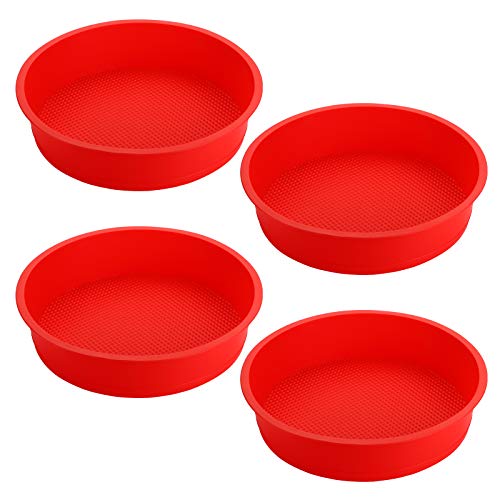
Bekith
4 Pack 9" Silicone Round Cake Pans, Silicone Cake Pans for Baking, Quick Release Baking Mold Round
$12.99 at AmazonEditors' Favorite
Color: Red Size: 9 inches diameter x 2 1/4 inches deep Dimensions: 6.99999999286 x 8.49999999133 x 1.799999998164 inches Weight: 0.75 pounds Product Group: Kitchen Binding: Electronics
Shop NowWebake Tart Pan Silicone Pie/Flan Pan 9.5 Inch Quiche Baking Dish Non-Stick Pizza Pie Mold

Webake
Tart Pan Silicone Pie/Flan Pan 9.5 Inch Quiche Baking Dish Non-Stick Pizza Pie Mold
$14.99 at AmazonGreat Value
Color: Green Size: Medium Dimensions: 11.70078738964 x 10.29921258792 x 1.20078740035 inches Weight: 0.4 Pounds Product Group: Kitchen Binding: Kitchen
Shop NowWebake 5 Inch Silicone Mini Pie Pans for Baking, Non-stick Small Tart Pan Quiche Baking Dish, BPA-Free Set of 4

Webake
5 Inch Silicone Mini Pie Pans for Baking, Non-stick Small Tart Pan Quiche Baking Dish, BPA-Free Set of 4
$12.99 at AmazonColor: Multicolor Size: 5 Inch Dimensions: 5.8 x 5.8 x 1.4 inches Weight: 0.50926782522 pounds Product Group: Kitchen Binding: Kitchen
Shop NowNagpew 2 Pack 9 Inch Silicone Round Cake Pans, Reinforced Metal Frame

Color: White Size: 12’’L x 9.8’’W x 1.8’’H Dimensions: 9.8 x 12 x 1.8 inches Product Group: Kitchen
Shop NowTo encounter 9 Inch Silicone Round Cake Pans, 2 Pack Nonstick Silicone Baking Pans Set, Food Grade Cake Molds, with Metal Reinforced Frame More Strength

To encounter
9 Inch Silicone Round Cake Pans, 2 Pack Nonstick Silicone Baking Pans Set, Food Grade Cake Molds, with Metal Reinforced Frame More Strength
$15.99 at AmazonColor: Light Grey Size: 2-Pack 9-Inch Round Cake Pan Dimensions: 11 x 9 x 2 Inches Weight: 0.4960400895 pounds Product Group: Kitchen Binding: Kitchen
Shop Now



Write Your Review
No reviews yet. Be the first to share your experience!