

Most people walk into the stainless-versus-nonstick decision expecting to crown one winner and then stock the whole kitchen with it. That single assumption is the mistake, and it is the reason a lot of cooks end up disappointed with pans that cost real money. Someone buys a heavy tri-ply stainless set, cracks two eggs into it on the first morning, watches them weld to the metal, and decides stainless is overpriced junk. Someone else buys a non-stick skillet, tries to sear a steak in it, gets grey meat instead of a brown crust, and blames the coating. Here is the uncomfortable part: both pans were doing exactly what they were built to do. The buyer simply asked the wrong pan to do the job.
The fix is not spending more. It is understanding that these two surfaces solve two different problems, and choosing based on what you actually cook on a normal Tuesday night rather than on which pan looks more impressive in the reviews.
The mistake that quietly ruins good cookware
The trap is treating this as an either-or contest. Marketing pushes it that way because a single-answer story sells complete matching sets. But no experienced cook I know owns only one kind of pan. They keep stainless for the jobs stainless is good at and a beat-up non-stick for the jobs it is good at, and they never expect either one to cover for the other.
Once you stop looking for a universal pan, the whole decision gets easier and cheaper. You are no longer trying to justify a premium purchase that has to do everything. You are just matching a tool to a task, the same way you would not use a bread knife to chop an onion. Keep that framing in mind and the rest of this comes together fast.
What stainless steel is genuinely good at
Stainless steel is a reactive cooking surface, and that is a feature, not a defect. When you lay a chicken thigh skin-side down in a hot stainless pan, the proteins grip the metal, brown deeply, and then release on their own once the crust has formed. That grip-then-release cycle is where a huge amount of flavor comes from. The browned bits left behind, what cooks call the fond, dissolve into wine or stock to build a pan sauce in about ninety seconds. You cannot do that in non-stick, because nothing stays put long enough to brown.
Stainless also shrugs off heat that would wreck a coating. You can push it past 500 degrees, slide it under a broiler, deglaze with acidic tomato or lemon, scrape it with a metal spatula, and send it through the dishwasher for years without changing how it cooks. A well-made clad pan, with a core of aluminum or copper sandwiched between steel layers, spreads heat evenly and lasts decades. Plenty of home cooks are still using the stainless skillets they bought in the 1990s, and those pans work as well now as the day they were unwrapped.
The tradeoff is a learning curve. Stainless demands a proper preheat, enough fat in the pan, and the patience to let food release itself instead of prying at it. Rush any of those three and food sticks, which is exactly the moment most first-time buyers give up on it.
Where non-stick earns its keep
Non-stick exists for the foods that stainless punishes you for cooking: eggs, omelets, crepes, delicate white fish, pancakes, anything that would tear itself apart if it gripped the surface. A morning omelet slides out of a non-stick pan in one clean piece with a teaspoon of butter, or none at all. That is genuinely useful, which is why even professional kitchens that run entirely on stainless and carbon steel still keep a couple of non-stick pans around strictly for egg service.
It is also the more forgiving pan to learn on and the faster one to clean. Less fat, less fuss, a quick wipe with a soft sponge and you are done. For a new cook or a busy weeknight, that lower friction is worth a lot.
The catch is lifespan. Every non-stick coating wears out eventually. The good ones give you three to five years of regular use, and the bargain-bin ones far less. Heat is the enemy here: above roughly 450 degrees most coatings begin to break down, which is why non-stick is a poor pick for searing or any oven work. Metal utensils scratch it, and once the surface is scored it is effectively finished, no matter how new the pan looks.
The specs that actually matter on the box
For stainless, the phrase worth hunting for is “fully clad” or “tri-ply,” which means the conductive metal core runs through the entire pan, walls included, and not just a disc glued to the bottom. Disc-bottom pans heat unevenly and develop hot spots that scorch a sauce in one patch while another sits lukewarm. Weight tells you a lot too. A good 10-inch skillet has real heft in the hand; flimsy stainless warps on high heat and starts rocking on a flat burner.
For non-stick, the coating chemistry is what counts. Modern PTFE coatings are manufactured without PFOA, which was phased out of production years ago, so that old health worry no longer applies to new pans. Ceramic coatings get sold as a natural alternative but tend to lose their slickness faster than a quality PTFE surface. A reinforced or hard-anodized body resists warping and holds heat far more steadily than thin stamped aluminum. And the oven-safe temperature rating quietly tells you how much abuse the handle and the coating are actually built to take.
The cost question people get backward
Buyers routinely spend their money in the wrong proportions. They pour a large budget into a premium non-stick set and buy the cheapest stainless they can find, when the smarter split is the reverse. Non-stick is a consumable. However much you spend, you are going to throw it away in a few years, so a mid-priced pan treated gently gives you nearly all the value of an expensive one.
Stainless is the opposite. It is a buy-it-once tool, so a well-made clad skillet is one of the few places in the kitchen where paying more genuinely pays off over time. Spend where longevity is real, save where the pan is going to wear out regardless, and your money stretches much further than it would on a single matching set.
Match the pan to the food you actually make
Forget the star ratings for a moment and think about your last week of dinners. If most nights are eggs, quick vegetable sautes, fish fillets, and reheating leftovers, a non-stick pan will make you happier day to day, and you can comfortably skip the expensive stainless set. If you regularly sear meat, build pan sauces, roast in the oven, or simmer acidic braises, stainless is the workhorse you will reach for again and again.
Most home cooks land somewhere in the middle, which is why the honest recommendation is usually a small kit rather than one heroic pan. One solid clad stainless skillet, one non-stick pan reserved for eggs and fish, and a stainless saucepan will handle roughly everything a home kitchen throws at you. That trio costs less than a matching ten-piece set of either type, and every piece in it is pulling its weight instead of sitting in a cabinet unused.
Keeping either one alive
Stainless rewards heat control above all. Preheat the empty pan for a minute or two, add fat, then add food, and let it release on its own schedule instead of yanking at it. Stuck-on bits lift with a short soak and a scrub, or with a splash of water and a wooden spoon while the pan is still warm and the fond loosens itself.
Non-stick asks mostly for restraint. Keep it at medium heat or lower, use wooden or silicone tools only, never blast an empty coated pan on a high flame, and hand-wash it even when the box promises it is dishwasher-safe. Replace it the moment food starts to cling or the surface looks scratched. A failing non-stick pan is worth less than the eggs you will waste fighting it every morning.
Can one pan really do the job of both?
The closest single option is a lightly seasoned carbon-steel skillet, which browns far better than non-stick and sticks much less than raw stainless once it builds a patina. A hard-anodized pan with a durable coating gets partway there from the other direction. Neither one fully replaces the pair, though. Hybrid pans with raised stainless ridges over a non-stick base browns a little and releases a little, but it does neither as well as a dedicated pan. If you cook a genuine range of food, two purpose-built pans will always beat one clever compromise.
Is non-stick safe to cook on at high heat?
The coating itself is inert at normal cooking temperatures, but overheating an empty non-stick pan past roughly 500 degrees can degrade the surface and release fumes that are genuinely dangerous to pet birds and unpleasant for people. The practical rule is short: never preheat a non-stick pan while it is empty, keep it at medium or below during cooking, and switch to stainless or cast iron for anything that needs a hard sear. Handled that way, today’s PFOA-free coatings are considered safe for everyday use.
How long should a non-stick pan actually last?
A decent non-stick pan used carefully gives you three to five years before the coating loses its release. Cheap pans can fade within a single year, especially if they meet metal utensils or high heat. Because the coating is a consumable that wears out no matter what, it rarely makes sense to spend a fortune on one. Buy a mid-priced pan, treat it gently, and plan to replace it on a schedule. Stainless, by contrast, is a one-time purchase you keep for decades, and that difference is worth weighing every time you set a budget.
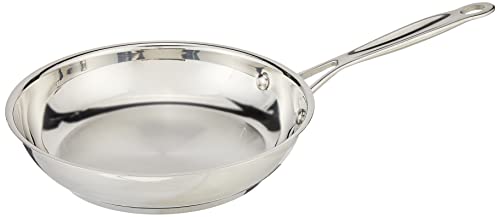
Cuisinart
Small-Meal Searing and Sautéing: Cuisinart 8-Inch Stainless Steel Open Skillet
The Cuisinart 8-inch open skillet handles small-batch searing and sautéing, with an aluminum-encapsulated base that distributes heat evenly to reduce hot spots. It suits solo cooks, couples, and kitchens needing a compact stainless steel pan that works across induction, electric, and gas cooktops.
Pros and Cons
Pros
- The mirror-finished stainless steel exterior offers a classic appearance and durable everyday construction.
- An aluminum-encapsulated base helps eliminate hot spots by distributing heat across the pan.
- The skillet is dishwasher safe and does not require specialized cleaning.
- Cuisinart backs the BPA-free skillet with a lifetime warranty.
Cons
- The compact 8-inch cooking surface is not suitable for large portions or family-size meals.
- The provided product information does not specify a maximum oven temperature.

VocVoi
Everyday Sautéing and Frying: VocVoi 12-Inch Tri-Ply Stainless Steel Pan with Lid
This 12-inch VocVoi tri-ply stainless steel pan supports sautéing, frying, broiling, and braising with quick, even heat transfer as its biggest advantage. It suits cooks who want non-coated cookware compatible with induction, other stovetops, ovens, and dishwashers.
Pros and Cons
Pros
- Tri-ply stainless steel construction is designed to improve heat distribution over pure steel.
- The non-toxic, non-coated cooking surface does not react with food or alter flavors.
- The ergonomic handle and broad stovetop compatibility support comfortable daily cooking.
- A lid adds versatility for covered cooking, braising, and retaining heat.
Cons
- The listing does not provide the pan's weight, so buyers cannot judge its lifting feel before purchase.
- Stainless steel can require more attention during cooking than nonstick cookware to reduce sticking.

Fruikit
Everyday Simmering and Stir-Frying: Fruikit 20-Piece Stainless Steel Cookware Set
Fruikit's 20-piece cookware set handles simmering, sauce-making, steaming, and stir-frying, with a 3-ply skillet designed for faster, more even heating. It suits home cooks who want one induction-compatible set with multiple pot sizes, matching lids, utensils, and dishwasher-safe cleanup.
Pros and Cons
Pros
- The 20-piece configuration includes four pots, matching lids, a skillet, a steamer, three utensils, and seven pot protectors.
- The skillet uses food-grade 3-ply stainless steel with a scratch-resistant surface suitable for metal spatulas.
- Ergonomic non-slip handles are designed to improve control and reduce hand fatigue during longer cooking sessions.
- Tight-sealing lids help retain cooking aromas and nutrients.
Cons
- The 20-piece collection may require considerable cabinet or drawer space.
- The product data does not specify the cookware weight or maximum oven temperature.

Ranbomer
Tri-Ply Stainless Steel Frying Pan for Searing and Sautéing: Ranbomer 10 Inch PFAS-Free Induction-Safe Skillet
This 10-inch tri-ply stainless steel skillet delivers even heat across its flat cooking surface for searing steaks and sautéing vegetables without PFAS, PFOA, or PTFE coatings. Buy it if you want a coating-free pan that works on gas, electric, ceramic, and induction cooktops and moves from stovetop to oven.
Pros and Cons
Pros
- Coating-free stainless surface handles high-heat searing that would ruin a nonstick pan.
- Induction compatibility covers every common cooktop type without a separate pan.
- Riveted handle construction avoids the weak welds that fail on cheaper skillets.
- The 10-inch surface fits two portions of protein without crowding.
Cons
- Bare stainless steel requires proper preheating and fat, or eggs and fish will stick.
- The stainless handle heats up on the stovetop and in the oven, so keep a towel or mitt within reach.

Cuisinart
Chef's Classic 11-Piece Cookware Set for Even Heat Cooking
This stainless steel cookware set heats evenly with an aluminum encapsulated base, eliminating hot spots that ruin sauces and seared proteins. Buy it if you cook multiple dishes simultaneously and want professional-grade durability without replacing pans every few years.
Pros and Cons
Pros
- Induction-compatible base works on all cooktop types, so you're not locked into one kitchen setup if you upgrade appliances.
- Riveted handles and helper grips feel solid after years of daily use, with no wobbling or separation like budget cookware.
- 11-piece assortment covers most home cooking scenarios: sauces, stocks, sautéing, and steaming without buying additional pans.
Cons
- Stainless steel exterior shows fingerprints and water spots, requiring frequent wiping to maintain a polished look.
- Heavier than non-stick alternatives, so moving full pots demands more effort and can strain wrists during extended cooking sessions.
The Best Deals This Week*
-
Small-Meal Searing and Sautéing
$17.95
($19.95)Save $2.00 -
Everyday Sautéing and Frying
$28.47
($39.99)Save $11.52 -
Everyday Simmering and Stir-Frying
$69.99
($79.99)Save $10.00 -
Tri-Ply Stainless Steel Frying Pan for Searing
$17.99
($29.99)Save $12.00
*Deals are selected by our commerce team
Cuisinart Small-Meal Searing and Sautéing: Cuisinart 8-Inch Stainless Steel Open Skillet
Cuisinart
Small-Meal Searing and Sautéing: Cuisinart 8-Inch Stainless Steel Open Skillet
The Cuisinart 8-inch open skillet handles small-batch searing and sautéing, with an aluminum-encapsulated base that distributes heat evenly to reduce hot spots. It suits solo cooks, couples, and kitchens needing a compact stainless steel pan that works across induction, electric, and gas cooktops.
$17.95 at AmazonEditors' Favorite
Color: Chef's Classic Stainless Size: 8-Inch Dimensions: 15.625 x 9.25 x 1.65 Inches Weight: 1 pounds Product Group: Kitchen Binding: Kitchen
Shop NowVocVoi Everyday Sautéing and Frying: VocVoi 12-Inch Tri-Ply Stainless Steel Pan with Lid
VocVoi
Everyday Sautéing and Frying: VocVoi 12-Inch Tri-Ply Stainless Steel Pan with Lid
This 12-inch VocVoi tri-ply stainless steel pan supports sautéing, frying, broiling, and braising with quick, even heat transfer as its biggest advantage. It suits cooks who want non-coated cookware compatible with induction, other stovetops, ovens, and dishwashers.
$28.47 at AmazonGreat Value
Color: Stainless Steel Size: 12 inch with Lid Dimensions: 12 x 12 x 3 inches Weight: 5 pounds Product Group: Kitchen Binding: Kitchen
Shop NowFruikit Everyday Simmering and Stir-Frying: Fruikit 20-Piece Stainless Steel Cookware Set
Fruikit
Everyday Simmering and Stir-Frying: Fruikit 20-Piece Stainless Steel Cookware Set
Fruikit's 20-piece cookware set handles simmering, sauce-making, steaming, and stir-frying, with a 3-ply skillet designed for faster, more even heating. It suits home cooks who want one induction-compatible set with multiple pot sizes, matching lids, utensils, and dishwasher-safe cleanup.
$69.99 at AmazonColor: Gray Size: 20P Cookware Set Dimensions: 0.1 x 0.1 x 0.1 inches Weight: 0.1 pounds Product Group: Kitchen
Shop NowRanbomer Tri-Ply Stainless Steel Frying Pan for Searing and Sautéing: Ranbomer 10 Inch PFAS-Free Induction-Safe Skillet
Ranbomer
Tri-Ply Stainless Steel Frying Pan for Searing and Sautéing: Ranbomer 10 Inch PFAS-Free Induction-Safe Skillet
This 10-inch tri-ply stainless steel skillet delivers even heat across its flat cooking surface for searing steaks and sautéing vegetables without PFAS, PFOA, or PTFE coatings. Buy it if you want a coating-free pan that works on gas, electric, ceramic, and induction cooktops and moves from stovetop to oven.
$17.99 at AmazonColor: Silver Size: 10 Inch Dimensions: 19.5 x 11 x 3.15 inches Weight: 2 Pounds Product Group: Kitchen Binding: Kitchen
Shop NowCuisinart Chef's Classic 11-Piece Cookware Set for Even Heat Cooking
Cuisinart
Chef's Classic 11-Piece Cookware Set for Even Heat Cooking
This stainless steel cookware set heats evenly with an aluminum encapsulated base, eliminating hot spots that ruin sauces and seared proteins. Buy it if you cook multiple dishes simultaneously and want professional-grade durability without replacing pans every few years.
Check PriceBrand Name: Cuisinart Number of Pieces: 11 Included Components: 11- Piece Cookware With Lid: Yes Manufacturer: Cuisinart Manufacturer Warranty Description: Lifetime warranty UPC: 086279040572 Global Trade Identification Number: 00086279040572 Set Name: Chef's-Classic-Stainless-Cookware-Collection Model Number: 77-11G Manufacturer Part Number: 77-11G Item Type Name: Chef's-Classic-Stainless-Cookware-Collection Unit Count: 1.0 Count Best Sellers Rank: #771 in Kitchen & Dining (See Top 100 in Kitchen & Dining) #6 in Kitchen Cookware Sets ASIN: B005H05SXM Customer Reviews: 4.3 4.3 out of 5 stars (9,346) 4.3 out of 5 stars Is Oven Safe: Yes Material Type: Aluminum, Stainless Steel Handle Material: Stainless,Stainless Steel,Steel, Stainless,Stainless Steel,Steel Is the item dishwasher safe?: Yes Material Type Free: PFAS Free Closure Material: Stainless Steel Cookware Set Is Compatible With: Gas Cooktop, Glass Ceramic Cooktop, Induction Cooktop Intended Use: residential Utensil Compatibility: Stainless Steel Is Cookware Induction Compatible: Yes Other Special Features of the Product: Electric Stovetop Compatible, Gas Stovetop Compatible, Induction Stovetop Compatible Compatibility Options: Can be used on stovetop, in oven, or under broiler Size: 11-Piece Volume: 2.5 Quarts Item Weight: 20.7 Pounds Color: 11-Piece Material: Aluminum, Stainless Steel Brand: Cuisinart
Shop Now




Write Your Review
No reviews yet. Be the first to share your experience!