

How Thermal Mass and Insulation Keep Wine at Temperature
A stainless steel wine bucket works through two complementary mechanisms: thermal mass and surface insulation. The metal walls absorb heat from the surrounding air while the ice water inside creates a cold reservoir. Stainless steel’s density means the bucket itself becomes part of the cooling system, maintaining a stable temperature gradient between the wine bottle and the ambient room.
The double-wall construction found in better models creates an air gap that slows heat transfer. This vacuum or air layer functions like a thermos, reducing the rate at which room-temperature air warms the chilled contents. Single-wall buckets rely entirely on ice volume and replacement frequency, which works but demands more attention during service.
Condensation management matters more than most buyers realize. When cold metal meets humid air, water droplets form on the exterior and drip onto tables or bar tops. Brushed or matte finishes hide water spots better than mirror-polished surfaces, and some designs include a drip tray or silicone base ring to catch runoff.
Capacity and Bottle Fit
Standard wine bottles measure 750ml with a diameter around 3 inches, but Champagne and Burgundy bottles run wider. A 4-liter bucket accommodates one standard bottle with enough ice to surround it, while 6-liter models fit two bottles or one magnum. Measure your most-used bottle types before buying—an oversized bucket wastes ice and reduces cooling efficiency because the thermal mass spreads too thin.
Depth is as important as diameter. Bottles should sit low enough that the liquid level inside aligns with the ice water level outside. If only the bottom third of the bottle contacts the cold bath, the top portion warms from room air. Quality buckets stand 8 to 9 inches tall, enough to chill the wine up to the shoulder of the bottle.
Handle design affects usability more than aesthetics suggest. Riveted handles withstand the weight of ice, water, and glass without flexing. Welded or spot-attached handles can separate under repeated use, especially when servers carry a full bucket one-handed through a crowded dining room. Look for handles wide enough to grip with four fingers, not just a two-finger hook.
Material Grade and Finish Durability
18/8 and 18/10 stainless steel refer to chromium and nickel content. Both resist rust and corrosion from prolonged contact with ice water and wine tannins. The nickel percentage affects polish retention—18/10 maintains its luster longer under daily commercial use, while 18/8 shows wear patterns sooner but costs less upfront.
Gauge thickness determines dent resistance. Thin-gauge steel buckles if knocked against a table edge or dropped onto tile flooring. Thicker walls add weight but survive the rough handling common in catering and event service. A bucket that dents loses its insulating air gap in double-wall designs, turning a premium product into a basic single-wall model.
Brushed finishes hide scratches and fingerprints better than polished surfaces, a practical advantage during service when staff handle buckets repeatedly without time to wipe them down. Mirror finishes photograph well and suit formal presentations, but they require constant buffing to maintain that showroom appearance.
Ice Retention and Melt Rate
Single-wall buckets melt ice quickly because room air directly heats the metal exterior. Expect to refresh the ice every 45 to 60 minutes during service in a 72-degree room. Double-wall insulated models extend that window to two or three hours, reducing labor and ice consumption during events.
The ratio of ice to water matters for heat transfer. Pure ice creates air pockets that insulate rather than conduct cold to the bottle. A slurry of half ice, half water maximizes surface contact with the glass, chilling the wine faster and more uniformly. Starting with crushed ice speeds the initial cool-down compared to large cubes, which leave gaps around the bottle.
Some buckets include a removable inner liner or false bottom that prevents the bottle from sitting directly on ice, which can freeze condensation to the label or create an unstable base. These features add cost but improve the service experience, especially with expensive bottles where label preservation matters to guests.
Portability and Storage
Weight when full determines whether a bucket stays stationary or moves from kitchen to table. A 4-liter model filled with ice, water, and a bottle weighs around 12 pounds—manageable for most adults but awkward for one-handed carrying. Larger 6-liter or 8-liter buckets approach 20 pounds and benefit from two-hand or tray transport.
Nesting design saves storage space in commercial kitchens and home bar areas with limited shelving. Straight-walled buckets stack tightly, while flared or tapered models waste vertical space. Check the inner diameter at the base before buying multiples for catering or restaurant use.
Collapsible or folding handles reduce the footprint on crowded bar tops and shelves. Fixed handles stick out and catch on adjacent items, making storage more frustrating than necessary. A simple hinge or removable handle design solves this without adding mechanical complexity that could fail.
Cleaning and Maintenance
Stainless steel tolerates dishwasher cycles, but hard water leaves mineral deposits that dull the finish over time. Hand washing with mild detergent and a soft sponge preserves the surface better than abrasive pads, which scratch even brushed finishes and create crevices where bacteria can hide.
Dried wine residue from spills or overflow bonds to the metal and requires soaking to remove without scrubbing. Rinsing the bucket immediately after each use takes ten seconds and prevents buildup. For buckets used daily in professional settings, a weekly white vinegar rinse dissolves mineral scale and restores shine.
Welded seams and rolled edges collect grime in tight corners that sponges miss. A soft-bristle brush reaches these areas without scratching. Avoid chlorine-based cleaners, which can pit stainless steel over time despite its corrosion resistance, especially in cheaper alloys with lower nickel content.
Design Features That Improve Service
Integrated drip trays catch condensation runoff, protecting wood furniture and linen tablecloths from water rings. Removable trays simplify cleaning but add a piece that can get lost during busy service. Built-in channels or grooves that direct water to a collection point work almost as well with fewer parts.
Silicone or cork base pads prevent the bucket from sliding on smooth surfaces and dampen the metallic clang when staff set it down on granite or tile. These pads wear out and need replacement every year or two in high-volume use, so check that spares are available from the manufacturer.
Some premium models include a lid or cover that retains cold between service intervals, useful for outdoor events where sun exposure accelerates ice melt. The lid also keeps insects out of the ice water at garden parties and patio dinners, a small detail that improves the guest experience.
Frequently Asked Questions
How long does a stainless steel wine bucket keep wine cold?
Single-wall buckets maintain proper serving temperature for 45 to 60 minutes before requiring fresh ice, while double-wall insulated models extend that period to two or three hours depending on ambient temperature and initial ice volume. Starting with pre-chilled wine reduces the thermal load and stretches ice longevity further. The key variable is the ratio of ice mass to water volume—a thick slurry chills faster and lasts longer than sparse ice cubes floating in water.
Can you use a wine bucket for Champagne bottles?
Standard Champagne bottles measure about 3.5 inches in diameter compared to 3 inches for regular wine bottles, so you need a bucket with at least a 4.5-inch interior width to accommodate the girth plus surrounding ice. Many manufacturers label their larger models as “wine and Champagne” buckets to clarify compatibility. Depth matters too—Champagne bottles stand taller than Bordeaux shapes, requiring at least 9 inches of interior height to submerge the liquid portion in the cold bath.
What is the difference between single-wall and double-wall wine buckets?
Single-wall buckets consist of one layer of stainless steel with no insulation, relying entirely on ice volume to maintain temperature. They cost less but melt ice faster and develop heavy condensation on the exterior. Double-wall buckets sandwich an air gap or vacuum layer between two steel shells, slowing heat transfer from room air to the cold interior. This insulation cuts ice consumption by roughly half and reduces condensation dripping, but adds weight and usually doubles the price. For occasional home use, single-wall performs adequately; for professional service or extended events, double-wall insulation pays for itself in reduced ice costs and labor.
Chef Craft Hammered Champagne Bucket. 4 Quart. Stainless Steel

Editors' Favorite
Color: Stainless Steel Size: 4 Quart Dimensions: 8.5 x 8.5 x 5 Inches Product Group: Kitchen Binding: Kitchen
Shop NowOggi Stainless Steel Double Wall Wine Cooler - Insulated Tabletop Wine Chiller for White Wine & Champagne, Fits Most Standard Sized Bottles

Oggi
Stainless Steel Double Wall Wine Cooler - Insulated Tabletop Wine Chiller for White Wine & Champagne, Fits Most Standard Sized Bottles
$19.99 at AmazonGreat Value
Color: Stainless Steel Size: Wine Cooler Dimensions: 5 x 5 x 7.2 inches Weight: 0.96 pounds Product Group: Kitchen Binding: Kitchen
Shop NowBREKX Insulated Hammered Stainless Steel Beverage Tub & Ice Bucket, 12QT
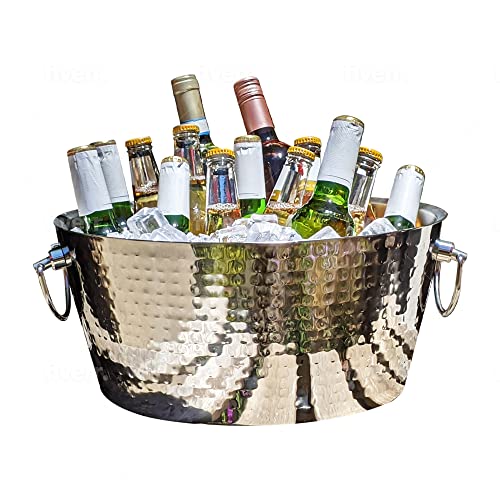
Color: Silver Size: Large Dimensions: 15 x 15 x 7 inches Weight: 4.8942622164 pounds Product Group: Kitchen Binding: Kitchen
Shop NowWinco Stainless Steel Wine Cooler

Color: Stainless Steel Size: Cooler Dimensions: 4.5 x 4.5 x 7.75 inches Weight: 1.1 pounds Product Group: Kitchen Binding: Kitchen
Shop NowZENFUN 2 Pack 3 Quart Ice Bucket with Handles, Beverage Tub with Handles, Galvanized Metal Ice Bucket, Drink and Wine Chiller for Bar, Party, BBQ, Great for Indoor and Outdoor Use

ZENFUN
2 Pack 3 Quart Ice Bucket with Handles, Beverage Tub with Handles, Galvanized Metal Ice Bucket, Drink and Wine Chiller for Bar, Party, BBQ, Great for Indoor and Outdoor Use
$22.99 at AmazonColor: Champagne Dimensions: 8 x 8 x 7.5 inches Weight: 0.149375 pounds Product Group: Kitchen Binding: Kitchen
Shop Now





Write Your Review
No reviews yet. Be the first to share your experience!