

How Ceramic Nonstick Coatings Actually Work
Ceramic cookware gets its nonstick properties from a sol-gel coating derived from silicon and oxygen. Manufacturers spray liquid silica onto aluminum or stainless steel bases, then cure it at temperatures exceeding 800°F. This process creates a glass-like surface that’s naturally slippery and doesn’t rely on synthetic polymers like PTFE. The coating typically measures between 20 and 50 microns thick—about half the width of a human hair.
Unlike traditional nonstick surfaces that use fluoropolymers, ceramic coatings bond through inorganic chemistry. Silicon dioxide molecules form a network that’s inherently hydrophobic, meaning fats and liquids bead up rather than spreading. This explains why eggs slide around even with minimal oil. The coating also resists scratching better than soft PTFE layers, though metal utensils will still damage it over time.
Heat distribution depends entirely on the base metal underneath the ceramic layer. Aluminum cores heat quickly but can warp at high temperatures. Stainless steel with an aluminum or copper core offers more stability, though these pans weigh considerably more. The ceramic itself doesn’t conduct heat—it simply provides the cooking surface while the metal does the actual work.
Performance Trade-Offs You Need to Know
Ceramic pans excel during their first six months. Food releases cleanly, cleanup takes seconds, and you can cook with a fraction of the fat required by stainless steel. But the coating degrades faster than PTFE. Thermal cycling causes microscopic cracks that trap oils and carbonized residue. Most ceramic pans lose their nonstick properties within 12 to 18 months of regular use.
High heat accelerates this breakdown. While manufacturers often claim their pans handle temperatures up to 850°F, cooking above 400°F damages the silica network. The coating doesn’t emit toxic fumes like overheated PTFE, but it will brown, stain, and develop sticky patches. Medium heat preserves the surface longer and produces better results for most cooking tasks.
Acidic ingredients also shorten lifespan. Tomato sauce, vinegar, and citrus juice etch the coating gradually. This doesn’t make the pan unsafe, but it creates rough spots where eggs and fish will stick. If you frequently cook with acidic ingredients, expect to replace ceramic pans more often than advertised.
Base Material Determines Durability
Budget ceramic pans typically use pressed aluminum bases. These heat quickly and keep prices low, but they’re prone to warping. Drop a cold pan onto a hot burner or run it under cold water while still hot, and the base will deform. Once warped, the pan rocks on flat cooktops and develops hot spots that burn food in patches.
Forged aluminum costs more but resists warping better. The manufacturing process compresses the metal under extreme pressure, creating a denser structure. These pans feel noticeably heavier than stamped versions. They also maintain flat contact with heating elements, which matters especially on induction and glass cooktops where gaps reduce efficiency.
Stainless steel exteriors with aluminum cores offer the best of both materials. The stainless provides structural stability and works on all cooktop types including induction. The aluminum core spreads heat evenly from the center to the rim. These hybrid designs cost two to three times more than basic aluminum pans, but they outlast cheaper options even after the ceramic coating wears out.
Handle and Weight Considerations
Riveted handles create crevices where food residue accumulates. Welded or molded handles eliminate this problem but may not feel as secure. Test the balance before buying—ceramic-coated pans with stainless cores can weigh over three pounds when empty. Add food and oil, and you’re lifting four or five pounds one-handed. If you have wrist issues or cook large batches, this matters more than marketing materials suggest.
Handle material affects stovetop safety. Silicone grips stay cool during stovetop cooking but can’t go in ovens above 350°F. Stainless steel handles tolerate any oven temperature but require mitts even after five minutes on a burner. Some manufacturers use hollow stainless handles that heat more slowly, though they still get too hot to touch eventually.
What to Cook (and What to Avoid)
Ceramic pans shine for eggs, fish, and delicate proteins that stick to stainless steel. You can cook scrambled eggs with just a teaspoon of butter and have them slide onto the plate in one motion. Pan-seared fish fillets release cleanly without tearing. Thin cutlets and diced vegetables move freely when you shake the pan.
Don’t sear thick steaks or attempt fond development. Ceramic surfaces don’t brown proteins as effectively as stainless steel or cast iron. The coating also breaks down faster under the sustained high heat required for proper crusting. Save these pans for medium-heat tasks where nonstick properties matter more than browning.
Acidic braises and sauces will stain the coating. The pan remains food-safe, but white ceramic turns tan or brown permanently. Dark-colored ceramic hides discoloration better. If aesthetics matter—and they do if you’re displaying cookware on open shelves—choose darker finishes or accept that white pans won’t stay pristine.
Maintenance That Actually Extends Lifespan
Hand washing preserves ceramic longer than dishwashers. Harsh detergents and water jets erode the coating gradually. Use warm water, mild soap, and a soft sponge. Nylon scrubbers remove stuck-on food without scratching. Avoid steel wool and abrasive cleaners entirely—they’ll strip the coating in weeks.
Let pans cool completely before washing. Thermal shock damages both the ceramic and the metal base. If you must clean immediately, use warm water rather than cold. This single habit prevents more failures than any other maintenance step.
A thin layer of oil applied after each washing helps maintain the nonstick surface. Wipe the pan with a paper towel dampened with vegetable or canola oil. This fills microscopic pores in the ceramic and prevents oxidation. The coating lasts months longer with this simple routine.
Price Ranges and What They Mean
Basic ceramic pans start around $20 for a ten-inch skillet. These use thin stamped aluminum and single-layer ceramic coatings. They work fine for light use—occasional eggs or reheating leftovers. Expect the coating to degrade within a year of regular cooking. At this price point, they’re essentially disposable.
Mid-range options between $40 and $80 feature thicker aluminum, better heat distribution, and reinforced ceramic layers. Some include titanium or diamond particles in the coating for added scratch resistance. These pans typically last 18 to 24 months before nonstick properties fade. They represent the best value for home cooks who use nonstick pans several times weekly.
Premium ceramic cookware exceeds $100 per piece. You’re paying for stainless steel construction, thick aluminum cores, and multi-layer ceramic systems. These pans retain heat better, resist warping, and work on induction cooktops. The ceramic still wears out eventually, but the underlying pan remains useful for other cooking methods. This tier makes sense if you cook daily and want equipment that lasts beyond the nonstick phase.
Frequently Asked Questions
Can you use metal utensils on ceramic cookware?
Metal utensils will scratch ceramic coatings despite marketing claims about scratch resistance. While ceramic is harder than PTFE, it’s still softer than stainless steel. Each scratch creates a rough patch where food can stick. Silicone, wood, and nylon utensils prevent damage and extend the coating’s effective lifespan by months. If you accidentally use metal once or twice, the pan won’t be ruined, but repeated use will degrade the surface quickly. Most warranties explicitly exclude damage from metal utensils.
Why does food start sticking to ceramic pans after a few months?
Cooking oils polymerize on ceramic surfaces through repeated heat exposure, creating an invisible sticky film. This happens faster at high temperatures and with oils that have low smoke points. Additionally, microscopic thermal cracks develop in the coating from temperature changes. These cracks trap carbonized food particles that soap and water can’t remove. Soaking the pan in warm water with baking soda for an hour can dissolve some buildup, but the coating won’t return to like-new condition. This degradation is normal and happens to all ceramic cookware eventually.
Are ceramic-coated pans safe for high-heat cooking?
Ceramic coatings don’t release toxic fumes when overheated, unlike PTFE which breaks down above 500°F and emits harmful gases. However, high heat permanently damages the ceramic structure. The coating browns, loses its nonstick properties, and may flake off in extreme cases. Most foods cook perfectly at medium heat, which preserves the pan while achieving good results. If you regularly need temperatures above 400°F for searing or wok cooking, stainless steel or carbon steel perform better and last longer. Ceramic’s safety advantage over PTFE only matters if you keep temperatures moderate.

SENSARTE
Everyday Nonstick Cooking: SENSARTE 14-Piece Ceramic Induction Cookware Set
This 14-piece cookware set handles frying, sautéing, simmering, and boiling, with a ceramic nonstick surface free of PFAS, PTFE, PFOA, PFOS, lead, and cadmium. It suits health-conscious home cooks who want versatile induction-compatible cookware that uses less oil and cleans easily.
Pros and Cons
Pros
- The ceramic coating is free of PFAS, PTFE, PFOA, PFOS, lead, and cadmium.
- The set includes multiple pan sizes, lids, utensils, and pot protectors for a practical starter collection.
- Its stainless steel base supports induction cooking while the aluminum body promotes even heating.
- Glass lids provide cooking visibility and help contain splashes.
Cons
- Hand washing is recommended, which may not suit buyers who prefer dishwasher-safe cookware.
- The provided product information does not specify oven compatibility or a maximum oven-safe temperature.
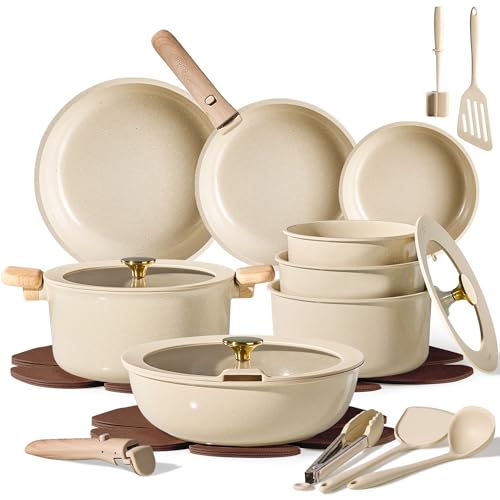
CAROTE
25-Piece Nonstick Ceramic Cookware Set with Removable Handles for Small Kitchens and RVs
This 25-piece ceramic cookware set features detachable handles that save cabinet space and enable oven-safe cooking without PFOA or PFOS. Best for RV owners, apartment dwellers, and anyone who wants a complete nonstick kitchen setup that stores compactly.
Pros and Cons
Pros
- Removable handle system maximizes cabinet and drawer space, especially valuable in RVs and small kitchens.
- Chemical-free ceramic coating provides reliable nonstick release without PFOA, PFOS, or PFAS exposure.
- Reinforced aluminum body resists warping and maintains even heating through repeated daily use.
Cons
- No customer reviews yet, so long-term durability and nonstick lifespan remain unverified by actual users.
- Ceramic nonstick coatings typically require gentler heat and utensils than traditional nonstick to preserve performance.

Redchef
Space-Saving Ceramic Cookware for RV Kitchens: Redchef Detachable Handle 5-Piece Set
The Redchef ceramic cookware set handles everyday stovetop, oven, grill, and fridge tasks while its detachable handle and stackable design save cabinet space. It suits small kitchens, RVs, and campers that need versatile cookware with PFAS, PFOA, and PTFE-free ceramic coating.
Pros and Cons
Pros
- The ceramic coating avoids Teflon, PFAS, PTFE, PFOA, lead, and cadmium.
- The detachable handle and stackable design are useful when cabinet or RV storage is limited.
- The set is compatible with gas, electric, and induction stovetops.
- The included glass lid has a visible silicone rim for covered cooking.
Cons
- Only one detachable handle is included, so switching between pans may require moving it during meal preparation.
- The set includes just one saucepan, two frying pans, and one lid, which may not cover larger meal-preparation needs.
The Best Deals This Week*
-
Everyday Nonstick Cooking
$74.99
($109.99)Save $35.00 -
CAROTE 25-Piece Nonstick Ceramic Cookware Set
$129.99
($199.99)Save $70.00 -
CAROTE 22pcs Ceramic Cookware Sets
$109.99
($159.99)Save $50.00 -
CAROTE 21pcs Ceramic Cookware Set
$129.99
($219.99)Save $90.00 -
Space-Saving Ceramic Cookware for RV Kitchens
$39.99
($59.99)Save $20.00
*Deals are selected by our commerce team
SENSARTE Everyday Nonstick Cooking: SENSARTE 14-Piece Ceramic Induction Cookware Set
SENSARTE
Everyday Nonstick Cooking: SENSARTE 14-Piece Ceramic Induction Cookware Set
This 14-piece cookware set handles frying, sautéing, simmering, and boiling, with a ceramic nonstick surface free of PFAS, PTFE, PFOA, PFOS, lead, and cadmium. It suits health-conscious home cooks who want versatile induction-compatible cookware that uses less oil and cleans easily.
$74.99 at AmazonEditors' Favorite
Color: Ceramic White Product Group: Kitchen
Shop NowCAROTE 25-Piece Nonstick Ceramic Cookware Set with Removable Handles for Small Kitchens and RVs
CAROTE
25-Piece Nonstick Ceramic Cookware Set with Removable Handles for Small Kitchens and RVs
This 25-piece ceramic cookware set features detachable handles that save cabinet space and enable oven-safe cooking without PFOA or PFOS. Best for RV owners, apartment dwellers, and anyone who wants a complete nonstick kitchen setup that stores compactly.
$129.99 at AmazonGreat Value
Color: Oatmeal Size: 25pcs Weight: 17.6810734124 Pounds Product Group: Kitchen
Shop NowCAROTE 22pcs Ceramic Cookware Sets, Pots and Pans Set
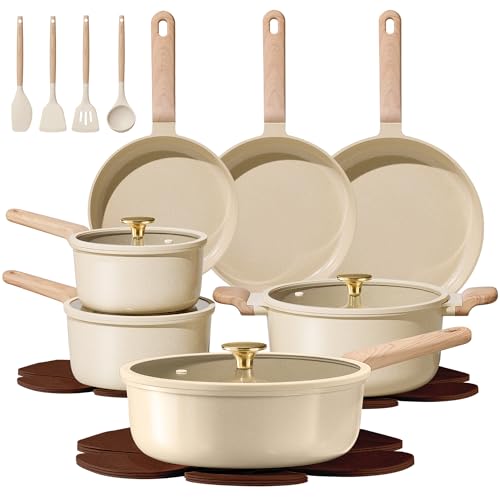
Color: Oatmeal Size: 22 Piece Dimensions: 14.7 x 12.6 x 7.8 Inches Weight: 18.82968179742 pounds Product Group: Kitchen
Shop NowCAROTE 21pcs Ceramic Cookware Set, Pots and Pans Set

Color: Grey Black Size: 21 Piece Dimensions: 22.834645646 x 15.74803148 x 11.023622036 inches Weight: 22.266688462 Pounds Product Group: Kitchen
Shop NowRedchef Space-Saving Ceramic Cookware for RV Kitchens: Redchef Detachable Handle 5-Piece Set
Redchef
Space-Saving Ceramic Cookware for RV Kitchens: Redchef Detachable Handle 5-Piece Set
The Redchef ceramic cookware set handles everyday stovetop, oven, grill, and fridge tasks while its detachable handle and stackable design save cabinet space. It suits small kitchens, RVs, and campers that need versatile cookware with PFAS, PFOA, and PTFE-free ceramic coating.
$39.99 at AmazonColor: Beige White Size: Beige White Dimensions: 13.58 x 13 x 15 Inches Weight: 5.84004532038 pounds Product Group: Kitchen Binding: Kitchen
Shop Now




Write Your Review
No reviews yet. Be the first to share your experience!