

Most people who buy Japanese knife sets make the same mistake: they treat them like the Western knives gathering dust in their kitchen drawer. You grab that gleaming gyuto, use it to hack through a frozen chicken breast, and hear a sickening crack. The edge chips. Now you own an expensive paperweight.
Japanese knives demand respect because they’re built differently. The steel is harder, which means it holds an edge longer but also means it’s more brittle. Throw in carbon steel options that rust if you leave them wet, massive sets where you’ll use three knives and ignore the rest, and sharpening requirements most buyers ignore until their blade can’t cut a tomato. The good news? Once you understand what actually goes wrong, picking the right set becomes straightforward.
Why Japanese Knife Sets Fail in Western Kitchens
The hardness that makes Japanese knives exceptional also makes them fragile in ways most cooks don’t expect. Western knives typically use softer steel around 56-58 HRC on the Rockwell scale. Japanese blades often hit 60-62 HRC or higher. That extra hardness keeps the edge sharp through weeks of prep work, but it also means the blade can chip if you twist it, pry with it, or hit bone at the wrong angle.
Then there’s the carbon steel trap. High-carbon blades sharpen beautifully and feel incredible in your hand, but they oxidize within hours if you don’t dry them immediately after washing. First-time buyers see the brown patina developing and panic, thinking they’ve ruined an expensive knife. Some have, if they let actual rust take hold. Stainless options exist, but many buyers don’t realize they need to choose carefully based on how much maintenance they’re willing to do.
Set size creates another problem. A twelve-piece Japanese knife set sounds impressive until you realize you’re paying for a nakiri you’ll never use, three sizes of utility knives when you need one, and a boning knife that sits in the block for years. Professional Japanese cooks often work with just two or three knives. The home cook who buys a massive set typically uses the chef’s knife and maybe a paring knife while the rest collect fingerprints.
What Actually Matters in a Japanese Knife Set
Start with steel type, because this decision affects everything else. VG-10 stainless appears in mid-range Japanese knives and offers a practical balance: it resists rust, sharpens reasonably well, and holds an edge for weeks of regular use. AUS-10 performs similarly at a lower price point. Both work for cooks who want Japanese performance without constant maintenance.
High-carbon options like White Steel or Blue Steel deliver superior sharpness and edge retention, but they’ll develop patina and require immediate drying after each use. These make sense for enthusiasts who enjoy the ritual of knife care. For everyone else, they create daily anxiety about whether you dried thoroughly enough.
Handle design matters more than most buyers realize. Traditional Japanese wa-handles use an oval or octagonal cross-section that some find more comfortable for precise cutting, while others prefer the familiar heft of a Western handle. You can’t know which you’ll prefer without holding one, so look for sets with at least one Western-handle option.
Edge geometry determines how the knife actually cuts. Japanese knives use thinner blade profiles and sharper angles—often 15 degrees per side or less, compared to 20 degrees for Western knives. This creates that effortless slicing through vegetables that makes them famous. But thinner edges are more fragile. A knife ground to 12 degrees will glide through a tomato but chip if you hit a chicken bone.
The Three-Knife Minimum That Actually Gets Used
Skip the ten-piece sets. A functional Japanese knife collection for most home cooks needs three blades: a gyuto, a petty, and possibly a santoku if you prefer that style. The gyuto is the Japanese chef’s knife, typically 210mm or 240mm long. This becomes your primary knife for 80% of kitchen tasks. The petty is a small utility knife, usually 120-150mm, for detail work and smaller ingredients.
A santoku can replace the gyuto if you prefer a shorter, wider blade with a flatter profile. The shape works better for chopping with an up-and-down motion rather than rocking. Some people find santokus more intuitive; others feel limited by the shorter length.
Specialized blades like nakiris, yanagibas, or debas make sense only if you regularly perform those specific tasks. A nakiri feels amazing when you’re processing vegetables for stir-fry, but most home cooks reach for it twice before defaulting back to the gyuto. Don’t pay for knives you won’t use.
Sharpening Reality and Maintenance You Can’t Skip
Japanese knives arrive scary sharp, then dull like any other blade. The difference is that the harder steel and thinner edge geometry mean you can’t just run them through a pull-through sharpener or use a standard honing steel. Those tools are too aggressive for thin Japanese edges and will damage them.
You need whetstones. A 1000-grit stone handles regular sharpening for most cooks, with a 3000-6000 grit stone for polishing if you want extra refinement. Learning to sharpen on a stone takes practice—plan on ruining the edge on a cheap knife first while you figure out angles and pressure. Some people find the process meditative. Others resent spending twenty minutes every few weeks. Know which type you are before buying.
Daily maintenance is simple but non-negotiable: hand wash immediately after use, dry completely before storing, and never put them in the dishwasher. Japanese blades are especially vulnerable to the combination of high heat, harsh detergent, and banging against other items. Carbon steel requires one extra step—wipe the blade with a thin layer of food-safe mineral oil if you’re storing it for more than a few days.
Price Points and What You’re Actually Paying For
Entry-level Japanese knife sets start around $100-150 for a three-piece set. At this price, you’re getting Japanese-style knives often made with AUS-8 or similar stainless steel, probably manufactured in China or Taiwan rather than Japan. They’ll perform better than supermarket knives but don’t expect the performance that justifies the Japanese knife reputation. These make sense if you want to test whether you’ll actually maintain Japanese knives before spending serious money.
The $200-400 range brings Japanese manufacturing and better steel like VG-10 or VG-MAX. Brands like Shun and Miyabi sit here, offering good performance with some hand-finishing. This is the sweet spot for serious home cooks who want authentic Japanese quality without entering collector territory.
Above $400, you’re paying for hand-forging, premium steel, or master craftsman reputation. A $600 gyuto from a respected smith will perform noticeably better than a $150 knife, but the difference between $600 and $1200 becomes increasingly subtle. Unless you’re a professional or a collecting enthusiast, the extra money buys bragging rights more than functional improvement.
Sets versus individual knives present another calculation. Buying a set saves money compared to purchasing each knife separately, but only if you’ll actually use every piece. A $300 five-piece set where you use two knives costs more than buying those two individually for $200 total. Do the math based on what you’ll realistically use.
Making the Choice That Matches Your Actual Cooking
Honest assessment of your cooking habits predicts success better than anything else. If you cook daily and enjoy the process, maintaining Japanese knives becomes part of the routine. If you cook sporadically and view it as a chore, the maintenance requirements will frustrate you. There’s no shame in deciding that a good German or Western-style knife fits your life better.
For daily cooks ready to commit to maintenance, start with a three-piece set in VG-10 stainless: a 210mm or 240mm gyuto, a 150mm petty, and possibly a santoku. This combination handles nearly everything without creating maintenance anxiety. Budget $250-350 for quality that will last decades. Add a 1000-grit whetstone and plan to spend an hour learning to use it.
Weekend cooks or those new to Japanese knives should start with a single gyuto rather than a set. Buy one good knife around $100-150, use it for a few months, and see whether you actually maintain it properly. If you do, add other pieces. If the knife sits in the drawer because sharpening feels like homework, you’ve saved money by not buying a full set.
Avoid massive sets regardless of cooking frequency. The seventeen-piece set with a wood block looks impressive, but you’ll use four of those knives at most. Smaller sets or individual purchases let you build a collection that actually matches what you cook. Your counter space and your wallet will thank you.
Common Questions About Japanese Knife Sets
Can you put Japanese knives in the dishwasher?
Never put Japanese knives in the dishwasher. The high heat damages both the blade and the handle, especially if it’s wood. The detergent is too harsh for the steel, and the knife will bang against other items, damaging the edge. Hand wash with mild soap, dry immediately, and store properly. This applies to both carbon steel and stainless Japanese knives. The five seconds it takes to hand wash protects your investment and keeps the blade performing correctly.
How often do Japanese knives need sharpening?
Most home cooks who use their Japanese knives regularly need to sharpen every 4-8 weeks, depending on usage and cutting technique. Professional cooks may sharpen weekly or even daily. You’ll know it’s time when the knife stops slicing tomato skin easily or starts requiring pressure to cut. The harder steel in Japanese knives holds an edge longer than Western knives, but when they do dull, you need whetstones to sharpen them properly. Honing between sharpenings extends the interval, but eventually every knife needs actual sharpening to remove metal and recreate the edge.
Are Japanese knife sets worth the price compared to Western knives?
Japanese knife sets justify their price if you cook frequently and commit to proper maintenance. The harder steel holds an edge significantly longer than Western knives, the thinner geometry cuts more precisely with less effort, and a quality Japanese knife will last decades. However, they require hand washing, immediate drying, regular sharpening on whetstones, and careful use to avoid chipping. If those requirements sound annoying rather than manageable, a good German or Western knife costs less and tolerates more abuse. The performance difference is real, but only matters if you’ll actually maintain the knives properly.

Matsato
Everyday Kitchen Prep Knife: Matsato Osuren 6.3-Inch Japanese Stainless Steel Chef Knife
The Matsato Osuren handles slicing, chopping, and cutting vegetables, meat, and herbs, with balanced control as its biggest advantage. It suits home cooks and professional food preparation users who want one versatile stainless steel knife for daily kitchen tasks.
Pros and Cons
Pros
- Sharp stainless steel construction supports dependable cutting performance.
- Balanced design helps with control while slicing and chopping.
- Versatile use covers vegetables, meat, herbs, and general kitchen preparation.
- The 6.3-inch size is suited to everyday food preparation.
Cons
- It is not dishwasher safe and requires hand washing and immediate drying.
- The product data does not specify the knife's weight.

Matsato
6.3 Inch Chef Knife Japanese Steel Blade for Home Cooking
This 6.3-inch Japanese stainless steel chef knife delivers razor-sharp precision for slicing, dicing, and chopping vegetables and meats with minimal effort and superior edge retention. Home cooks and meal preppers will appreciate the balanced ergonomic handle that reduces hand fatigue during extended kitchen tasks.
Pros and Cons
Pros
- High-carbon stainless steel blade resists dulling and chipping, maintaining sharpness through hundreds of cutting sessions.
- Ergonomic handle crafted from premium materials reduces fatigue during meal prep and makes controlled cuts feel effortless.
- Compact 6.3-inch size offers better maneuverability than larger chef knives while handling everyday kitchen tasks effectively.
Cons
- Requires hand washing and immediate drying to maintain blade quality and prevent water spots on the steel.
- At 6.3 inches, slightly smaller than traditional 8-inch chef knives, which may limit effectiveness for breaking down large cuts of meat.
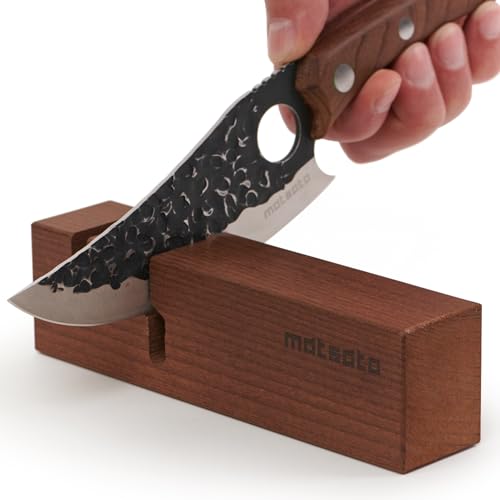
Matsato
Sharpen Kitchen, Chef, and Pocket Knives with the Matsato Knife Sharpener
The Matsato Knife Sharpener restores kitchen, chef, and pocket knife edges with ceramic rods, while its non-slip base keeps sharpening controlled. It suits home cooks who want one compact manual sharpener for several knife types.
Pros and Cons
Pros
- Works with kitchen knives, chef knives, and pocket knives.
- Ceramic sharpening rods support smooth, controlled blade maintenance.
- The non-slip base and comfortable grip improve sharpening stability.
- The compact design is easy to store or transport.
Cons
- As a manual sharpener, it requires hands-on effort instead of electric operation.
- Its listed compact dimensions may provide less handling area than larger countertop sharpeners.

Matsato
Compact Meat and Vegetable Prep Knife: Matsato Japanese Steel Chef Knife, 4.53-Inch Blade
The Matsato Japanese Steel Chef Knife handles meat, vegetables, and everyday chopping with a compact hammered blade that helps reduce food sticking. It suits home cooks and grilling enthusiasts who want one versatile knife with a secure finger-hole grip.
Pros and Cons
Pros
- The compact blade and finger-hole grip support precise, controlled cutting.
- The hammered surface is designed to reduce food sticking during slicing.
- The knife handles both meat and vegetables, reducing the need to switch tools.
- The carbonized beech wood handle gives the knife a distinctive, gift-ready appearance.
Cons
- The 4.53-inch blade provides less cutting reach than a standard full-size chef knife when processing large vegetables or substantial cuts of meat.
- The listing does not provide the knife's weight, sheath details, or dishwasher-safety guidance.

Matsato
Meat and Vegetable Chopping: Matsato 5.8-Inch Japanese Steel Cleaver Knife
The Matsato 5.8-inch cleaver chops meat, poultry, and vegetables with a lightweight 176g design that provides controlled, precise handling. It suits home cooks, barbecue enthusiasts, and gift buyers seeking a compact 3CR13 stainless steel knife with a secure finger-hole grip.
Pros and Cons
Pros
- Its compact 5.8-inch blade is easier to maneuver than a large traditional meat cleaver.
- The lightweight 176g construction reduces bulk while maintaining a balanced chopping motion.
- A hammered blade surface helps prevent sliced ingredients from clinging to the steel.
- The finger hole, beech wood handle, and hanging hole combine control, comfort, and convenient storage.
Cons
- The compact 5.8-inch blade provides less cutting reach for large cuts of meat or oversized vegetables.
- The listing does not specify dishwasher compatibility, so the beech wood handle should be washed and dried carefully.

SHAN ZU
Complete Kitchen Prep Knife Set with Block, SHAN ZU 16-Piece Japanese Steel Set
This 16-piece SHAN ZU set covers slicing, bread cutting, carving, filleting, steak cutting, sharpening, and kitchen shearing with Japanese high carbon steel blades and 15-degree edges. It suits home cooks building an all-purpose knife collection who want organized storage and an ergonomic full-tang pakkawood handle.
Pros and Cons
Pros
- Japanese high carbon steel and forged construction provide a sharp, durable cutting setup.
- The set includes seven kitchen knives, six steak knives, a sharpener, scissors, and a storage block.
- The ergonomic full-tang pakkawood handles are designed for comfortable, controlled handling.
- The knife block helps reduce countertop clutter while protecting the blades.
Cons
- Dishwasher cleaning is not recommended, so the knives require careful hand washing.
- The product data does not provide individual knife dimensions or weights for buyers comparing fit and balance.

imarku
Complete Kitchen Prep Knife Set: imarku 14-Piece Full-Tang Japanese Stainless Steel Set with Sharpener
The imarku 14-piece knife set handles chopping, slicing, carving, bread cutting, and steak service, with a built-in sharpener as its biggest convenience. It suits home cooks who want a complete, organized set that maintains its edge without separate sharpening equipment.
Pros and Cons
Pros
- The 14-piece selection includes chef, Santoku, bread, slicing, utility, paring, and steak knives plus kitchen shears.
- Each mirror-polished blade is sharpened to a precise 15° angle per side for low-resistance cutting.
- Repeated forging, low-temperature quenching, and full-tang construction are designed for strength and lasting daily use.
- The built-in sharpener and dishwasher-safe labeling simplify routine maintenance.
Cons
- The 56 ± 2 HRC hardness prioritizes everyday durability but may not retain an edge as long as harder premium Japanese blades.
- Buyers may receive either the classic or updated imarku logo, so the delivered set may differ visually from some listing images.
The Best Deals This Week*
-
YOTSUBA 3 PCS Japanese Kitchen Knife Set with Full
$69.99
($85.99)Save $16.00 -
KnifeSaga Japanese 15-pc Kitchen Knife Block Set
$129.99
($199.99)Save $70.00 -
Complete Kitchen Prep Knife Set
$154.99
($199.99)Save $45.00
*Deals are selected by our commerce team
Matsato Everyday Kitchen Prep Knife: Matsato Osuren 6.3-Inch Japanese Stainless Steel Chef Knife
Matsato
Everyday Kitchen Prep Knife: Matsato Osuren 6.3-Inch Japanese Stainless Steel Chef Knife
The Matsato Osuren handles slicing, chopping, and cutting vegetables, meat, and herbs, with balanced control as its biggest advantage. It suits home cooks and professional food preparation users who want one versatile stainless steel knife for daily kitchen tasks.
$35.95 at AmazonEditors' Favorite
Color: Black, Brown Size: 6.3" Dimensions: 11 x 2.1 x 0.9 inches Weight: 0.3968320716 Pounds Product Group: Kitchen
Shop NowMatsato 6.3 Inch Chef Knife Japanese Steel Blade for Home Cooking
Matsato
6.3 Inch Chef Knife Japanese Steel Blade for Home Cooking
This 6.3-inch Japanese stainless steel chef knife delivers razor-sharp precision for slicing, dicing, and chopping vegetables and meats with minimal effort and superior edge retention. Home cooks and meal preppers will appreciate the balanced ergonomic handle that reduces hand fatigue during extended kitchen tasks.
$39.99 at AmazonGreat Value
Brand Name: Matsato Manufacturer: Matsato Model Number: Matsato Manufacturer Part Number: Matsato Item Type Name: Knife Unit Count: 1.0 Count Included Components: Knife Best Sellers Rank: #3,455 in Kitchen & Dining (See Top 100 in Kitchen & Dining) #4 in Chef's Knives ASIN: B0CLVMXH3Y Customer Reviews: 4.5 4.5 out of 5 stars (9,153) 4.5 out of 5 stars Blade Edge: Plain Construction Type: Forged Blade Material Type: Stainless Steel Handle Material: Wood Is the item dishwasher safe?: No Material Type: 1.4116 Japanese Stainles, Wood BladeLength: 6.3 Inches Item Weight: 176 Grams Item Length: 10.8 Inches Size: 6.3" Color: Brown, Silver Blade Color: Silver Blade Material: Stainless Steel Brand: Matsato
Shop NowMatsato Sharpen Kitchen, Chef, and Pocket Knives with the Matsato Knife Sharpener
Matsato
Sharpen Kitchen, Chef, and Pocket Knives with the Matsato Knife Sharpener
The Matsato Knife Sharpener restores kitchen, chef, and pocket knife edges with ceramic rods, while its non-slip base keeps sharpening controlled. It suits home cooks who want one compact manual sharpener for several knife types.
$25.99 at AmazonColor: Brown Size: 7.09" x 1.97” x 1.57" Dimensions: 7.086614166 x 1.968503935 x 1.574803148 Inches Weight: 0.440924524 Pounds Product Group: Kitchen
Shop NowMatsato Compact Meat and Vegetable Prep Knife: Matsato Japanese Steel Chef Knife, 4.53-Inch Blade
Matsato
Compact Meat and Vegetable Prep Knife: Matsato Japanese Steel Chef Knife, 4.53-Inch Blade
The Matsato Japanese Steel Chef Knife handles meat, vegetables, and everyday chopping with a compact hammered blade that helps reduce food sticking. It suits home cooks and grilling enthusiasts who want one versatile knife with a secure finger-hole grip.
$36.99 at AmazonColor: Brown Size: 4.5" Dimensions: 10.8267716425 x 1.968503935 x 0.15748 inches Weight: 0.62 pounds Product Group: Kitchen
Shop NowMatsato Meat and Vegetable Chopping: Matsato 5.8-Inch Japanese Steel Cleaver Knife
Matsato
Meat and Vegetable Chopping: Matsato 5.8-Inch Japanese Steel Cleaver Knife
The Matsato 5.8-inch cleaver chops meat, poultry, and vegetables with a lightweight 176g design that provides controlled, precise handling. It suits home cooks, barbecue enthusiasts, and gift buyers seeking a compact 3CR13 stainless steel knife with a secure finger-hole grip.
$43.99 at AmazonColor: Brown Size: 5.8" Dimensions: 11.1417322721 x 3.543307083 x 0.787401574 inches Weight: 0.38801358112 Pounds Product Group: Kitchen
Shop NowSHAN ZU Complete Kitchen Prep Knife Set with Block, SHAN ZU 16-Piece Japanese Steel Set
SHAN ZU
Complete Kitchen Prep Knife Set with Block, SHAN ZU 16-Piece Japanese Steel Set
This 16-piece SHAN ZU set covers slicing, bread cutting, carving, filleting, steak cutting, sharpening, and kitchen shearing with Japanese high carbon steel blades and 15-degree edges. It suits home cooks building an all-purpose knife collection who want organized storage and an ergonomic full-tang pakkawood handle.
Check PriceColor: 16 PC KNIFE SET Size: 16-piece Dimensions: 9.64 x 5.86 x 14.72 inches Weight: 9.47 Pounds Product Group: Kitchen Binding: Home
Shop NowYOTSUBA 3 PCS Japanese Kitchen Knife Set with Full Tang Rosewood Handle

Color: Red Brown Size: 8" Dimensions: 13 x 2 x 1.3 inches Weight: 1.1 pounds Product Group: Kitchen Binding: Kitchen
Shop NowSANMEIHO 16 PCS Japanese Kitchen Knife Set with Block, Dishwasher Safe
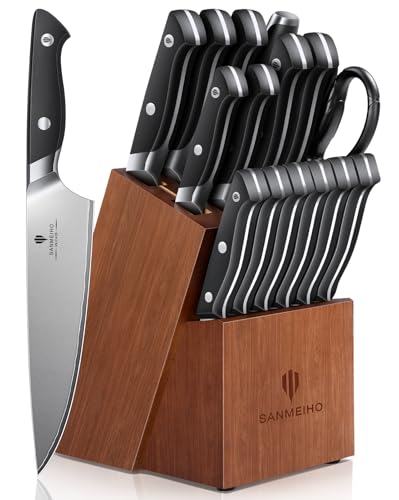
Color: 16PCS Knife Set Size: 3.75 inches to 8 inches Dimensions: 13.779527545 x 7.87401574 x 13.779527545 inches Weight: 5.51155655 Pounds Product Group: Kitchen Binding: Kitchen
Shop NowHOSHANHO 7 Pcs Knife Set, Ultra Sharp Knife Sets with Magnetic Knife Block

Color: Silver Size: 7 Pieces Knife Set Dimensions: 14 x 10 x 13 inches Weight: 2.2928075248 pounds Product Group: Kitchen Binding: Kitchen
Shop NowKnifeSaga Japanese 15-pc Kitchen Knife Block Set, Professional, Razor Sharp

Color: Natural White Size: 15 Pcs Dimensions: 14 x 5.5 x 12 inches Product Group: Kitchen
Shop Nowimarku Complete Kitchen Prep Knife Set: imarku 14-Piece Full-Tang Japanese Stainless Steel Set with Sharpener
imarku
Complete Kitchen Prep Knife Set: imarku 14-Piece Full-Tang Japanese Stainless Steel Set with Sharpener
The imarku 14-piece knife set handles chopping, slicing, carving, bread cutting, and steak service, with a built-in sharpener as its biggest convenience. It suits home cooks who want a complete, organized set that maintains its edge without separate sharpening equipment.
$154.99 at AmazonColor: Light Brown Size: 8" Dimensions: 14.56 x 10 x 6.5 inches Product Group: BISS
Shop Now




Write Your Review
No reviews yet. Be the first to share your experience!