

Most people buy the wrong outdoor pizza oven, and they usually figure it out about three pizzas in. The stainless steel unit looked sharp on the patio, the price felt fair, and then reality set in: the fuel type was a hassle, the cooking floor was too small for the group they wanted to feed, or every single pie came out folded, torn, or stuck to the peel. None of those problems are the oven’s fault, exactly. They come from decisions made before the box ever arrived. If you understand the three mistakes that trip up almost everyone, you can skip the expensive learning tax and get to good pizza faster.
Mistake One: Choosing Fuel Type by Habit Instead of Reality
The first fork in the road is fuel, and people tend to pick based on romance rather than how they actually live. Wood-fired ovens promise that smoky char and the crackle of a real fire, and they deliver it. But wood also means sourcing kiln-dried hardwood, tending the fire so the temperature does not swing wildly, and cleaning ash out of a hot chamber every session. If you cook on a whim after work, that ritual becomes a reason to order takeout instead.
Gas, or propane, is the honest answer for most home cooks. Turn a knob, wait fifteen to twenty minutes, and you have a stable 750 to 900 degree Fahrenheit deck without babysitting a flame. The tradeoff is a slightly cleaner, less complex flavor, though many people cannot tell the difference once toppings are on. A number of stainless steel models now accept both, either through a swappable burner or a wood tray that slots in over the gas line. If you are torn, a dual-fuel oven buys you time to learn which one you reach for. Just do not pay the premium for wood capability if you already suspect you will run gas ninety percent of the time.
Mistake Two: Underestimating How Much Cooking Floor You Need
Size is where the second mistake lives, and it is sneaky because the spec sheet sounds generous. A 12-inch cooking surface seems fine until you realize the pizza needs room to be turned. A pie that fits edge to edge cannot be rotated with a peel, and rotation is not optional in a wood or gas oven where one side faces the flame. That side chars in ninety seconds while the far side stays pale. So a 12-inch stone practically limits you to 10-inch pizzas, which is a personal-size portion, fine for one or two people who like to cook in sequence.
If you are feeding a family or hosting, look at 16-inch and larger decks. The extra room lets you spin a full 13- or 14-inch pie and gives you space to slide a fresh one in while the last cooks. Larger ovens do take longer to preheat and burn more fuel, but the frustration of a cramped chamber costs more in the long run. Measure your patio or cart space honestly too. Stainless steel ovens shed heat from their outer shell, so factor in clearance from siding, railings, and anything flammable. A common regret is buying the biggest oven available and then having nowhere safe to run it.
Mistake Three: Ignoring the Launch-and-Peel Learning Curve
The third mistake is assuming the oven does all the work. It does not. The hardest skill in outdoor pizza is getting a topped, raw pie off a peel and onto a screaming-hot stone without it collapsing into a calzone. New owners lose their first several attempts to dough that welds itself to the peel, and they blame the equipment. The equipment is fine. The technique needs practice.
Two things fix most launch disasters. First, use plenty of flour or fine semolina on the peel and give it a test shake before you add sauce, so the dough glides rather than grabs. Second, work fast once the pie is dressed, because wet toppings sitting on raw dough are what create the stick. Many cooks find a thin wooden peel easier for launching and a smaller metal turning peel better for the quick rotations inside the oven. Budget for both, and budget mentally for a handful of ugly practice pizzas. They still taste good. Nobody at the table will care that the shape is a little abstract.
Why Stainless Steel Is Worth Paying For Outdoors
With the mistakes named, the material choice makes more sense. Stainless steel earns its place outdoors because it shrugs off the two things that kill patio equipment: rain and temperature shock. A painted carbon-steel shell will eventually rust at the seams and around the door where moisture collects, especially if you leave the oven uncovered through a wet season. Quality stainless resists that corrosion and cleans up with a wipe.
Not all stainless is equal, though. Look for 304-grade steel if the listing states it, since it holds up to salt air and humidity better than the cheaper 430 grade. Check the gauge, or thickness, too. Thin panels flex, dent, and warp near the flame, while a heavier gauge stays flat and holds heat more evenly. A well-built stainless oven should also carry a layer of insulation between the outer shell and the cooking chamber. Without it, the exterior gets dangerously hot and the oven bleeds heat, forcing you to burn more fuel to hold temperature. Run your hand near a display model’s outer wall while it is hot, if you can, and notice how much heat escapes.
Reading the Temperature Spec Without Getting Fooled
Manufacturers love to advertise a peak temperature, and buyers fixate on the biggest number. A ceiling of 950 degrees looks impressive next to one that tops out at 750. But the number that matters is the stone temperature you can actually hold while cooking, not the flash reading at the roof of the chamber. Neapolitan-style pizza wants a deck around 850 to 900 degrees for a 60- to 90-second bake. New York and thicker styles cook better around 650 to 750, where the crust has time to set without the toppings scorching.
If you mostly want a leopard-spotted, puffy Neapolitan crust, prioritize an oven that reaches and sustains that high deck heat. If you lean toward loaded, American-style pies, raw peak temperature matters less than even heat and a stone thick enough to recover between bakes. An infrared thermometer, pointed at the stone rather than the flame, is the single most useful accessory here. It removes the guesswork and stops you from launching onto a surface that has not fully recovered from the last pizza.
Putting It All Together Before You Buy
Work the decision backward from how you cook. Be honest about frequency: a busy household leans gas, a weekend hobbyist who enjoys the process can commit to wood. Match the deck size to your crowd, remembering that usable pizza size runs a couple inches under the stone dimension. Then insist on real stainless construction with insulation, because outdoor life is hard on cheap builds. Finally, set aside the first few sessions as practice and buy the peels that make launching easier. Do those four things and the oven stops being a source of frustration and becomes the reason people keep asking when you are hosting again.
Is a gas or wood stainless steel pizza oven better for beginners?
Gas is friendlier for beginners because it gives you a steady, predictable temperature without fire management. You can focus on learning the launch and the rotation instead of also fighting to keep the flame stable. Wood adds flavor and a satisfying ritual, but it introduces variables that make early pizzas harder to get right. If you love the craft and want to grow into it, a dual-fuel stainless oven lets you start on gas and add wood later once your technique is solid.
What size cooking surface should I get for a family?
For a family or regular hosting, aim for a cooking floor of 16 inches or more. That gives you room to spin a 13- or 14-inch pizza during the bake and to stage the next pie while one cooks, which keeps the line moving when you are feeding a group. Smaller 12-inch decks really only handle personal-size pizzas cooked one at a time, which works for a couple but gets slow and tedious when four or more hungry people are waiting.
Will a stainless steel outdoor pizza oven rust over time?
Quality stainless steel resists rust far better than painted or coated carbon steel, but grade matters. A 304-grade shell holds up well to rain, humidity, and even coastal salt air, while cheaper 430-grade steel can develop surface spots in harsh conditions. Regardless of grade, use a fitted cover, keep the cooking chamber dry between sessions, and wipe down the exterior occasionally. Treated that way, a well-made stainless oven will look and perform well for many years outdoors.
BIG HORN
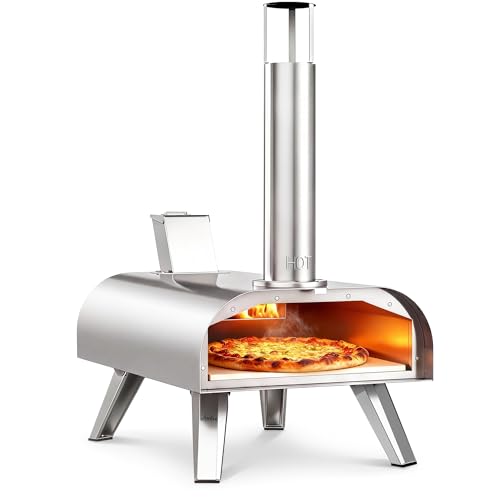
Fast Neapolitan-Style Pizza Outdoors: BIG HORN 12-Inch 3-in-1 Multi-Fuel Pizza Oven
The BIG HORN 12-inch pizza oven cooks Neapolitan-style pizzas in 60 to 90 seconds, with multi-fuel compatibility as its biggest advantage. It suits backyard cooks, campers, and tailgaters who want portable high-heat cooking for pizza, meat, fish, and vegetables.
Pros and Cons
Pros
- Three compatible fuel options let users choose wood-fired flavor, gas convenience, or electric cooking when the matching attachments are purchased.
- The maximum 1110°F temperature supports fast pizza cooking and high-heat searing.
- Folding legs, low weight, and minimal assembly improve portability for outdoor events.
- The oven also cooks steaks, fish, lamb, burgers, and vegetables.
Cons
- Gas and electric burner attachments are sold separately, so the included setup relies on hardwood pellets.
- The 12-inch stone limits pizza size, and pizzas must be turned frequently for even cooking.
The Best Deals This Week*
-
Fast Neapolitan-Style Pizza Outdoors
$123.49
($169.99)Save $46.50 -
BIG HORN Gas Pizza Oven, Portable Propane Pizza
$239.99
($309.99)Save $70.00
*Deals are selected by our commerce team
KOSTCH 32.5 inch Wood Fired and Propane Gas Pizza Oven for Outdoor Kitchen in Stainless Steel, Large Pizza Oven for Outside, Yard and Party (Stainless Steel)

KOSTCH
32.5 inch Wood Fired and Propane Gas Pizza Oven for Outdoor Kitchen in Stainless Steel, Large Pizza Oven for Outside, Yard and Party (Stainless Steel)
$1,169.00 at AmazonEditors' Favorite
Color: Stainless Steel Size: 32.5 inch Weight: 143 pounds Product Group: Major Appliances
Shop NowBIG HORN Fast Neapolitan-Style Pizza Outdoors: BIG HORN 12-Inch 3-in-1 Multi-Fuel Pizza Oven
BIG HORN
Fast Neapolitan-Style Pizza Outdoors: BIG HORN 12-Inch 3-in-1 Multi-Fuel Pizza Oven
The BIG HORN 12-inch pizza oven cooks Neapolitan-style pizzas in 60 to 90 seconds, with multi-fuel compatibility as its biggest advantage. It suits backyard cooks, campers, and tailgaters who want portable high-heat cooking for pizza, meat, fish, and vegetables.
$123.49 at AmazonGreat Value
Color: Silver Size: 12-inch pizzas Dimensions: 21 x 14 x 24 inches Weight: 24.912235606 pounds Product Group: Lawn & Patio Binding: Kitchen
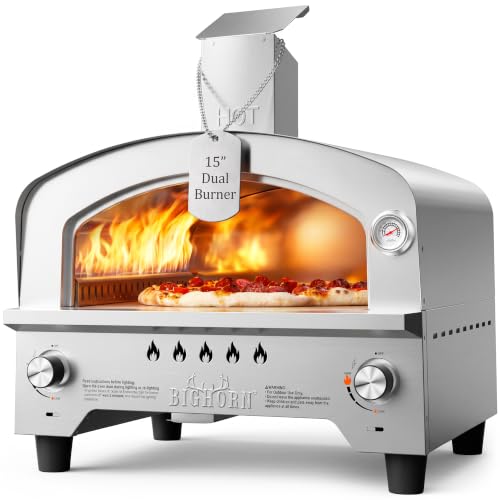
Shop NowBIG HORN Gas Pizza Oven, Portable Propane Pizza Oven with 15 inch Pizza Stone, Stainless Steel Pizza Maker for Outdoor Cooking
BIG HORN
Gas Pizza Oven, Portable Propane Pizza Oven with 15 inch Pizza Stone, Stainless Steel Pizza Maker for Outdoor Cooking
$239.99 at AmazonColor: Silver Size: 15 inch Dimensions: 19.4881889565 x 12.992125971 x 19.4881889565 inches Product Group: Lawn & Patio Binding: Kitchen
Shop NowSCORPIO Pizza Oven - Dual Fuel Wood & Propane Portable Outdoor Pizza Oven with 16” Rotating Stone - 90 Second Cook at 850-900°F- Ultra Durable 304 Stainless Steel - Ceramic Viewing Window

SCORPIO
Pizza Oven - Dual Fuel Wood & Propane Portable Outdoor Pizza Oven with 16” Rotating Stone - 90 Second Cook at 850-900°F- Ultra Durable 304 Stainless Steel - Ceramic Viewing Window
$699.00 at AmazonColor: Stainless Steel Weight: 63 pounds Product Group: Lawn & Patio
Shop NowDvasovio 125-Inch 108000 BTU Double Stainless Steel Gas Outdoor Kitchen Bar, BBQ Island Grill with Pizza Oven, Wine Cooler, Compact Refrigerator, Rotisserie & Granite Countertops, Sliver

Dvasovio
125-Inch 108000 BTU Double Stainless Steel Gas Outdoor Kitchen Bar, BBQ Island Grill with Pizza Oven, Wine Cooler, Compact Refrigerator, Rotisserie & Granite Countertops, Sliver
$5,599.00 at AmazonColor: Silver Size: 125'' Dimensions: 23 x 125 x 78 inches Weight: 540 pounds Product Group: Lawn & Patio
Shop Now





Write Your Review
No reviews yet. Be the first to share your experience!