

Every wood-fired grill runs on the same three inputs: fuel, oxygen, and somewhere for the heat to go. Shrink the whole machine into a small wood grill that fits on an apartment balcony or rides in a car trunk, though, and none of those inputs behaves the way it does in a full-size backyard kettle. The firebox is smaller, the margins are thinner, and the gap between an effortless dinner and a smoky frustration is mostly physics.
Understanding that physics first makes shopping easier. Once you know why firebox volume, damper design, and fuel density decide how these machines cook, the spec sheet stops being marketing noise and starts predicting exactly how a small wood grill will behave on a Tuesday night.
How a Small Wood Grill Works: Firebox, Airflow, and Ash
Start with proportions. A 14-inch portable like the classic Smokey Joe offers about 147 square inches of cooking grate floating two to four inches above a fuel bed that holds a single layer of lump charcoal. A 22-inch kettle gives you 363 square inches over a coal bed twice as deep. Those ratios matter because radiant heat intensity climbs sharply as food gets closer to the coals; halve the distance and you roughly quadruple the energy landing on each square inch of meat. That is why tiny grills sear so aggressively, and why they punish inattention: the window between perfectly charred and burnt is measured in seconds rather than minutes.
Airflow is the other half of the story. Combustion needs oxygen, and a grill breathes through two sets of openings: an intake damper near the bottom and an exhaust vent in the lid. Hot air rises out of the exhaust, pulls fresh air through the intake, and the fire responds. In a big kettle with dozens of pounds of steel holding heat, a damper adjustment takes several minutes to register at the grate. In a compact firebox with almost no thermal mass, the same change shows up inside two minutes, which makes the grill wonderfully responsive but unforgiving of sloppy technique. Ash is the quiet saboteur here. Burned-off fragments fall straight toward the intake path, and in a shallow box an inch of accumulation can starve the fire mid-cook. Any model worth buying solves this with a removable pan or a fire grate held well above its vents.
What You Burn Changes Everything: Lump Charcoal, Sticks, and Pellets
Lump charcoal is the default fuel for good reason. It is kiln-burned hardwood that lights in about fifteen minutes in a chimney starter, drives grate temperatures well past 600 degrees Fahrenheit, and reacts almost instantly to vent settings because glowing chunk surfaces radiate directly instead of smoldering. Its weakness is inconsistency: pieces range from walnut-sized to fist-sized, so building a level bed takes a moment of sorting with gloved hands.
Actual sticks are the older tradition, and they demand patience. Only seasoned hardwood such as oak, hickory, or apple belongs in a firebox; unseasoned or softwood sticks smolder, spit resin, and coat food in bitter, creosote-heavy smoke. Sticks also burn with visible flame first, so you wait twenty to thirty minutes for the fire to collapse into a bed of glowing embers before any food goes on. In exchange you get genuine wood-fire flavor and a fuel source you can occasionally gather at a campsite rather than haul from home.
Pellets occupy a stranger middle ground. Compressed sawdust with single-digit moisture content burns clean and remarkably evenly, but dedicated pellet grills need an auger, a blower fan, and battery or wall power, which strips away the light-a-match simplicity that makes compact grills attractive in the first place. The hybrid workaround, pellets burned in a basket inside a charcoal-style firebox, produces steady heat, though the enormous surface area of a pellet means the basket empties fast.
Building Heat Zones in a Tiny Firebox
Zone control still works at this scale; you just build zones vertically instead of spreading them across a wide bed. Pile lump two layers deep across one third of the firebox, scatter a single layer through the middle, and leave the final third bare. One grill now holds three climates: fierce radiant heat over the stack, moderate convective heat over the thin bed, and a gentle finishing area over bare foil where dripping fat cannot flare. Because the zones sit inches apart rather than feet apart, moving food between them is a two-second tong transfer.
The practical consequences cut both ways. Searing benefits enormously from the close grate-to-coal geometry, since a steak parked over a double stack can develop a deep crust in about ninety seconds per side. Low-and-slow is where compact fireboxes struggle, because a modest fuel load cannot hold 225 degrees for the eight hours a pork shoulder demands. Plan barbecue around cuts that finish within two to three hours, and budget one refuel at the midpoint to keep the thin-bed side alive.
Turning the Physics Into Buying Criteria
Begin with grate arithmetic. A four-inch burger patty claims roughly thirteen square inches, so a household cooking for four realistically wants at least 150 square inches to fit six patties plus vegetables without running shifts; the popular 147-square-inch class sits right at that threshold, and anything under 100 square inches is strictly a two-person machine. Next, check the steel. Thin stamped panels below one millimeter, around 20-gauge, tend to warp through repeated heat cycles and shed warmth along the edges, while 10-gauge plate at roughly 3.4 millimeters stays flat and holds steadier temperatures. Cast-iron grates add mass that speeds recovery every time the lid opens, but they also add eight to fifteen pounds, which matters depending on where the grill will live.
Interrogate the ash path before anything else on the floor model. Ask how ashes leave the box: a slide-out tray or a deep basin positioned below the intake vents carries a full cook through to the end, while vents mounted at coal level will clog halfway through a batch of chicken thighs. Then handle the vents themselves and swing the lid shut. Damper plates cut from flimsy sheet metal warp and seize when heated, and a lid that rattles loosely leaks air, runs hotter than the vent settings imply, and eats fuel faster than you planned for.
Matching the Grill to a Balcony, a Campsite, or a Tuesday Night
Apartment dwellers should confirm the rules before shopping, because many leases and municipal fire codes restrict open-flame cooking on balconies outright, and no amount of compactness exempts anyone. Where grilling is allowed, prioritize a deep lid that contains sparks, a fully enclosed ash base you can rinse at a kitchen sink, and a footprint under twenty inches wide so the unit stores upright in a corner through winter.
For car camping, weight splits the field cleanly. Stamped-steel portables run ten to fourteen pounds, while cast-iron hibachis push twenty-five to thirty, so trunk-haulers can enjoy cast iron’s heat retention and anyone carrying gear past the parking lot should pass on it. Stick-fired designs earn their keep at established campgrounds where gathering deadfall hardwood is permitted, sparing you from packing forty pounds of lump charcoal into an already full hatchback.
Weeknight cooks get the best deal of all. A chimney of lump catches in fifteen minutes, burgers need eight more, and the entire operation wraps inside half an hour while consuming perhaps a third of the fuel a large kettle would burn for the same two-person meal. That efficiency, paired with minimal cleanup, is exactly why a small wood grill earns a permanent spot on city patios.
Frequently Asked Questions
Can you really cook over wood sticks instead of charcoal?
Yes, provided you accept the timeline and choose the right wood. Seasoned hardwood only, meaning oak, hickory, maple, or fruitwoods, because pine and other softwoods carry resin that sparks violently and turns acrid when it burns. Light the sticks, let them flame hard for fifteen to twenty minutes, then wait for the flames to collapse into a glowing ember bed before anything touches the grate. As you cook, add fresh sticks to one edge of the box so replacements ignite without smoking out the food already grilling.
How long does one load of fuel last in a small grill?
Vent settings decide everything. A full chimney of lump charcoal burned with both dampers barely cracked can stretch toward two hours of gentle heat, while the identical load consumed with the vents wide open becomes ash inside forty-five to sixty minutes of hard grilling. Compact fireboxes drain fuel faster per pound than large ones because their higher airflow-to-fuel ratio burns hotter and quicker throughout the cook. A dependable habit is to budget one extra handful of lump for every additional thirty minutes you expect to stay at the grill.
Is a small wood grill suitable for apartment balconies?
Physically suited, legally uncertain, so check before you buy. Fire codes and lease terms vary widely: some cities prohibit open-flame cooking on balconies above ground level or within ten feet of the structure, some buildings allow nothing but electric appliances, and a few jurisdictions treat a tabletop charcoal grill the same as a fire pit. Read the lease language or call the local fire marshal’s office rather than trusting product listings that market portability as blanket permission. Where open flame is prohibited, no grill is small enough to slip past the rule, because the restriction applies to the fire itself, not the footprint.
The Best Deals This Week*
-
Odoland Camping Campfire Grill
$36.39
($47.99)Save $11.60 -
Odoland Camping Campfire Grill
$32.99
($42.99)Save $10.00 -
Tabletop Charcoal Grill, Portable Foldable
$39.99
($53.89)Save $13.90
*Deals are selected by our commerce team
Odoland Camping Campfire Grill, Portable Folding Charcoal Grills for BBQ

Editors' Favorite
Color: black Size: 15.8"x11.8"x8.3" Dimensions: 15.74803148 x 11.417322823 x 8.1496062909 inches Weight: 9.4137385874 Pounds Product Group: Lawn & Patio Binding: Unknown Binding
Shop NowOdoland Camping Campfire Grill, Portable Folding Charcoal Grills, Backpacking BBQ Grill, Heavy Duty Firepit with Carry Bag for Outdoor Cooking, Bonfire, Patio, Backyard

Odoland
Camping Campfire Grill, Portable Folding Charcoal Grills, Backpacking BBQ Grill, Heavy Duty Firepit with Carry Bag for Outdoor Cooking, Bonfire, Patio, Backyard
$32.99 at AmazonGreat Value
Color: Black Size: 11.8"x11.8"x8.3" Dimensions: 11.417322823 x 11.417322823 x 8.267716527 inches Weight: 5.2470018356 Pounds Product Group: Outdoors
Shop NowRun Jee Tabletop Charcoal Grill, Portable Foldable Tabletop BBQ Grill with Dual Sided Griddle & Grill, Compact Folded Design, Thickened Body for Camping, Picnic & Outdoor Cooking

Run Jee
Tabletop Charcoal Grill, Portable Foldable Tabletop BBQ Grill with Dual Sided Griddle & Grill, Compact Folded Design, Thickened Body for Camping, Picnic & Outdoor Cooking
$39.99 at AmazonColor: black Dimensions: 16.1 x 9.8 x 12.2 inches Weight: 8.3 Pounds Product Group: Lawn & Patio Binding: Tools & Home Improvement
Shop NowGas One GasOne 14-inch Portable Charcoal Barbecue Grill with Thermometer Lux Brown

Color: New Lux Brown with Thermometer Dimensions: 14.5 x 14.5 x 15 inches Product Group: Lawn & Patio Binding: Tools & Home Improvement
Shop NowREDCAMP Wood Burning Folding Camp Stove Stainless Steel Grid, Portable Collapsible Backpacking Stove Survival Rocket Stove for Hiking Outdoor Tent Camping Picnic BBQ, Samll
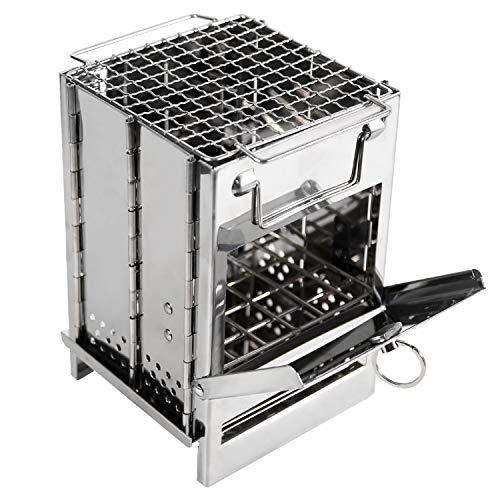
REDCAMP
Wood Burning Folding Camp Stove Stainless Steel Grid, Portable Collapsible Backpacking Stove Survival Rocket Stove for Hiking Outdoor Tent Camping Picnic BBQ, Samll
$21.99 at AmazonColor: Stainless Steel Grid Size: Small Dimensions: 5.9 x 5.5 x 8.3 inches Weight: 1.9 pounds Product Group: Kitchen Binding: Kitchen
Shop Now







Write Your Review
No reviews yet. Be the first to share your experience!