

The first lesson most people learn about buying a stainless steel martini shaker is that the glossy gift-set version fights back. Ten seconds into a first shake, the little cap on a cheap three-piece cobbler set welds itself shut, the recipe is trapped inside, and the evening pauses while someone searches for how to open it. That failure is not bad luck; it is thermodynamics meeting thin steel, and it is the first of several predictable buying mistakes covered below.
The other common errors follow the same pattern. New buyers choose glass-topped Boston pairs without knowing the glass side eventually chips, order tins too small to chill more than a single drink, ignore weight and wall taper until the seal fails mid-shake, accept whatever strainer came bundled in the box, then shorten the tool’s life in the dishwasher. Each mistake has a specific cause and a specific fix, and walking through them in order turns a frustrating first year of home bartending into a short, deliberate shopping list.
Why a Cheap Cobbler Cap Fuses Shut Mid-Shake
Shaking drives a cocktail down to roughly 23°F within about fifteen seconds, and everything sealed inside the tin cools with it. The air pocket above the liquid contracts as it loses heat, pressure inside drops below atmospheric, and the cap gets pulled inward at the same moment the metal itself is shrinking. On a thick, precisely fitted tin the effect stays manageable; on a thin-gauge cobbler stamped from budget steel, tolerances wander enough that normal contraction turns a snug fit into a press fit. Working a stuck cap free means bracing the base and striking the seam sharply near the spout, or holding the joint under warm running water for half a minute — both effective, both unwelcome interruptions mid-round. If the cobbler format appeals, pay for a heavyweight model with machined fittings rather than a fifteen-dollar stamped set; otherwise a two-piece Boston avoids the problem entirely, because its lid is a second tin released with a firm sideways tap rather than unscrewed against a vacuum.
All-Stainless Boston Pairs Beat Glass Halves
The traditional Boston shaker pairs a tin with a mixing glass, and the glass half is why many first-timers abandon theirs. Seeing the drink chill through the glass teaches beginners what proper dilution looks like, but the rim chips a little more with every seal-breaking strike, and one encounter with a faucet or a tile floor ends its career outright. An all-stainless tin-on-tin pair removes that fragility: both halves are steel, the seal releases with a sharp slap on the upper tin just below the rim, and a dropped shaker becomes a scuff mark instead of a cleanup. The trade-off is losing the view, so you learn to listen instead — the rattle of the cubes changes pitch as they erode, and that cue arrives around the same twelve-to-fifteen-second mark in any tin. Anyone practicing egg-white sours or making rounds for guests will find the stainless pair outlives the learning curve; glass halves frequently do not.
The 12-Ounce Tin Problem: Sizing for Ice, Not Looks
Small tins are the most frequent sizing error because they look proportional sitting next to a coupe. The arithmetic disagrees. A single martini begins as roughly four and a half ounces of gin and vermouth and finishes 20 to 25 percent heavier from melted ice, so a two-drink session sends nine ounces of liquid through the tin while still demanding full cube contact for chilling and aeration. Once that liquid goes in, a 12-ounce tin has no room left for ice, and an under-packed tin churns slowly, moves less cold per second, and forces a longer, wetter shake to reach the same temperature. The working standard is an 18-ounce small tin for solo drinks and a 28-ounce large tin for doubles and batches; anyone hosting will use both halves together constantly. Pack the tin two-thirds full with cube ice, pour the spirit over it, seal, and the headroom that remains is what lets fifteen seconds of hard shaking finish the job.
Weight and Wall Taper Decide Whether the Seal Holds
Two physical traits separate tins that stay locked from tins that take flight. The first is taper: a Boston seal is a wedge, and the shallower the cone of the walls, the harder the halves grip as internal pressure pulls them together, while straight-sided or warped tins depend on suction alone and let go the instant the vacuum slips. The second is mass. A quality weighted 28-ounce tin approaches a full pound, with an 18-ounce partner near twelve ounces; featherweight sets run several ounces lighter, and the missing metal shows up as thin walls that flex when struck and dent when dropped, spoiling the mating surface between the rims. Dents matter more than shoppers expect, because a rim no longer seated in a true circle sprays a fine mist of martini with every shake. Before buying, press the empty pair together, turn it upside down, and give it a dry test swing — matched tins hold, mismatched ones separate on the first arc.
The Strainer Spring Decides What Reaches the Glass
Moving to a two-piece Boston hands the buyer a new decision, because the strainer is no longer built in. A Hawthorne strains through a flat plate ringed by a coil spring, and the spring decides what reaches the glass whenever a drink carries texture. Fresh-squeezed citrus brings pulp, muddled fruit brings seeds and fiber, egg whites bring a fine foam, and a loose, widely spaced spring waves all of it straight past the plate. Choose one wound from stiff wire in tight coils that sits flush against the tin rim all the way around; pressed against a palm it should resist evenly, with no daylight anywhere between coil and plate. Built-in cobbler strainers fail differently — their small hole area clogs on the first pulpy pour and slows the drink to a dribble, silently over-diluting the batch while it waits. A modest upgrade in spring tension does more for clarity than any logo stamped on the tin.
Steel Grades, Finishes, and the Dishwasher Question
Grade and finish determine how the shaker ages. Quality models are made from 18/8 stainless, also marked 304, meaning 18 percent chromium and 8 percent nickel; the nickel is what shrugs off week after week of acidic vermouth and lemon, while cheaper 18/0 stock omits it, which is why bargain tins develop rough, rust-colored pits within a season or two. Below even that sit the stainless-look shakers cast from zinc alloy and dipped in chrome — the plating flakes off under repeated heating and cooling cycles, and those flakes travel straight into drinks. Finish choice is a maintenance contract: mirror polish photographs beautifully and then catalogs every micro-scratch forever, whereas brushed and satin surfaces hide daily wear. Dishwashers shorten the life of all three — powdered detergent etches the surface, drying heat bakes on film, and rattling racks dent rims that need to stay perfectly round. Hand wash with a soft cloth, towel dry immediately, and store the two tins apart so their rims never grind together in a drawer.
Frequently Asked Questions About Stainless Steel Martini Shakers
Does shaking a martini in stainless steel change the taste?
Not through the metal itself. Passivated 18/8 stainless is non-reactive, so unlike vintage aluminum shakers, which could lend a faint gray, metallic edge to acidic mixes, steel passes nothing noticeable into the drink. What it changes is speed: stainless conducts heat quickly, so a properly filled tin brings a martini down to around 23°F in twelve to fifteen seconds of hard shaking. Beyond that point the mixture has already bottomed out near freezing, and further shaking only melts more ice and thins the spirit. The differences people taste between shakers trace almost entirely to dilution — ice quantity, tin size, and shake length — rather than to the material doing the shaking.
Can sparkling wine or soda be shaken in a stainless steel Boston shaker?
No, and the sealed construction is exactly why. Agitating a carbonated liquid inside closed tins builds pressure well past atmospheric, and the same physics that locks the halves during a cold shake now clamps a pressurized container shut until the seam gives way all at once. The usual result is a ceiling-mounted spray of prosecco and a sticky floor, sometimes with a dented tin for company. Anything containing Champagne, soda, or tonic gets built in the glass with the bubbles folded in at the end, poured gently down the side. Recipes that truly require shaking a fizzy element, such as a Ramos-style fizz, are specialist techniques with their own handling rules, not reasons to shop differently.
How long should a good stainless steel shaker last?
Longer than most appliances in the same kitchen. A two-piece Boston pair carries no threads, gaskets, or springs in the tin bodies themselves, leaving only two realistic failure modes: loss, or a rim bent badly enough to leak, and working bars regularly keep the same tins spinning for a decade or more. Three-piece cobblers age faster because their caps rely on precise fits and, in budget versions, silicone gaskets that stiffen and crack within a couple of years. Habits decide most of the lifespan — hand washing, immediate drying, never leaving an acidic drink sitting in the tin overnight, and storing the halves apart all protect the sealing surfaces. Chosen sensibly in 18/8 stainless, a shaker is a once-an-adulthood purchase rather than a recurring line item.
The Best Deals This Week*
-
Mawisek Cocktail Shaker 24oz Martini Drink Shaker
$7.99
($9.99)Save $2.00 -
Cocktail Shaker, KITESSENSU 24oz Drink Shaker
$11.99
($12.99)Save $1.00
*Deals are selected by our commerce team
WPHUAW 24oz Cocktail Shaker Bar Set-Professional Margarita Mixer Drink Shaker Professional Stainless Steel Bar Tools Built-in Bartender Strainer for Martini Kit

WPHUAW
24oz Cocktail Shaker Bar Set-Professional Margarita Mixer Drink Shaker Professional Stainless Steel Bar Tools Built-in Bartender Strainer for Martini Kit
$9.99 at AmazonEditors' Favorite
Color: Stainless Steel Dimensions: 3.2 x 3.2 x 9 inches Weight: 0.67 pounds Product Group: Kitchen Binding: Kitchen
Shop NowOXO Steel Cocktail Shaker with Strainer, Stainless Finish - 24 oz Capacity

Great Value
Color: Stainless Steel Size: 24 oz Dimensions: 3.5 x 3.5 x 9.5 Inches Weight: 0.9 pounds Product Group: Kitchen Binding: Kitchen
Shop NowLUCKYGOOBO Cocktail Shaker,24oz Martini Shaker,Drink Shaker Mixer
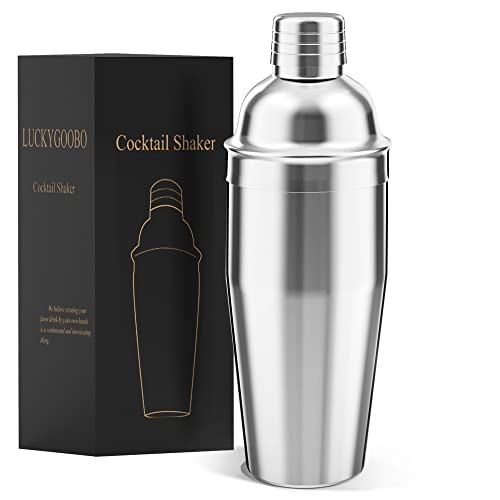
Color: A-Silver Size: 1 Piece set Dimensions: 2.3 x 3.2 x 9.5 inches Weight: 0.53 pounds Product Group: Kitchen Binding: Kitchen
Shop NowMawisek Cocktail Shaker 24oz Martini Drink Shaker with Built-In Strainer

Color: A-Silver Size: 1pcs Dimensions: 3.3 x 3.3 x 9.45 inches Weight: 0.6393405598 Pounds Product Group: Kitchen Binding: Kitchen
Shop NowKITESSENSU Cocktail Shaker, KITESSENSU 24oz Drink Shaker with Bartender Strainer, Measuring Jigger, Bar Mixing Spoon, Cocktail Recipe Guide, Professional Drink Mixer Set for Beginners, Silver

KITESSENSU
Cocktail Shaker, KITESSENSU 24oz Drink Shaker with Bartender Strainer, Measuring Jigger, Bar Mixing Spoon, Cocktail Recipe Guide, Professional Drink Mixer Set for Beginners, Silver
$11.99 at AmazonColor: Silver - Cobbler 3 Size: Cobbler - 3 Dimensions: 9.06 x 3.66 x 3.66 inches Product Group: Kitchen Binding: Kitchen
Shop Now





Write Your Review
No reviews yet. Be the first to share your experience!