

Prices for a stainless steel mandolin run from about fifteen dollars to well past two hundred, and the spread reflects real engineering rather than packaging. Where the money goes is predictable: blade steel and how long it stays sharp, the precision of the thickness mechanism, whether the frame stays planted on a wet counter, and how much hardware stands between your fingers and an edge that never gets tired. Sorting the market into three tiers makes those trade-offs easier to read.
One spelling note first: cooks write mandoline for the slicer and mandolin for the stringed instrument, yet store listings mix them freely. Everything here concerns the kitchen tool, whichever way the label spells it.
Three Tiers, Three Different Tools
The bottom tier, roughly $15 to $30, is dominated by hand-held Japanese-style designs descended from the Benriner: a single stamped stainless blade stretched across a plastic frame. The middle tier, about $40 to $80, brings full stainless bodies, a genuine adjustment dial, folding legs, and a food guard that finally deserves the name. Up top, from roughly $100 to $300, sit the all-metal German and French boards that commercial kitchens buy, with micro-adjustable thickness, interchangeable blade systems, and frames heavy enough that sliding stops being a concern. Frequency of use is the axis that decides which tier makes sense, and each section below closes with exactly that judgment.
Budget Tier ($15-$30): Benriner Clones and Plastic Frames
The original Benriner has been made in Japan for decades, and its name borrows the Japanese word for convenience. Its countless imitators sell for the price of a takeaway dinner and share the same anatomy: a 420-grade stainless main blade, stamped rather than forged, held in a plastic chassis. 420 stainless sharpens easily and shrugs off rust, but it is soft by knife standards, so the edge deforms after a few months of weekly slicing. Thickness is set by turning knobs that shift the blade plate up or down, nominally from tissue-thin to around eight millimeters, though the printed scale runs optimistic and most cooks calibrate by eye against a test slice.
Safety hardware is where these models economize hardest. The included pusher is usually a shallow plastic claw covering the fingertips and little else, while the blade sits fully exposed across the deck, which is why emergency rooms see so many of the wounds this design produces. Three toothed combs cut julienne strips somewhere near two-and-a-half, four, and eight millimeters wide. There are no feet worth trusting; you brace the frame against a bowl rim and hope. For a cook who slices twice a year for a holiday gratin and pulls on a garden glove while doing it, a clone is an honest tool. Ask it for weekly service and the soft steel plus the wobble turns prep into a chore.
Mid-Tier ($40-$80): Full Stainless Bodies and Real Dials
Around the forty-dollar mark the construction changes in ways you can feel. Plastic gives way to a stainless deck and carriage, the blade moves into a V-mount that spreads cutting pressure evenly, and thickness adjustment graduates to a detented dial, a wheel that clicks through fixed stops, commonly in half-millimeter steps spanning 0.5 to 10 mm. Repeatability is the quiet benefit here: every potato in the batch meets the same gap, which matters enormously when slices are headed for a gratin that must cook evenly or chips meant to finish at the same second. Blades in this band remain mostly 420-class stainless, though julienne inserts sometimes carry harder Japanese steel that holds its bite noticeably longer.
Stability and guarding grow up alongside the metal. Folding legs lock solidly open, wide rubber feet grip the counter, and the food holder becomes a spiked half-dome that keeps your entire hand behind plastic for the length of the stroke. Interchangeable julienne blades at common widths of three, six, and nine millimeters handle slaws, fries, and matchstick vegetables without extra purchases. This is the tier built for weekly cooking: Sunday slaws, a tray of russet chips, eggplant for parmigiana. What the money buys is consistency and speed rather than merely a shinier blade, and for anyone slicing more than occasionally the upgrade repays itself within the first month of regular use.
Premium Tier ($100-$300): German and French Professional Boards
Lift a French Bron Coucke or a German-made board and the difference registers before a single stroke: mass. These machines weigh several pounds, their frames machined or cast from heavy stainless and aluminum, and they simply decline to walk across the counter. The blades change character too, typically forged from high-carbon stainless in the X50CrMoV15 family, the same alloy behind good German chef’s knives. Harder than 420 steel and polished to a keener finish, such an edge shears plant cells cleanly instead of crushing them, which is why premium-cut cucumber stays crisp and onion sheds less of its harsh bite.
Adjustment turns stepless at this level: a micro-adjust dial offering continuous positions between roughly 0.5 and 10 mm, so you can request 2.3 mm and receive it, slice after hundredth slice, because nothing in the linkage flexes. Blade systems go modular as well, adding straight, crinkle, and waffle cutters plus julienne combs in graduated widths down to about 2 mm, each plate removable for individual sharpening or replacement. The safety apparatus finally matches the machine, with full-width carriages, deep hand guards, and storage sheaths for every blade. This is daily-volume territory: professional kitchens, devoted chip makers, anyone breaking down ten pounds of root vegetables on a Saturday. There, the price reads as sensible rather than extravagant.
Safety Equipment Costs Less Than One ER Visit
Mandoline injuries deserve plain talk: sliced tendons, partially severed fingertips, skin flaps that require grafting. Emergency departments treat a steady stream of them, and the blade responsible is indifferent to its price bracket. A $250 board operated bare-handed is more dangerous than a $20 clone handled with respect, because sharper steel simply cuts deeper. Whatever tier you buy, decide before the first slice that the guard rides on every pass, including the tempting last inch of vegetable where almost all accidents happen.
Two inexpensive additions close most of the remaining risk. Cut-resistant gloves knit from HPPE fibers carry an ANSI cut rating, and a pair rated A4 or better costs about what a pizza does; wear one on the holding hand whenever the guard feels awkward or during washing, when blades are wet, hard to see, and at their most treacherous. A damp towel or non-slip mat beneath the feet stops the frame-slide that precedes many bad cuts. Wash the blade in place where you can and re-cover it immediately where you cannot, and never freehand a slice to finish a cabbage. The salad is not worth a tendon.
Matching the Tier to How Often You Slice
Frequency is the honest sorting question. If mandoline duty arrives a few times a year, a gratin at Christmas or coleslaw for a crowd, the budget tier plus a pair of gloves is the right answer, and pocketing eighty dollars toward a proper chef’s knife beats owning a mid-range board that gathers dust. Weekly slicing flips the calculus: a detented dial saves real minutes, locked legs remove the slide that causes injuries, and a guard you actually tolerate gets used every single time. Daily volumes, texture-critical plating, or big preserving sessions justify the premium tier, where stepless thickness and steel that stays sharp through a twenty-pound sack stop being luxuries. The right stainless steel mandolin is the one matched to your calendar, because buying above your habit wastes money while buying below it eventually costs skin.
Frequently Asked Questions
Can a cheap stainless steel mandolin slice potatoes thin enough for chips?
Yes, and nearly every model, including fifteen-dollar clones, reaches sub-millimeter settings at the thinnest part of its range. What separates the tiers is holding that setting. As soft stamped steel dulls midway through a batch, later slices emerge thicker and unevenly shaped, and they fry inconsistently as a result. An occasional experimenter will be perfectly happy with a budget board and a fresh blade. A household frying chips monthly will want the mid-tier dial and better edge retention, because uniform thickness is what separates crisp chips from soggy ones.
Do I need cut-resistant gloves if my mandoline already has a food guard?
The guard protects the strokes you use it for, and that is precisely the problem, since most mandoline injuries happen outside those moments: the final stubby piece, a moment of distraction, or cleanup. Guards also fit imperfectly, and a slick onion half can shoot past a worn pusher with disconcerting ease. A pair of A4-rated gloves costs about twelve dollars, weighs nothing, and converts the worst outcomes into near misses. Professionals who slice all day wear them regardless of how good their equipment is. Treat the guard as your primary defense and the gloves as the seatbelt behind the airbag.
How long does a mandoline blade stay sharp, and can it be resharpened?
Lifespan tracks steel grade more than brand. A 420-class stamped blade in a budget or mid-tier board typically loses its factory bite within a few months of regular use, while the high-carbon X50CrMoV15 edges on premium boards can run for years before needing attention. Most quality boards accept maintenance with a flat sharpening stone worked gently along the original bevel, and several makers, among them Benriner and Bron Coucke, sell replacement blades for roughly the price of a cookbook. Light honing between full sharpenings stretches those intervals considerably. If a board’s blade cannot be removed or replaced, treat its eventual dulling as a known limitation rather than a surprise.
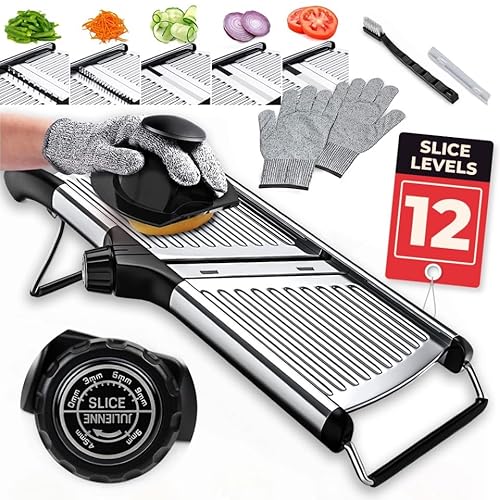
Gramercy Kitchen Company
Gramercy Mandoline Slicer for Kitchen with 12 Slice Settings, Black Edition
The Best Deals This Week*
-
MuellerLiving Mandoline Slicer for Kitchen
$35.99
($39.99)Save $4.00 -
OXO SteeL Chef's Mandoline Slicer 2.0
$89.95
($129.99)Save $40.04
*Deals are selected by our commerce team
Gramercy Kitchen Company Gramercy Mandoline Slicer for Kitchen with 12 Slice Settings, Black Edition
Gramercy Kitchen Company
Gramercy Mandoline Slicer for Kitchen with 12 Slice Settings, Black Edition
$39.95 at AmazonEditors' Favorite
Color: Black/Silver Size: Pro – Black Dimensions: 16.54 x 6.69 x 3.15 inches Weight: 1.9 Pounds Product Group: Kitchen Binding: Kitchen
Shop Now-BINGBING- Mandoline Slicer for Kitchen, 7-in-1 Adjustable Vegetable Slicer
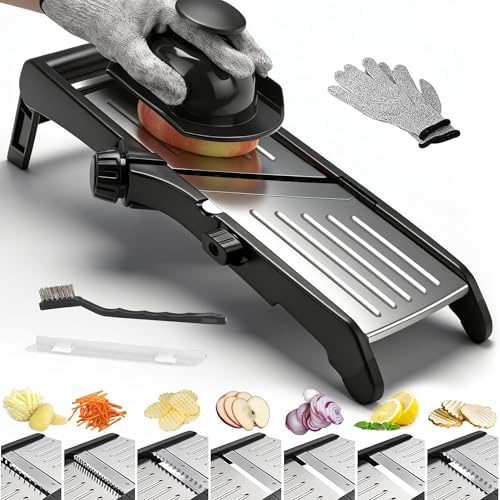
Great Value
Color: Gray Size: Extra Large Dimensions: 16 x 6 x 5 inches Weight: 2 pounds Product Group: Kitchen Binding: Kitchen
Shop NowMueller MuellerLiving Mandoline Slicer for Kitchen, Stainless Steel, Slice or Julienne, Vegetable Chopper, Fruit Slicer

Mueller
MuellerLiving Mandoline Slicer for Kitchen, Stainless Steel, Slice or Julienne, Vegetable Chopper, Fruit Slicer
$35.99 at AmazonColor: Stainless Steel Size: Stainless Steel Dimensions: 15.94 x 6.89 x 3.03 inches Weight: 1.68 pounds Product Group: Kitchen
Shop NowIPPINKA Japanese Double-Edged Slicer, Mandoline, Stainless Steel, Made in Sanjo, Japan, Silver

IPPINKA
Japanese Double-Edged Slicer, Mandoline, Stainless Steel, Made in Sanjo, Japan, Silver
$43.95 at AmazonColor: Silver Dimensions: 10.8 x 3.86 x 1.02 inches Product Group: Kitchen
Shop NowOXO SteeL Chef's Mandoline Slicer 2.0
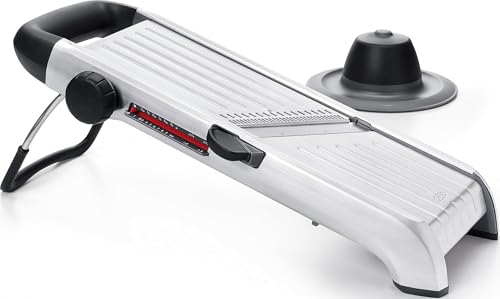
Color: Steel Size: One Size Dimensions: 17.6 x 7.8 x 5 inches Weight: 2.8219169536 pounds Product Group: Kitchen Binding: Kitchen
Shop Now




Write Your Review
No reviews yet. Be the first to share your experience!