

TL;DR — Yes, a high-carbon santoku knife is safe to use and safe to cook with. “High-carbon” describes the steel’s composition, more carbon for a harder, sharper edge, not a coating or additive that touches your food in any harmful way. The real question is which kind of high-carbon steel it is: high-carbon stainless (the most common, chromium-added, rust-resistant, low-maintenance) or traditional high-carbon (non-stainless) steel, which holds a keener edge but rusts, stains, and can react with acidic foods if not dried and oiled. Neither is a health hazard; the difference is maintenance and edge behavior. For picks, see our best santoku knife guide.
The HomeWhisk editorial team researches kitchen equipment by analyzing manufacturer specifications, steel metallurgy, and aggregated user reviews from major retailers and communities like Reddit r/chefknives. This explanation is based on how these steels behave, not on brand marketing.

“Is a high-carbon santoku knife safe?” usually comes from one of two worries: that “carbon” implies something toxic, or that a knife that rusts or discolors might contaminate food. Neither concern holds up, but they point to a genuine and useful distinction between two very different steel types sold under the same “high-carbon” banner. Understanding that distinction tells you what you’re actually buying, how much upkeep it needs, and whether the discoloration you may see is a problem or perfectly normal. Below we break down the steel, the safety facts, and the care. If you want a versatile all-rounder alongside a santoku, our best chef knife guide is the companion piece.
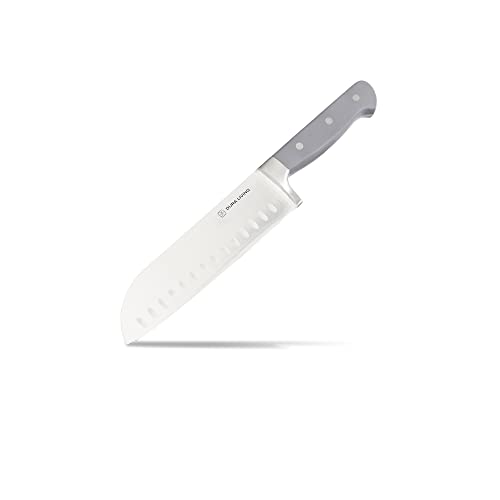
DURA LIVING
7-Inch Santoku Knife for Chopping, Slicing & Dicing - DURA LIVING High-Carbon Stainless Steel Chef Knife
This 7-inch Santoku handles vegetable chopping, meat slicing, and fruit dicing with a high-carbon stainless steel edge that holds its sharpness through repeated prep sessions. It suits home cooks who want one lightweight, full-tang blade to cover most daily cutting tasks without buying a full knife set.
Pros and Cons
Pros
- High-carbon stainless steel delivers a sharp working edge with solid edge retention.
- Full-tang, lightweight build gives balanced handling for chopping and slicing.
- Triple-riveted ergonomic handle stays comfortable and grippy through extended prep.
- One versatile blade covers vegetables, fruits, and meats for everyday cooking.
Cons
- Dishwasher use is permitted but will dull the edge faster, so handwashing is effectively required.
- High-carbon steel needs prompt drying to avoid spotting or corrosion over time.

Winco
Santoku Kitchen Knife for Slicing and Dicing: Winco 7" Black High Carbon Steel
This 7-inch Santoku slices, dices, and minces through vegetables and proteins with a Granton-edged blade that keeps food from sticking. Buy it if you want an NSF-certified, full-tang knife for daily prep without paying premium-brand pricing.
Pros and Cons
Pros
- Granton scallops stop food from clinging to the blade for cleaner slicing.
- High carbon steel delivers strong, sharp edge retention for everyday use.
- Full tang and triple rivets give it professional-level balance and durability.
- NSF certified for commercial kitchen safety standards.
Cons
- High carbon steel can rust or stain if left wet, so it needs prompt hand-drying.
- At 7 inches, it is less suited to heavy tasks like breaking down large cuts of meat.

SHAN ZU
7-Inch Santoku for Fast Vegetable and Protein Prep: SHAN ZU 9-Layer 10Cr15MoV Japanese Knife
This 7-inch santoku handles slicing, chopping, and dicing with a 12-degree edge on a 62 HRC Japanese 10Cr15MoV core, so it moves through produce and protein with minimal resistance. It suits home cooks and chefs who want a hard, edge-retentive Japanese profile with a traditional octagonal handle, and it arrives in a presentation box if you are buying it as a gift.
Pros and Cons
Pros
- High 62 HRC hardness paired with a 12-degree angle delivers a thin, keen edge for precision slicing.
- Multi-layer forged body resists corrosion and chipping better than single-layer budget blades.
- Octagonal sandalwood handle gives consistent grip orientation without needing to look at the blade.
- Ships in a premium gift box, so it is ready to give without extra packaging.
Cons
- Steel hardened to 62 HRC is more brittle than softer Western blades and can chip on bone, frozen food, or hard squash.
- The natural sandalwood handle needs hand washing and drying, since dishwasher exposure will dry and crack the wood.

Deeny Jarte
Faster Daily Meal Prep with Deeny Jarte 3-Piece Chef Knife Set, High-Carbon Stainless Steel
This three-knife set handles chopping, slicing, peeling, and trimming, with full-tang construction and 5Cr15MoV steel for balanced, chip-resistant performance. It suits home cooks, culinary students, and professional chefs who want three versatile knives for most daily prep.
Pros and Cons
Pros
- Full-tang construction supports balance during repeated chopping and slicing.
- The three blade sizes cover most everyday kitchen preparation tasks.
- 5Cr15MoV steel is hardened to 57±2 HRC for a balance of edge retention and chip resistance.
- Dishwasher-safe construction simplifies cleanup, although hand washing is recommended.
Cons
- The manufacturer recommends hand washing for the best long-term care despite dishwasher-safe construction.
- Product weight is not specified, so buyers cannot compare heft before purchase.
The Best Deals This Week*
-
7-Inch Santoku Knife for Chopping
$9.49
($17.99)Save $8.50 -
Santoku Kitchen Knife for Slicing and Dicing
$17.50
($21.29)Save $3.79 -
7-Inch Santoku for Fast Vegetable and Protein
$65.98
($79.98)Save $14.00 -
Faster Daily Meal Prep with Deeny Jarte 3-Piece
$16.79
($23.99)Save $7.20
*Deals are selected by our commerce team
DURA LIVING 7-Inch Santoku Knife for Chopping, Slicing & Dicing - DURA LIVING High-Carbon Stainless Steel Chef Knife
DURA LIVING
7-Inch Santoku Knife for Chopping, Slicing & Dicing - DURA LIVING High-Carbon Stainless Steel Chef Knife
This 7-inch Santoku handles vegetable chopping, meat slicing, and fruit dicing with a high-carbon stainless steel edge that holds its sharpness through repeated prep sessions. It suits home cooks who want one lightweight, full-tang blade to cover most daily cutting tasks without buying a full knife set.
Check price on AmazonA 7-inch Santoku built to replace several specialty blades for daily vegetable, fruit, and boneless meat prep.
The high-carbon stainless steel edge stays sharp through repeated chopping, and the flat Santoku profile suits push-cut slicing on a board.
Full-tang steel runs the length of a forged, triple-riveted handle, keeping the knife light and balanced rather than blade-heavy.
Despite the dishwasher-safe rating, detergent and heat will dull the edge, so handwashing is the realistic maintenance routine.
Best for home cooks who want one capable all-purpose knife instead of a full block set.
Winco Santoku Kitchen Knife for Slicing and Dicing: Winco 7" Black High Carbon Steel
Winco
Santoku Kitchen Knife for Slicing and Dicing: Winco 7" Black High Carbon Steel
This 7-inch Santoku slices, dices, and minces through vegetables and proteins with a Granton-edged blade that keeps food from sticking. Buy it if you want an NSF-certified, full-tang knife for daily prep without paying premium-brand pricing.
Check price on AmazonThis is a 7-inch Santoku built for daily slicing, dicing, and mincing of vegetables, fish, and boneless meats.
The Granton-edged blade cuts air pockets along the edge, so wet or starchy foods release instead of sticking.
High carbon steel with full tang construction and a triple-riveted handle gives it a balanced, sharp, durable feel for repeat use.
One limitation: high carbon steel is prone to rust, so it must be dried right after washing.
Best for home cooks and line prep who want a sharp, NSF-certified daily driver on a budget.
SHAN ZU 7-Inch Santoku for Fast Vegetable and Protein Prep: SHAN ZU 9-Layer 10Cr15MoV Japanese Knife
SHAN ZU
7-Inch Santoku for Fast Vegetable and Protein Prep: SHAN ZU 9-Layer 10Cr15MoV Japanese Knife
This 7-inch santoku handles slicing, chopping, and dicing with a 12-degree edge on a 62 HRC Japanese 10Cr15MoV core, so it moves through produce and protein with minimal resistance. It suits home cooks and chefs who want a hard, edge-retentive Japanese profile with a traditional octagonal handle, and it arrives in a presentation box if you are buying it as a gift.
Check price on AmazonA 7-inch Japanese santoku built for the repetitive vegetable and protein prep that dulls ordinary kitchen knives within weeks.
The 10Cr15MoV core at 62 HRC with a 12-degree edge slices tomatoes and fish cleanly instead of crushing them, and it stays sharp through heavy prep.
Nine forged layers, a tapered spine, and a matte finish keep the blade balanced and easy to wipe clean; the octagonal red sandalwood handle controls blade direction.
Hard steel at this hardness chips if used on bone, frozen items, or as a cleaver.
Best for home cooks and chefs who want Japanese edge geometry and will hand wash it.
Deeny Jarte Faster Daily Meal Prep with Deeny Jarte 3-Piece Chef Knife Set, High-Carbon Stainless Steel
Deeny Jarte
Faster Daily Meal Prep with Deeny Jarte 3-Piece Chef Knife Set, High-Carbon Stainless Steel
This three-knife set handles chopping, slicing, peeling, and trimming, with full-tang construction and 5Cr15MoV steel for balanced, chip-resistant performance. It suits home cooks, culinary students, and professional chefs who want three versatile knives for most daily prep.
Check price on AmazonThis set combines an 8-inch chef knife, 7-inch santoku, and 5-inch utility knife to cover chopping, slicing, peeling, and trimming without filling a drawer with specialized tools.
5Cr15MoV steel hardened to 57±2 HRC aims to retain sharpness while resisting chips during routine meat, vegetable, fish, and fruit preparation.
Each knife uses full-tang construction and a textured non-slip handle. Blade sizes are specified, but product weight is not provided for buyers comparing heavier or lighter knives.
The knives are dishwasher safe, but hand washing is recommended to preserve their condition over time.
Best for home cooks, culinary students, and professionals needing a compact set for everyday prep.
What “High-Carbon” Actually Means
Steel is iron plus carbon, and the amount of carbon largely determines how hard the finished blade can be. “High-carbon” simply means the steel has enough carbon (roughly 0.6% or more) to be hardened to a high level, which lets the blade take and hold a very sharp, thin edge. That is the entire meaning of the term: it is a metallurgical description, not a coating, chemical treatment, or additive that contacts your food differently from any other steel.
This is why “high-carbon” is a selling point on quality knives: harder steel holds an edge longer and can be sharpened thinner and keener. It has nothing to do with toxicity. The confusion comes from the word “carbon,” which is just the element that, alloyed into iron, makes good blade steel possible.
High-Carbon Stainless vs. Traditional Carbon Steel
This is the distinction that matters, because two very different knives are both marketed as “high-carbon.”
- High-carbon stainless steel contains both high carbon (for hardness and edge retention) and at least around 11-13% chromium, which forms a passive oxide layer that resists rust and staining. Most modern Japanese and Western santoku knives, including popular steels like VG-10, AUS-10, and various proprietary blends, are high-carbon stainless. They combine a hard, sharp edge with low maintenance, which is why they dominate the market.
- Traditional (non-stainless) high-carbon steel, such as White (Shirogami) and Blue (Aogami) steels or Western tool-type carbon steels, has little or no chromium. It can be hardened to take an exceptionally keen edge that many enthusiasts prize, and it is easy to sharpen, but with no chromium layer it rusts, stains, and reacts with acids readily. It demands drying and oiling.
Both are completely safe to eat from. The practical difference is maintenance: stainless is set-and-forget, while traditional carbon steel is a higher-maintenance tool that rewards care with a superior edge. Our best santoku knife guide notes which steel each pick uses.
Is High-Carbon Steel Safe for Food? Addressing the Real Worries
Three specific concerns come up, and each has a straightforward answer.
Toxicity. No. Both high-carbon stainless and traditional carbon steel are inert food-contact metals. Nothing harmful leaches from them during normal use. Carbon steel has been used for kitchen and professional knives for centuries.
Rust. Traditional carbon steel can develop orange rust if left wet. Surface rust is unsightly and should be cleaned off (it can affect taste and, in quantity, is not something you want to ingest), but it is not acutely toxic, and it is entirely preventable by drying the blade after use. A rusted knife is a maintenance failure, not a design flaw.
Patina and discoloration. As traditional carbon steel is used, it develops a patina, a thin gray, blue, or bronze oxide layer that forms from contact with food and moisture. A patina is normal, harmless, and actually protective: it is a stable oxide that helps shield the underlying steel from deeper rust. It is not dirt or damage, and many owners deliberately encourage it. Do not confuse a patina (stable, harmless) with active red rust (should be removed).
When a High-Carbon Santoku Is the Right Choice
A santoku is a Japanese general-purpose knife, typically 5-7 inches, with a flatter edge and a rounded “sheepsfoot” tip that suits a push-cut and up-and-down chopping motion rather than the rocking motion of a Western chef’s knife. It excels at slicing, dicing, and mincing vegetables, fish, and boneless meats, and its thin, hard high-carbon blade makes clean, precise cuts.
Choose high-carbon stainless if you want that sharpness with minimal fuss: it is the best fit for most home cooks. Choose traditional high-carbon steel if you sharpen your own knives, want the keenest possible edge, and will commit to drying and oiling. If you find the santoku’s flatter profile doesn’t suit your rocking cut, a chef’s knife from our best chef knife guide may serve you better, and a coordinated best knife sets purchase covers both plus the specialty blades below.
How to Care for a High-Carbon Knife
Care depends on which steel you have, and it is the whole difference between a knife that lasts decades and one that pits.
For traditional (non-stainless) carbon steel:
1. Hand-wash only, immediately. Never put it in the dishwasher. Wash with mild soap and warm water right after use, especially after cutting acidic foods like tomatoes, citrus, or onions. 2. Dry thoroughly at once. Water is the enemy; wipe the blade completely dry the moment you finish washing. 3. Apply a thin oil film for storage. A light coat of food-safe mineral oil (or camellia oil) on the blade blocks moisture and rust between uses if you won’t use it for a while. 4. Let the patina develop. Don’t scrub off the natural gray patina; it protects the steel. Remove only orange rust.
For high-carbon stainless steel:
- Hand-washing and drying is still best practice, but it tolerates occasional moisture far better and does not need oiling.
For both types:
- Store on a magnetic strip or in a knife block or edge guard, never loose in a drawer where the edge chips.
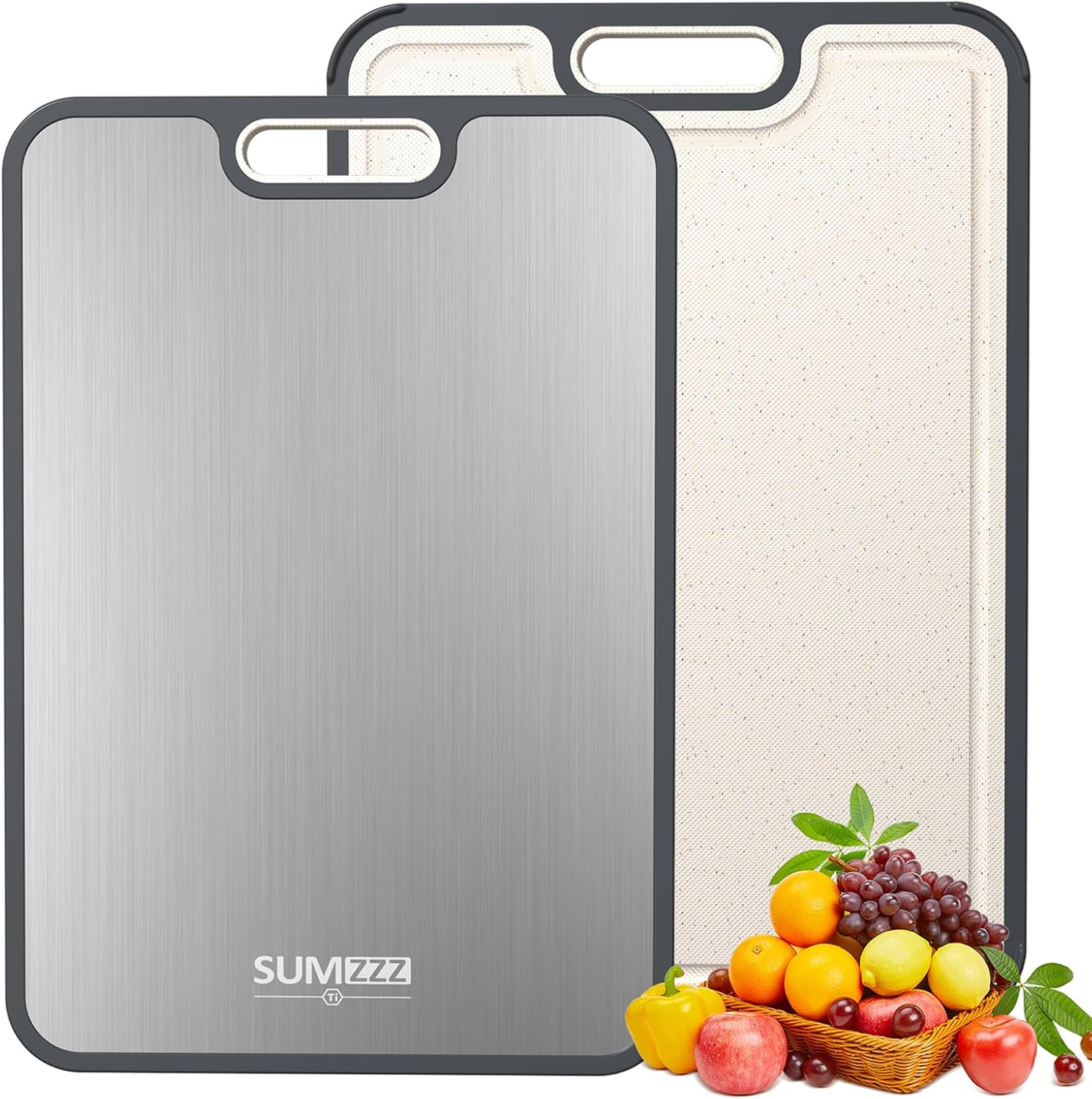
- Cut on wood or plastic; glass, stone, and ceramic boards dull and chip hard edges quickly. A quality wood or soft-plastic board protects the edge.
- Hone regularly and sharpen on whetstones; hard high-carbon steel takes a fine edge but a coarse pull-through sharpener can chip it.
Frequently Asked Questions
Is high-carbon steel safe for kitchen knives?
Yes. High-carbon steel, whether stainless or traditional, is an inert food-contact metal that leaches nothing harmful during normal use. “High-carbon” refers only to the steel’s carbon content, which makes the blade harder and sharper, not to any toxic additive. Carbon steel has been used for kitchen and professional knives for centuries. The only care points are keeping traditional carbon steel dry to prevent rust and cleaning off any active rust that forms.
What is the difference between high-carbon stainless and carbon steel knives?
High-carbon stainless steel adds chromium (around 11-13% or more), which forms a rust-resistant layer, so the knife stays sharp with little maintenance; most modern santoku knives use it. Traditional carbon steel has little or no chromium, so it takes an even keener edge and sharpens easily but rusts, stains, and reacts with acids unless dried and oiled. Both are safe; the choice is between low maintenance (stainless) and maximum edge quality (traditional carbon).
Is the discoloration on my carbon steel knife dangerous?
Almost certainly not. A gray, blue, or bronze film that develops with use is a patina, a stable, harmless oxide layer that actually protects the blade from deeper rust. It is normal and desirable. Active orange or red rust is different and should be cleaned off with a mild abrasive, then the blade dried and oiled. Learn to tell the two apart: patina stays, red rust goes.
How do I sharpen a high-carbon santoku knife?
Use whetstones (water stones), which suit the hard, thin edge of high-carbon steel. Progress from a coarse grit to fine, holding a consistent angle, typically around 10-15 degrees per side for a Japanese santoku, which is more acute than a Western knife. Avoid coarse electric or pull-through sharpeners, as they remove too much metal and can chip a hard edge. Regular honing between sharpenings keeps the edge aligned.
Can a high-carbon santoku knife rust, and is that a problem?
Traditional (non-stainless) high-carbon santoku knives can rust if left wet, because they lack chromium. It is preventable: wash and dry immediately and oil the blade for storage. Surface rust is a maintenance issue, not a safety crisis; clean it off promptly. High-carbon stainless santoku knives resist rust and rarely have this problem. If you don’t want to manage rust at all, choose a high-carbon stainless model from our best santoku knife guide.
Is a santoku or a chef’s knife better for a high-carbon blade?
Both work well in high-carbon steel; the choice is about cutting style. A santoku’s flatter edge and rounded tip favor push-cutting and straight up-and-down chopping, ideal for vegetables and precise slicing. A chef’s knife has a curved edge for rocking cuts and a pointed tip for detail work, and it is more versatile for meat and general tasks. Many cooks own both. See our best chef knife and best knife sets guides to compare.
The Bottom Line
A high-carbon santoku knife is safe to use and safe to eat from; “high-carbon” is a metallurgical term for a harder, sharper steel, not a hazard. The meaningful decision is between high-carbon stainless steel, which resists rust and needs little care, and traditional non-stainless carbon steel, which takes a superb edge but must be dried and oiled to avoid rust. The gray patina that forms on traditional carbon steel is normal and protective, not dangerous; only active red rust needs removing. For most home cooks, a high-carbon stainless santoku delivers the sharpness with the least fuss, while dedicated sharpeners may prefer traditional carbon. Pair it with a wood cutting board and proper storage, and it will last for decades. To choose, see our best santoku knife, best chef knife, and best knife sets guides, plus our best bread knife, best boning knife, and best fillet knife guides for the specialty blades a santoku can’t replace.




Write Your Review
No reviews yet. Be the first to share your experience!