

Shopping for the smallest grill made tends to end in one of two purchases: something so light it barely cooks, or something sold as portable that turns out to weigh as much as a full propane tank. Both mistakes come from reading the wrong number off the listing.
The problems below are the ones that show up in returns and in second purchases six weeks later. Most of them are decided before the grill is ever lit, at the moment somebody compares grate dimensions and skips the part about carrying the thing.
The Number That Decides Whether It Travels Is Folded Volume
Grate area is printed largest, and it is the wrong number for a grill that has to move. Packed volume and weight decide that. A 12-inch tabletop kettle with 15 to 18 pounds of steel under it has a better grate than any 8-inch folding unit sold, and it still will not go into a pack, because a sphere with legs packs at roughly 13 by 13 by 11 inches and nests with nothing. The folding unit collapses to something like 12 by 9 by 2 inches and slides down the side of a 40-liter pack. Same category on paper, two unrelated objects in practice.
Measure the folded footprint in all three dimensions before comparing cooking area, then treat the weight in pounds as a hard sort. Under 2 pounds is genuinely backpackable. Five to 15 pounds is car camping, meaning you carry it from the trunk to the site and no farther. Twenty to 40 pounds is a patio grill with handles bolted to it. Listings often quote shipping weight, so confirm the unit weight separately; the two can differ by 3 or 4 pounds of box and foam.
Under Sixty Square Inches, You Cook in Rounds
There is a floor below which a grill stops cooking food and starts warming it. Around 80 to 100 square inches, two burgers or two modest pieces of chicken go down at the same time and finish together. Below roughly 60 square inches, everything happens one item at a time. A 7-inch round grate is 38 square inches, and a chicken breast runs 6 to 7 inches long, so it fits diagonally and nothing else fits beside it.
That is where the reported regret lives, because many of the smallest units on the market sit between 40 and 70 square inches. Dinner for two at that size is four rounds. Each round is 8 to 10 minutes plus 2 or 3 for the grate to recover after cold food lands on it, so you are 40 minutes in and the first thing you cooked went cold 25 minutes ago. At home you can hold plates in the oven. At a campsite there is no oven, and that gap is what nobody prices in.
A One-Pound Body Cannot Hold a Temperature
Tiny grills shed heat fast because the ratio of exposed surface to fuel volume works against them. A 1-pound folding grill is 22-gauge steel, about three hundredths of an inch, with almost no mass to buffer anything. A 10 mph breeze pulls the grate down 100°F or more and it does not climb back until the wind drops. Cooking on one often means standing on the windward side as a windscreen yourself.
A small cast-iron hibachi does the opposite. It holds a steady temperature for 40 minutes, wants 10 to 15 minutes of preheat, and weighs 25 to 40 pounds. No design is both featherweight and thermally stable, because the property that buys stability is mass. Choosing which of those two failures you would rather live with is the real purchase, and expecting a 2-pound grill to behave like the 30-pound one is where the disappointment starts.
Three Pounds of Grill Is Not a Three-Pound System
Charcoal for a single cook on a small grate is 1 to 2 pounds. A 16-ounce propane canister weighs about 1.5 pounds with the steel, and a butane cartridge sits close behind. Add a lighter, a foil pouch for ash, tongs, and something to scrub with, and that is another 8 to 12 ounces riding along.
On foot that arithmetic flips the decision. Two cooks a day for three days is 6 to 9 pounds of briquettes, more than the tent weighs. The fuel outweighs the grill, sometimes several times over, so for a multi-day trip the honest answer is a canister stove at 3 to 5 ounces burning an 8-ounce cartridge. For an afternoon 40 yards from a parked car none of it matters, and you can bring the heavy grill and the heavy bag both.
Small Does Not Buy an Exemption
Dorms and hotels prohibit open flame on their property no matter how small the flame is, and a balcony is still their property. In dry season, fire restrictions apply to a 6-inch grate exactly as they do to a full grill. The common wording bans charcoal and wood outright while permitting liquid-fuel or propane devices that shut off with a valve, which means the folding grate in the trunk is the prohibited one and the little canister stove is the one that passes.
Many national and state parks go further and want a closed-flame stove rather than an open grate, or require cooking inside an existing ring or over a fire pan. On a multifamily balcony the fuel and the required clearance settle it, not the dimensions. All of this is a five-minute check on a park alert page or a call to the campground office, and it belongs before the order rather than at the trailhead.
The Legs Fail First, and the Ash Becomes Your Problem
On a carried unit, the parts that fail are the parts that fold. Thin wire legs, often eighth-inch rod, bend after a dozen packs, and a bent leg means the grill sits crooked and everything rolls to one corner. Plastic latches crack in cold, especially ones that spent a season in a truck bed and then get opened at 25°F. A thin lid warps at high heat, and once it warps the vents control nothing, because the gap around the rim is wider than the vent itself.
Two things catch people at the end of a cook rather than the beginning. A small grill has no shelf, so a 600°F grate comes off and lands in the dirt or on a picnic table it immediately scorches; a folded sheet of heavy foil fixes that and weighs nothing. And with no lid there is no way to smother coals, so you either wait 40 to 60 minutes for them to die or drown them and pack out wet ash. Embers hold heat for hours, so that pouch has to be metal or doubled foil, and working it out at 10 p.m. is worse than deciding in advance.
Matching the Floor to the Trip
One person on foot is better served by a 1 to 2 pound folding grate laid over an existing fire ring, or by a canister stove, than by any tiny grill with a body and a lid. The body is the part that adds weight without adding cooking.
Two people car camping should stop shrinking at 100 to 150 square inches and 10 to 18 pounds. That is the range where dinner happens in one pass and the unit holds temperature in a breeze, and the extra 8 pounds is something you carry 30 feet. For a balcony, the building’s fuel rules answer the size question first, and whatever inches remain after that are what you actually get to shop for.
What is the smallest grill that can really cook dinner for two?
About 100 square inches, in a unit weighing 10 to 18 pounds. At that size two burgers and two pieces of chicken go down together and come off together, and a breeze does not end the cook. Between 60 and 80 square inches it still works, but you are plating in two waves. Below 60 you are running four rounds across roughly 40 minutes, and the first item is cold before the last one is done. If dinner for two is the actual job, treat 100 square inches as the floor and buy the lightest unit that clears it.
Is any grill light enough to take backpacking?
Only the ones under 2 pounds, and those are grates rather than grills: a folding titanium or steel rack, 4 to 16 ounces, that sits over an existing fire ring. It is real gear and it cooks well where there is wood and a legal fire. The catch is that fires are the first thing banned in dry season, so the grate can turn into dead weight on a permit you already paid for. For anything past one night, a 3 to 5 ounce canister stove with an 8-ounce cartridge cooks more reliably for less total weight. Carrying a grill with a body, a lid, and legs on your back is rarely something people do twice.
How much weight does the fuel add on top of the grill?
Enough to change which grill makes sense. One cook on a small charcoal grate takes 1 to 2 pounds of briquettes, a 16-ounce propane canister runs about 1.5 pounds with its steel, and a butane cartridge is similar. Accessories add 8 to 12 ounces once a lighter, tongs, and an ash pouch are counted. Across three days at two cooks a day, charcoal reaches 6 to 9 pounds, which is more than most of these grills weigh empty. That is why fuel type rather than grate size usually settles the choice for anything carried on foot.

Charbroil
Portable Grilling for Small Kitchens and Outdoor Meals: Charbroil 465133010 1-Burner Propane Grill
The Charbroil 465133010 provides portable propane grilling with 190 square inches of cooking space, while its porcelain-coated grates simplify cleanup. It suits apartment cooks, campers, and small households who need a compact grill with minimal assembly.
Pros and Cons
Pros
- The porcelain-coated grates offer rust resistance and easier cleaning.
- The 190-square-inch cooking area provides useful capacity in a portable format.
- Minimal assembly and included step-by-step instructions simplify setup.
- The steel body and high-temperature finish support durability.
Cons
- The single-burner design limits temperature-zone control for foods requiring different heat levels.
- The 90-day warranty is short compared with many longer-term appliance warranties.
George Foreman GR10B 2-Serving Mini Grill & Panini Press, Compact 7.3” x 5.6” Cooking Surface,1–2 Servings, Dorms & Small Kitchens
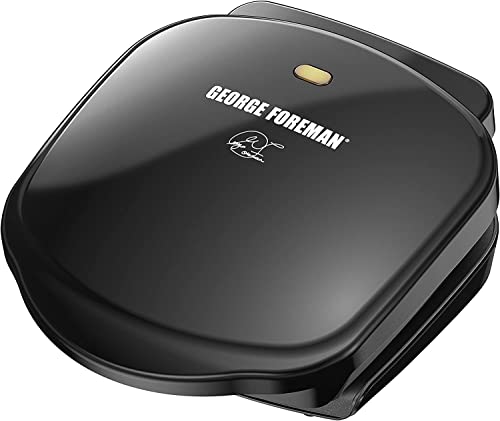
George Foreman
GR10B 2-Serving Mini Grill & Panini Press, Compact 7.3” x 5.6” Cooking Surface,1–2 Servings, Dorms & Small Kitchens
$28.99 at AmazonEditors' Favorite
Color: Black Size: 2-Serving Dimensions: 9.38 x 5.12 x 10.25 inches Weight: 2.8 pounds Product Group: Kitchen Binding: Kitchen
Shop NowGas One GasOne 14-inch Portable Charcoal Barbecue Grill with Thermometer – Red

Great Value
Color: Red with Thermometer Dimensions: 14.5 x 14.5 x 15 inches Product Group: Lawn & Patio Binding: Tools & Home Improvement
Shop NowRealcook Small Portable BBQ Charcoal Grill: Mini Foldable Table Top Barbecue Grills

Realcook
Small Portable BBQ Charcoal Grill: Mini Foldable Table Top Barbecue Grills
$31.99 at AmazonColor: Black Size: Small Dimensions: 14.96 x 12.2 x 9.45 Inches Product Group: Lawn & Patio
Shop NowCharbroil Portable Grilling for Small Kitchens and Outdoor Meals: Charbroil 465133010 1-Burner Propane Grill
Charbroil
Portable Grilling for Small Kitchens and Outdoor Meals: Charbroil 465133010 1-Burner Propane Grill
The Charbroil 465133010 provides portable propane grilling with 190 square inches of cooking space, while its porcelain-coated grates simplify cleanup. It suits apartment cooks, campers, and small households who need a compact grill with minimal assembly.
$54.99 at AmazonColor: Black Size: Standard Dimensions: 24 x 12 x 15 inches Weight: 11 Pounds Product Group: Lawn & Patio Binding: Apparel
Shop NowGeorge Foreman Compact 2-Serving Electric Indoor Grill and Panini Press for 1–2 People, Classic Plates, Black
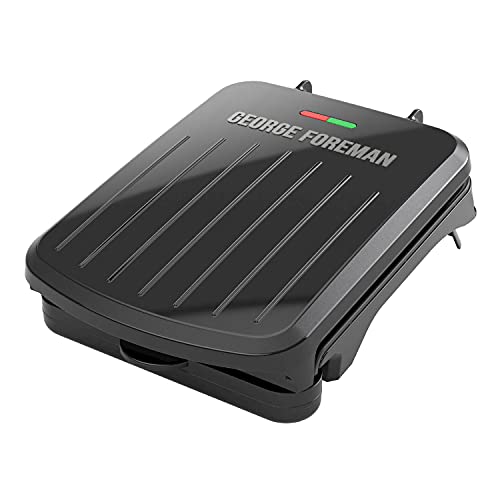
George Foreman
Compact 2-Serving Electric Indoor Grill and Panini Press for 1–2 People, Classic Plates, Black
$35.50 at AmazonColor: Black Size: 2-Serving Dimensions: 10.49 x 3.1 x 7.53 Inches Product Group: Kitchen Binding: Kitchen
Shop Now







Write Your Review
No reviews yet. Be the first to share your experience!