

A glass pan set gets bought for the oven and used just as often for the refrigerator. The same dishes bake a lasagna, hold the leftovers, travel to a potluck, and come back to be reheated. That range is why glass sells, and it is also why glass gets misunderstood, because the material follows a narrow set of rules and the box almost never explains them. Knowing what glass does to heat, and to food, is what tells you which sizes are worth owning and which pieces in a fourteen-piece box exist to make the number look bigger.
Two Kinds of Glass, and a Box That Rarely Says Which
Bakeware glass comes in two families, and they behave differently enough that the distinction matters more than the brand name. Borosilicate has a low coefficient of thermal expansion, meaning it barely changes size as it heats. A dish can have a hot inner face and a cool outer face without the two sides fighting each other, so borosilicate tolerates a temperature differential across its wall of roughly 300°F or more. Tempered soda-lime is the other family, and tempering makes it noticeably stronger against impact, the knock of a serving spoon or a slide across a counter. But soda-lime expands several times as much for the same rise in temperature, so the differential it survives is far smaller, somewhere between 100°F and 140°F.
Most inexpensive sets sold now are tempered soda-lime, and few makers print which glass you are holding. That one fact explains nearly every story of a dish that shattered in the oven or split in the sink, and the conclusion is a rule rather than a worry. No cold dish into a hot oven. No hot dish onto a wet or cold surface. No cold liquid into a hot dish. Follow those three and soda-lime is perfectly serviceable; ignore them and even borosilicate will eventually object.
Why Glass Browns Gently and Shows Its Work
Glass conducts heat poorly and passes radiant energy readily, and that combination changes how food cooks. In a metal pan, heat arrives mostly by conduction through the base and travels fast up the walls, which is why edges catch and corners overbrown. Glass lets radiant heat from the oven elements through to the underside of the food while conducting slowly sideways, so the base warms steadily and the edges stay closer to the middle in temperature. Custards set without curdled rims, gratins brown across the whole surface instead of drying at the perimeter, and baked pasta comes out with the corners still edible.
The same property is a liability wherever you want a crisp, dry bottom. Pastry needs a fast blast of conducted heat to set before the filling soaks in, and glass cannot deliver it as quickly as steel or aluminum. A fruit pie in glass usually wants the lower rack and ten to fifteen minutes longer than the metal version, and it still will not match metal for snap. What glass gives back is information. You can see whether a lasagna base has set, tilt the dish to see whether the liquid reduced, and check the color of a crust from underneath without lifting anything.
The Heat That Keeps Working After the Oven
Glass is heavy for its volume, and that mass stores energy. A 9 by 13 inch dish out of a 375°F oven goes on cooking its contents for several minutes on the counter, which is a difference in timing rather than a technicality. A gratin pulled at the moment it looks right will be slightly past right at the table, so the habit worth building is to take glass out a few minutes early and let residual heat finish it. Eggs and cheese punish you most for ignoring this; a bread pudding forgives it.
The upside is the same physics running in your favor. A glass dish reaches the table hot and stays hot through second helpings, long enough to matter at a buffet or a slow dinner. Bake, carry, serve, then cover and refrigerate in the same vessel, and you understand why these sets get used more often than the metal pans stacked beside them.
Oven and Microwave Yes, Burner and Broiler No
The word pan invites an assumption worth correcting plainly. These dishes belong in the oven and the microwave. They are not stovetop cookware, and setting one on a gas or electric burner concentrates heat on a small patch of the base while the rest of the dish stays cool, which is exactly the differential the material cannot absorb. It will crack, and it can do so violently.
A broiler element deserves the same caution for the same reason: intense radiant heat a few inches away drives the top surface and upper rim well ahead of the base, and one face expanding against another is how glass fails. Browning the top of an already hot dish under a low broiler, with the rack dropped to eight inches or more, is usually fine. Sliding a cold, filled dish under an element at full blast is not. Neither is a burner, a barbecue grate, or a toaster oven where the coil sits an inch from the rim.
Which Sizes Earn Their Shelf Space
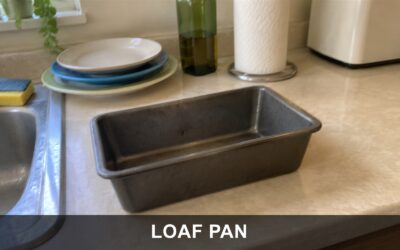
Piece counts are marketing, so set composition deserves an honest look. The rectangular 9 by 13, holding roughly three to four quarts, is the dish that does mains: lasagna, enchiladas, a tray of chicken thighs, brownies for a crowd. The 8 by 8 square, about two quarts, handles sides, halved recipes and bar bakes. A 2 or 3 quart round or oval is the gratin and cobbler dish, and its curved walls suit anything served with a spoon. Add a loaf dish if you bake bread, meatloaf or terrines. Those four cover most of what a home oven is asked to do.
What pads a set is a second small square in a slightly different size, a nest of ramekins that duplicates bowls you already own, and lids counted as pieces. A fourteen-piece set is frequently seven dishes and seven lids, so read the number that way before comparing prices.
Lids are not filler, though, because they change what the set is for. Plastic snap lids turn baking dishes into refrigerator and transport vessels, and that second role is most of why people buy glass at all. They are not oven-safe and should be off the dish before it goes near heat. Check whether the gasket is removable, since a molded-in seal traps sauce in a groove you cannot reach and will start to smell long before the dishes wear out.
Two physical details separate a good set from a cheap one. Wide grip tabs let you carry four pounds of hot dish in thick mitts, where a shallow lip forces the pinch grip that ends in a dropped dinner. Rims should be thick and evenly finished, because a chip in glass is not cosmetic damage.
Care, Chips, and What to Check Before Buying
A chipped rim is a stress concentration. Glass fails from surface flaws, and a missing flake gives an expanding wall somewhere to begin a crack, so a chipped dish should leave the oven rotation even when it looks harmless. Micro-scratches do the same thing on a longer timescale, which is the case against abrasive powders and steel wool. Soak a baked-on dish in hot water and detergent for an hour and the residue lifts on its own; scour it every week and you are sanding tomorrow’s cracks into the surface.
The rest of the care list is short. Never pour liquid into a hot empty dish, which is how most people break glass while trying to loosen stuck-on food. Cool dishes on a dry towel or a wooden board rather than a stone counter or a wet sink, both of which pull heat out of one face quickly. Let a dish reach room temperature before the refrigerator, and let it warm up before a hot oven.
The buying summary is short as well. Find out whether the set is borosilicate or tempered soda-lime and handle it accordingly, buy the four sizes that get used rather than the largest number on the box, treat lids as storage rather than cooking parts, and retire chipped dishes instead of hoping. Glass and metal are complements. For custards, casseroles, gratins and anything going straight to the table, a glass pan set is the better answer, while crisp pie bases, dark roasted vegetables and properly browned sheet dinners still want metal.
Frequently Asked Questions
Can a glass dish go straight from the refrigerator into a hot oven?
Treat that as no unless you know the dish is borosilicate. A dish at 40°F meeting a 375°F oven sees a differential across the wall well past the 100°F to 140°F that tempered soda-lime handles, and the failure is sudden rather than gradual. Leave the filled dish on the counter for twenty to thirty minutes, or put it into a cold oven and let both climb together. Borosilicate is much more forgiving, but the habit costs nothing and it protects the dish you actually own.
Do baking times change if I use glass instead of metal?
They usually do, in both directions. Glass is slow to come up to temperature, so a fruit pie or anything needing a set bottom crust generally wants the lower rack and ten to fifteen minutes more than the metal version. Once hot, glass stays hot, so cakes, brownies and custards do better if you drop the oven 25°F and start checking early. Anything heavy in egg or cheese should come out a few minutes before it looks finished, with carryover heat closing the gap.
How do I tell which type of glass I already own?
Start with the packaging or product page, since borosilicate is a selling point and brands that use it say so. Failing that, look through a thick edge or the base, because soda-lime often shows a faint green or blue cast while borosilicate reads clearer. Where the set was made is a rough signal too, as several European lines still use borosilicate while most low-cost sets are tempered soda-lime. If nothing settles it, assume soda-lime and follow the three temperature rules, which costs you nothing if you turn out to be wrong.

M MCIRCO
Bake, Store & Reheat in One Dish: M MCIRCO 8-Piece Deep Glass Baking Dish Set with Lids, Borosilicate, Green
This set pairs four deep borosilicate glass baking dishes from 1 to 3.2 quarts with four tight-fitting gray lids, so a lasagna goes from oven to fridge without dirtying a second container. Buy it if you batch-cook or meal-prep and want oven-to-freezer dishes that stack in the fridge instead of a drawer of mismatched storage.
Pros and Cons
Pros
- One dish handles baking, serving, and storing, which reduces cleanup after big-batch meals.
- The 2.1-inch depth on the three larger dishes holds saucy foods like stews and layered pasta without overflow.
- Clear glass presents well enough to go straight from oven to dining table.
- Dishwasher-safe glass avoids the hand-scrubbing that baked-on cheese usually demands.
Cons
- The lids are plastic and not oven-safe, so they must be removed before baking and washed separately.
- Glass dishes of this depth are heavy when full, which makes the 3.2-quart size awkward for anyone with limited grip strength.

Amazon Basics
Oven-to-Table Casserole Baking: Amazon Basics 6-Piece Borosilicate Glass Baking Dish Set with BPA-Free Lids
This set pairs three borosilicate glass baking dishes with matching BPA-free lids so a casserole goes from a 752°F oven straight to the fridge without transferring food to another container. Buy it if you batch-cook or meal-prep and want bakeware that doubles as stackable storage instead of owning separate dishes and containers.
Pros and Cons
Pros
- The 752°F oven rating clears the temperature range of roasting, broiling-adjacent baking, and high-heat casseroles.
- Clear glass lets you check browning on the bottom and sides without pulling the dish out of the oven.
- Lids are designed for travel, so the largest 15.3-inch dish works for potlucks and covered-dish dinners.
- Glass will not absorb tomato sauce, garlic, or curry odors the way plastic bakeware does.
Cons
- The lids are storage covers, not oven-safe, so they must come off before baking and be washed separately on the top rack.
- Glass of this size is heavy when full, and the largest dish is awkward to lift one-handed from a low oven rack.
The Best Deals This Week*
-
Bake, Store & Reheat in One Dish
$37.99
($44.99)Save $7.00 -
KOMUEE 8 Pieces Glass Baking Dish with Lids, Gray
$33.99
($39.99)Save $6.00
*Deals are selected by our commerce team
M MCIRCO Bake, Store & Reheat in One Dish: M MCIRCO 8-Piece Deep Glass Baking Dish Set with Lids, Borosilicate, Green
M MCIRCO
Bake, Store & Reheat in One Dish: M MCIRCO 8-Piece Deep Glass Baking Dish Set with Lids, Borosilicate, Green
This set pairs four deep borosilicate glass baking dishes from 1 to 3.2 quarts with four tight-fitting gray lids, so a lasagna goes from oven to fridge without dirtying a second container. Buy it if you batch-cook or meal-prep and want oven-to-freezer dishes that stack in the fridge instead of a drawer of mismatched storage.
$37.99 at AmazonEditors' Favorite
Color: Green Dimensions: 1.574803148 x 1.574803148 x 5.905511805 inches Weight: 11.71095535744 pounds Product Group: Kitchen Binding: Kitchen
Shop NowAmazon Basics Oven-to-Table Casserole Baking: Amazon Basics 6-Piece Borosilicate Glass Baking Dish Set with BPA-Free Lids
Amazon Basics
Oven-to-Table Casserole Baking: Amazon Basics 6-Piece Borosilicate Glass Baking Dish Set with BPA-Free Lids
This set pairs three borosilicate glass baking dishes with matching BPA-free lids so a casserole goes from a 752°F oven straight to the fridge without transferring food to another container. Buy it if you batch-cook or meal-prep and want bakeware that doubles as stackable storage instead of owning separate dishes and containers.
$44.39 at AmazonGreat Value
Color: Linen Gray Size: 6 Piece Dimensions: 17.5 x 11.5 x 6.5 Inches Weight: 8.267334825 pounds Product Group: Kitchen Binding: Kitchen
Shop NowKOMUEE 8 Pieces Glass Baking Dish with Lids, Gray

Color: Gray Size: Gray Dimensions: 9.9999999898 x 5.90157479713 x 1.79921259659 inches Weight: 11.8608696956 Pounds Product Group: Kitchen Binding: Kitchen
Shop Now



Write Your Review
No reviews yet. Be the first to share your experience!