

The phrase on the box does less work than buyers think. A rice cooker is not one object you can hand to a machine; it is a sealed electrical base plus five or six detachable pieces, and the rules differ for each. Most complaints about a cooker turning sour, spitting starch onto the counter, or losing its coating in a year trace back to a few predictable errors.
Name them plainly: treating the whole appliance as washable, machine-washing a coated inner pot, ignoring the inner lid and gasket, forgetting the steam vent, abandoning the condensation cup, using the bottom rack, scrubbing the heating plate, and expecting a time saving that never arrives. Each has a specific fix, and two of them should change which cooker you buy.
The Label Applies to Parts, Never to the Appliance
No rice cooker is dishwasher safe as a unit, whatever the carton suggests. The main body holds a heating plate, a thermostat or fuzzy-logic sensor, wiring and a control board. Submerging it, or letting water run into the well where the pot sits, is how cookers die, and it leaves a shock hazard afterwards. No drying period reliably fixes water that has reached the board.
What is typically rated is the removable set: the inner pot, the inner lid, the steam vent cap, the condensation cup and the serving paddle. Read that as a maximum rather than a promise, since plenty of models rate only three of the five and the pot is the piece most often excluded. The care section of the manual names the components, often with a top-rack qualifier attached.
So the routine splits. Lift out the pot and every detachable piece, take them to the sink or the rack, then wipe the base with a cloth damp with warm water and a drop of dish soap. Rim, housing, control panel, well, then dry. Two minutes, and no water poured anywhere.
The Inner Pot Is Where the Buying Decision Lives
Most affordable cookers use a spun or pressed aluminium pot with a nonstick interior. Aluminium spreads heat well and keeps the cooker light and cheap, and the coating means cooked rice lifts out in one piece. The weakness is that surface: repeated cycles dull it, the hot dry stage bakes it, and any scratch from a metal spoon gives water a route to the aluminium underneath.
This is why manufacturers single the pot out for hand washing even when the lid and vent cap are cleared. It is not a legal hedge. A coated pot washed by hand in warm water with a soft sponge outlasts one that runs two hundred cycles, and the difference shows as rice sticking in the third year rather than the first.
For a cooker that genuinely tolerates the machine, the specification is a stainless or clad stainless inner pot, where stainless layers sandwich an aluminium core so heat still spreads evenly. The trade is real: stainless grips rice, especially short-grain, so the bottom layer needs a ten-minute soak before it releases. Nonstick releases cleanly and then wears out. Stainless sticks and then lasts.
Why an Unwashed Inner Lid and Gasket Turn Sour
Every cook drives starchy steam upward, and it condenses on the underside of the inner lid and in the channel around the silicone gasket. What is left once the cooker cools is a film of starch and dissolved protein in a warm, enclosed space, which is an excellent growth medium. Skip it for a week or two and the cooker turns sour, and the smell transfers into the next batch of rice.
On most cookers the inner lid unclips or twists off a quarter turn, and the gasket pulls out of its groove by hand. Wash both, and pay attention to the groove, which looks clean until you run a fingertip through it; a soft brush clears it in seconds. Dry the gasket before refitting.
Check this before you buy, because it is a design decision you cannot undo. A cooker with a non-removable gasket, or an inner lid fixed to the outer lid, is a long-term problem: you clean a sealed crevice with a cloth and hope, and eventually the smell wins. Removability matters more here than an extra cooking program, and photos showing the lid from underneath usually reveal it.
The Steam Vent and the Cup Nobody Empties
The vent cap on top of the lid is the most neglected part of any rice cooker. Starch dries inside it into a glaze that narrows the opening, and that changes how the machine behaves rather than simply looking dirty. Steam escapes in bursts, so the cooker spits, foam pushes past the lid onto the counter, and the temperature curve can shift enough to leave the top layer of rice undercooked.
On most models the cap lifts off and separates into two or three pieces, often with a baffle inside that traps the worst of it. Rinse the pieces under hot water and clear the hole with a brush. Anyone fighting a boil-over they blamed on too much water should check the vent before adjusting the ratio.
The condensation cup is its partner in neglect. Many cookers carry a small reservoir clipped to the back that catches drips off the lid, and it fills with cloudy starch water that grows a film within days. It slides out with one hand; empty and rinse it every few cooks. A cooker that smells despite a clean lid usually has a full cup.
Top Rack Only, and the Plate That Stays Dry
When a manual rates plastic parts, it almost always adds top rack only, and that qualifier carries the weight. The lower rack sits close to the heating element, where air during the dry stage runs hotter than the wash water and can pass 170°F for long stretches. Polypropylene lids, vent caps and paddles soften there and come out slightly bowed. A bowed inner lid no longer meets the gasket evenly.
That failure is permanent. A warped lid cannot be flattened, and a lid that does not seal leaks steam, which lengthens cooking, dries the top of the rice and drips onto the counter. Replacements are awkward to source for budget models, and keeping small parts on the upper rack costs nothing.
The heating plate under the pot needs the same restraint. It works by pressing flat against the pot base, so contact is everything. Dried grains create gaps that read as hot spots and cook unevenly, while scouring pads and abrasive powder scratch the plate and make contact worse still. Let it cool, wipe with a damp cloth, lift a stubborn grain with a fingernail, and stop there.
What to Check on the Box Before You Pay
Be honest about the time saving; it is smaller than the marketing implies. A pot, lid, gasket, cap and cup wash by hand in two or three minutes if you get to them the same evening, since rice starch stays water-soluble until it dries. A ten-minute soak does more than any cycle, and alkaline dishwasher detergent buys nothing on residue that warm water already dissolves.
Compatibility earns its price in one situation: a household that will not wash promptly, where parts sit overnight and starch hardens into something a sponge argues with. There, a stainless inner pot is the right purchase, because it is the only pot material that takes repeated cycles without degrading. Know your own habits before paying the premium.
Five checks settle it. Is the inner pot stainless or coated aluminium. Is the pot rated, or listed as hand wash while other parts are cleared. Does the gasket pull out. Does the vent cap come apart. Are rated parts top rack only. Behind all five sits one principle: a cooker with fewer removable parts is easier to keep clean than one with many, provided those parts detach.
Can I put the whole rice cooker in the dishwasher if the box says dishwasher safe?
No, and no manufacturer intends that reading. The claim refers to specific removable parts listed in the care section of the manual, and the main body is never among them. That body holds the heating plate, a control board and mains wiring, so water reaching it can kill the cooker outright and leaves a shock risk. Wash only the pieces you can lift out, then clean the base with a cloth damp with warm water and dry it. If the manual is lost, assume the pot, inner lid, vent cap, cup and paddle are the candidates.
Will the dishwasher ruin a nonstick inner pot?
One cycle will not, but a habit of it will. Coated aluminium pots lose surface slickness gradually across repeated cycles, and the hot dry stage is harder on the coating than the wash. The bigger risk is an existing scratch from a metal spoon, which lets water reach the aluminium substrate and etch it, spreading damage outward. This is why so many manuals rate the lid and vent cap for the machine while listing the pot as hand wash only. Warm water, a soft sponge and a ten-minute soak keep a coated pot usable for years longer.
Why does my rice cooker smell sour even though I wash the pot?
Almost always the inner lid, the gasket groove or the condensation cup. Starchy steam condenses on the lid underside and in the silicone gasket channel during every cook, and that residue ferments in a warm sealed space within a week or two. The cup at the back collects the same liquid and grows a film if nobody empties it. Pull the inner lid, pull the gasket from its groove, wash all three parts and clear the groove with a soft brush, then dry the gasket before refitting. Check the vent cap too, since trapped starch inside it holds the same smell.

GreenLife
Compact 3-Cup Rice Cooker for Small Kitchens: GreenLife Ceramic Nonstick One-Touch Rice Cooker, Black
This GreenLife rice cooker turns 3 cups of uncooked rice into 6 cups cooked with a single switch, and its PFAS-free ceramic nonstick pot releases grains cleanly instead of leaving a crusted layer to scrub. It suits apartment dwellers, students, and couples who want set-and-forget rice without surrendering half a countertop to a full-size cooker.
Pros and Cons
Pros
- PFAS-free ceramic coating appeals to cooks avoiding traditional nonstick chemistry.
- Small footprint fits apartment counters and dorm setups where a 10-cup cooker will not.
- Everything needed to start is included: inner pot, measuring cup, and paddle.
- Dishwasher-safe removable parts mean the cooker does not create extra handwashing.
Cons
- Six cups of cooked rice is a ceiling, not a suggestion, so households cooking for five or more will run it twice.
- The single on/off switch offers no delay timer, steaming basket, or porridge mode found on programmable cookers.

AROMA
Uncoated Stainless Rice Cooker for Easy Cleanup, AROMA ARC-753SGB 6-Cup
The AROMA ARC-753SGB cooks up to 6 cups of rice and keeps it warm automatically, with an uncoated stainless steel pot that simplifies cleanup. It suits small kitchens and households needing rice, oatmeal, soups, pasta, or omelets from a compact one-touch appliance.
Pros and Cons
Pros
- The food-grade 304 stainless steel inner pot is uncoated, durable, and dishwasher-safe.
- One-touch operation lets you add rice and water, lower the lever, and leave the cooker to work.
- Automatic keep-warm operation helps maintain serving temperature after cooking finishes.
- The spatula stores in the handle, while the included measuring cup supports consistent portions.
Cons
- The 3-cup uncooked capacity may be limiting for larger households or batch cooking.
- The product data does not provide a listed weight.

BLACK+DECKER
6-Cup Rice Cooker with Steam Basket for Weeknight Family Meals - BLACK+DECKER Surf Spray
This BLACK+DECKER cooker turns out up to 6 cups of cooked rice with one button press, then switches to Keep Warm so dinner stays hot until everyone sits down. It suits families and meal preppers who want rice and a steamed side finished in the same appliance without watching a pot.
Pros and Cons
Pros
- Handles rice and a steamed side at the same time, freeing a burner during dinner prep.
- Single-button operation makes it usable by anyone in the household, including teens cooking for themselves.
- Dishwasher-safe pot and basket with a durable ceramic coating simplify daily cleanup.
- Glossy pastel finish looks intentional on an open countertop rather than like hidden-away appliance clutter.
Cons
- One-touch operation means no dedicated settings for brown rice, quinoa, or porridge, so grains with longer cook times take trial and error.
- The 6-cup cooked capacity is limiting if you regularly cook for large gatherings or batch-prep rice for a full week.
GreenLife Compact 3-Cup Rice Cooker for Small Kitchens: GreenLife Ceramic Nonstick One-Touch Rice Cooker, Black
GreenLife
Compact 3-Cup Rice Cooker for Small Kitchens: GreenLife Ceramic Nonstick One-Touch Rice Cooker, Black
This GreenLife rice cooker turns 3 cups of uncooked rice into 6 cups cooked with a single switch, and its PFAS-free ceramic nonstick pot releases grains cleanly instead of leaving a crusted layer to scrub. It suits apartment dwellers, students, and couples who want set-and-forget rice without surrendering half a countertop to a full-size cooker.
$39.99 at AmazonEditors' Favorite
Color: Black Size: 1.5QT Rice Cooker Weight: 3.15040572398 pounds Product Group: Kitchen Binding: Unknown Binding
Shop NowAROMA Uncoated Stainless Rice Cooker for Easy Cleanup, AROMA ARC-753SGB 6-Cup
AROMA
Uncoated Stainless Rice Cooker for Easy Cleanup, AROMA ARC-753SGB 6-Cup
The AROMA ARC-753SGB cooks up to 6 cups of rice and keeps it warm automatically, with an uncoated stainless steel pot that simplifies cleanup. It suits small kitchens and households needing rice, oatmeal, soups, pasta, or omelets from a compact one-touch appliance.
$45.00 at AmazonGreat Value
Color: Black Size: 3-Cup Uncooked/6-Cup Cooked / 1.2Qt Dimensions: 10.25 x 8.25 x 7.88 inches Product Group: Kitchen Binding: Kitchen
Shop NowBLACK+DECKER 6-Cup Rice Cooker with Steam Basket for Weeknight Family Meals - BLACK+DECKER Surf Spray
BLACK+DECKER
6-Cup Rice Cooker with Steam Basket for Weeknight Family Meals - BLACK+DECKER Surf Spray
This BLACK+DECKER cooker turns out up to 6 cups of cooked rice with one button press, then switches to Keep Warm so dinner stays hot until everyone sits down. It suits families and meal preppers who want rice and a steamed side finished in the same appliance without watching a pot.
$22.99 at AmazonColor: Surf Spray Product Group: Kitchen Binding: Unknown Binding
Shop NowOster Rice Cooker, 6 Cup Cooked (3 Cup Uncooked), Electric Rice Maker, Compact Size for Family Meals & Sides, Automatic Keep Warm, Nonstick Inner Pot, Black
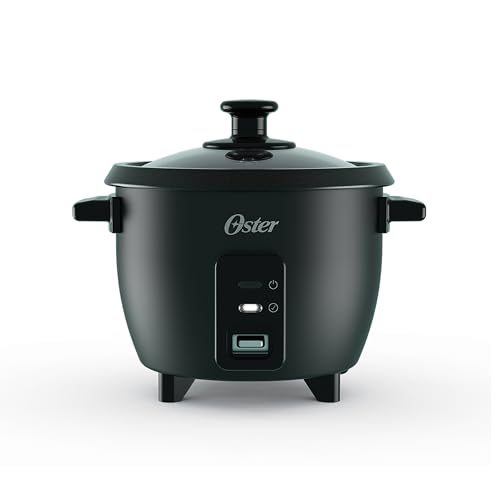
Oster
Rice Cooker, 6 Cup Cooked (3 Cup Uncooked), Electric Rice Maker, Compact Size for Family Meals & Sides, Automatic Keep Warm, Nonstick Inner Pot, Black
$26.98 at AmazonColor: Black Size: 6-Cup Weight: 3.50094072056 pounds Product Group: Kitchen Binding: Kitchen
Shop Now








Write Your Review
No reviews yet. Be the first to share your experience!