

TL;DR — Yes, a good frying pan is worth it — it’s one of the few pieces of cookware you’ll use almost daily, from eggs and pancakes to searing, sautéing, and pan sauces. The real question isn’t whether to own one but which material to buy: nonstick for eggs and low-fat cooking, stainless steel for searing and sauces, and carbon steel or cast iron for high-heat, long-lasting versatility. A single quality pan beats a cheap set you barely use. For picks across cookware, see our best cookware sets guide.
The HomeWhisk editorial team researches kitchen equipment by analyzing manufacturer specifications, material behavior, and aggregated owner reviews from major retailers and communities like Reddit r/Cooking and r/carbonsteel. A frying pan — also called a skillet or fry pan — is the workhorse of most kitchens, so “is it worth it” usually really means “is a good one worth the money over a cheap one, and which type?” This guide breaks down the materials, what each does well, how long they last, and how to choose the pan you’ll actually reach for.

SENSARTE
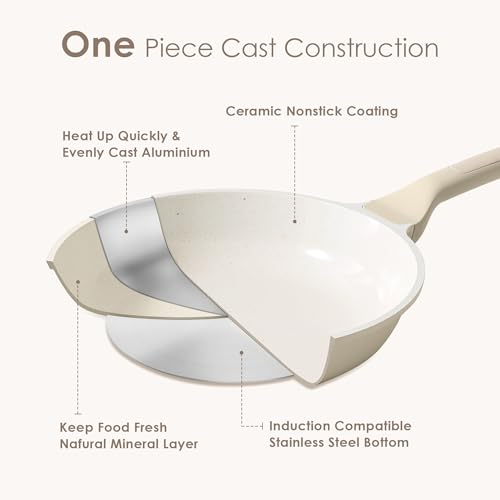
Nonstick Ceramic Omelet Pan for Effortless Eggs: SENSARTE 9.5-Inch PFAS-Free Skillet, Cream White
This 9.5-inch ceramic skillet slides eggs and delicate foods off its super nonstick surface with less oil and no coating flaking into your meal. Buy it if you want a PFAS-free, induction-compatible pan for daily egg, omelet, and single-serving cooking.
Pros and Cons
Pros
- Eggs and delicate foods slide off cleanly with minimal oil thanks to the smooth ceramic coating.
- Free of PFOA, PTFE, PFAS, lead, and cadmium for safer everyday cooking.
- Compatible with all stovetops including induction, and resists warping over time.
- Rivet-free interior and dishwasher-safe finish make cleanup quick and stain-free.
Cons
- At 9.5 inches it suits one to two servings, so it is small for cooking family-sized batches.
- Ceramic nonstick coatings generally lose their release performance faster than harder alternatives with heavy use.

VocVoi
Tri-Ply Stainless Steel Frying Pan for Searing and Sauteing: VocVoi 12 Inch Non-Toxic Skillet, Induction Ready
This 12-inch tri-ply stainless steel skillet delivers fast, even heat across a wide cooking surface without any PFOA or PTFE coating that can chip or degrade. It suits cooks who want a searing and braising pan that will not react with acidic foods and can move from stovetop to oven to dishwasher.
Pros and Cons
Pros
- Twelve inches of cooking area handles four chicken breasts or a full batch of vegetables without crowding.
- Completely coating-free surface stands up to high-heat searing that would ruin ceramic or Teflon pans.
- Ergonomic handle and full stovetop compatibility make it a practical single-pan starter for a new kitchen.
- Multi-layer core fixes the hot-spot problem of single-ply stainless pans during deep frying and braising.
Cons
- Stainless steel is not nonstick, so eggs and fish need proper preheating and enough fat or they will grab the surface.
- Tri-ply pans of this diameter carry real weight, which makes one-handed tossing harder than with a thin aluminum skillet.
The Best Deals This Week*
-
Nonstick Ceramic Omelet Pan for Effortless Eggs
$21.84
($29.99)Save $8.15 -
Tri-Ply Stainless Steel Frying Pan for Searing
$19.99
($29.99)Save $10.00
*Deals are selected by our commerce team
SENSARTE Nonstick Ceramic Omelet Pan for Effortless Eggs: SENSARTE 9.5-Inch PFAS-Free Skillet, Cream White
SENSARTE
Nonstick Ceramic Omelet Pan for Effortless Eggs: SENSARTE 9.5-Inch PFAS-Free Skillet, Cream White
This 9.5-inch ceramic skillet slides eggs and delicate foods off its super nonstick surface with less oil and no coating flaking into your meal. Buy it if you want a PFAS-free, induction-compatible pan for daily egg, omelet, and single-serving cooking.
Check price on AmazonThe SENSARTE 9.5-inch skillet solves the daily struggle of eggs and omelets sticking or tearing on the pan.
Its super nonstick ceramic surface releases food with little oil, while the induction base heats fast and evenly for consistent results.
Built from cast aluminum with a woodgrain bakelite handle that stays cool, it is a lightweight, single-to-double-serving pan sized for quick cooking.
The 9.5-inch diameter limits you to smaller portions, so it is not ideal for large family meals.
Best for solo cooks and couples who want a healthy, easy-clean pan for eggs and everyday tasks.
VocVoi Tri-Ply Stainless Steel Frying Pan for Searing and Sauteing: VocVoi 12 Inch Non-Toxic Skillet, Induction Ready
VocVoi
Tri-Ply Stainless Steel Frying Pan for Searing and Sauteing: VocVoi 12 Inch Non-Toxic Skillet, Induction Ready
This 12-inch tri-ply stainless steel skillet delivers fast, even heat across a wide cooking surface without any PFOA or PTFE coating that can chip or degrade. It suits cooks who want a searing and braising pan that will not react with acidic foods and can move from stovetop to oven to dishwasher.
Check price on AmazonA 12-inch tri-ply stainless skillet built for cooks who want browning and pan sauces without a chemical coating that wears out.
The multi-layer base solves the hot-spot problem of pure steel, so oil heats evenly for deep frying and braising liquid simmers steadily.
Uncoated stainless will not react with tomatoes or wine, the handle is shaped for a secure grip, and the pan is rated for oven, dishwasher, and induction use.
It requires technique: heat the pan, then add fat, or delicate proteins will stick until they release.
Best for the cook replacing worn nonstick pans or outfitting a first apartment kitchen with one versatile skillet.
Why a Frying Pan Earns Its Place
A frying pan is a shallow, flat-bottomed pan with low, flared sides, typically 8 to 12 inches across. That flared shape is the point: it maximizes surface contact with the heat and lets moisture escape, so food browns instead of steaming. Those sloped sides also make it easy to slide a spatula under an egg or flip a pancake, and to toss or stir without food climbing out.
Compared with a saucepan (tall, straight sides, made for liquids) or a sauté pan (straight sides, more capacity for braising), the frying pan is built for dry-heat cooking where browning matters: eggs, pancakes, sautéed vegetables, searing meat, crisping fish skin, and building the fond that becomes a pan sauce. For the majority of home cooks it’s the most-used pan in the kitchen, which is exactly why buying a good one pays off. If you cook for a family, a matched set spreads that value across sizes — our best cookware sets guide covers full lineups.
The Materials, and What Each Does Best
Frying-pan performance comes down to material. There’s no single best one; each is a set of trade-offs.
Nonstick (PTFE-coated aluminum) releases food with little or no fat, which makes it unbeatable for eggs, omelets, crepes, and delicate fish. The coating is applied over an aluminum body, so it heats fast and evenly. The catch is a limited lifespan: the coating wears out in roughly 2-5 years of regular use, it can’t take metal utensils or very high heat (generally keep it under about 260°C/500°F), and it doesn’t brown or build fond as well. See our best nonstick cookware guide for coating types and durability.
Ceramic nonstick uses a sol-gel (silica-based) coating marketed as PTFE-free. It’s genuinely nonstick when new and handles slightly higher heat, but aggregated reviews consistently show the release fades faster than PTFE — often within a year or two — so it’s a reasonable pick for the coating-averse, not a longevity champion.
Stainless steel is the durable all-rounder. It won’t scratch, tolerates any utensil and oven heat, and browns superbly, which makes it the choice for searing and pan sauces. Because steel alone conducts heat poorly, quality pans are tri-ply or fully clad — a layer of aluminum or copper sandwiched in steel for even heating. The trade-off: food sticks unless you preheat properly and use enough fat. It’s covered in our best cookware sets and best copper cookware guides.
Carbon steel and cast iron are the high-heat, buy-it-for-life options. Both build a natural nonstick seasoning over time, take extreme heat and oven use, and last decades. Carbon steel is lighter and heats faster (a favorite of restaurant kitchens); cast iron holds heat like a battery, ideal for searing steak. Both need seasoning and can’t sit in acidic sauces for long.
Is a Nonstick Frying Pan Worth It Specifically?
For most homes, a nonstick pan is worth owning as one pan, not your only pan. Nothing beats it for eggs and low-fat cooking, and a mid-priced nonstick pan is genuinely useful every morning. But treat it as a consumable: the coating will degrade, so there’s little reason to spend heavily on a premium nonstick when a solid mid-range one performs nearly as well for its shorter life.
The best-value setup for many cooks is a nonstick pan for eggs plus a stainless or carbon-steel pan for everything that needs browning or high heat. That pairing covers the full range without asking one coating to do a job it isn’t built for.
What to Look for When Buying
A few concrete specs separate a pan you’ll love from one you’ll regret.
- Thickness and weight. A too-thin pan develops hot spots and warps on high heat. A heavier gauge (especially in the base) heats evenly and stays flat. For clad stainless, look for a fully clad or tri-ply base.
- Size. A 10-inch pan suits one or two people; 12-inch handles a family portion or a full sear. Many cooks own both.
- Handle and oven rating. Riveted stainless handles are durable and oven-safe; plastic handles limit oven use. Check the oven temperature rating if you finish dishes under the broiler.
- Induction compatibility. Only magnetic bases work on induction — cast iron and carbon steel always do; aluminum and some stainless need a magnetic layer.
- Lid and pour. A flat lid and a slightly flared rim make a frying pan far more versatile day to day.
Matching the pan to your cooktop and cooking style matters more than brand prestige. If you camp or cook outdoors, durability and induction/flame tolerance shift the calculus — see our best camping cookware guide.
How to Care for a Frying Pan So It Lasts
Care is where most pans live or die, and it differs sharply by material.
Nonstick: use wooden, silicone, or nylon utensils only; avoid high heat and aerosol sprays (which leave a burnt residue that ruins release); hand-wash with a soft sponge and let it cool before washing to prevent warping. Stainless: preheat before adding oil, deglaze stuck-on bits with water or a bit of acid, and use Bar Keepers Friend to restore shine. Carbon steel and cast iron: dry immediately after washing, wipe with a thin film of oil, and re-season as needed; never leave them soaking. Good care easily doubles a pan’s usable life, and it’s the main reason a well-kept carbon-steel pan outlasts a drawer of neglected nonstick.
Frequently Asked Questions
What is the best frying pan material?
There’s no universal winner — it depends on the job. Nonstick is best for eggs and low-fat cooking but wears out in a few years. Stainless steel is the durable all-rounder for searing and sauces but needs technique to avoid sticking. Carbon steel and cast iron take high heat, build a natural nonstick surface, and last decades, but need seasoning. Most cooks are best served by owning two: a nonstick for eggs and a stainless or carbon-steel pan for everything that needs browning.
What is the best frying pan material for health?
The main health question is coating. PTFE nonstick is considered safe below about 260°C (500°F); the older concern, PFOA, has been banned from manufacture since 2013, so modern PTFE pans are PFOA-free. If you’d rather avoid coatings entirely, stainless steel, carbon steel, and cast iron have no coating to degrade — cast iron can even add trace dietary iron. Ceramic nonstick is another coating-free-of-PTFE option, though its surface fades faster. Avoid using any nonstick pan on very high heat or with metal utensils.
What is the best frying pan for eggs?
A nonstick pan is the clear winner for eggs — omelets, fried eggs, and scrambles slide right out with little fat. An 8- or 10-inch nonstick pan is ideal. If you prefer to avoid coatings, a well-seasoned carbon-steel or cast-iron pan can cook eggs beautifully once the seasoning is established, though it takes practice and adequate fat. Stainless steel is the hardest for eggs because they stick unless the pan is properly preheated and oiled.
Is a frying pan worth it, or should I buy a whole cookware set?
Both can be worth it, depending on how you cook. If you mostly make eggs and quick meals, one good frying pan may be all you need. If you cook varied meals for a household, a set gives you matched sizes and pots at a lower per-piece cost. A common mistake is buying a large cheap set you rarely fully use — one or two quality pans often beats ten mediocre ones. Compare full lineups in our best cookware sets guide, and remember that a frying pan pairs with, rather than replaces, dedicated tools like a best moka pot for coffee or a best instant pot for pressure cooking.
How long should a good frying pan last?
It depends entirely on material. A nonstick pan typically lasts 2-5 years before the coating degrades, and ceramic often less. Stainless steel lasts decades with basic care. Carbon steel and cast iron can genuinely last a lifetime — even generations — because the surface can always be re-seasoned and any rust scoured off. This lifespan gap is why the higher upfront cost of a clad stainless or carbon-steel pan often works out cheaper over time than replacing nonstick pans repeatedly.
Do I need a nonstick pan if I have stainless steel?
Not strictly, but many cooks find it worthwhile. Stainless can cook eggs and delicate foods once you master preheating and fat, but nonstick makes those tasks effortless and forgiving. Since a nonstick pan is a consumable that wears out, a practical approach is one mid-priced nonstick for eggs plus a stainless (or carbon-steel) pan for searing and sauces. That covers nearly everything without overspending on a coating that won’t last.
The Bottom Line
Is a frying pan worth it? For nearly everyone, yes — it’s the most-used pan in most kitchens, and a good one transforms everyday cooking. The smarter question is which material fits your habits: nonstick for effortless eggs and low-fat cooking (with the understanding it’s a 2-5 year consumable), stainless steel for durable searing and sauces, and carbon steel or cast iron for high-heat, buy-it-for-life versatility. Most cooks are best served owning two complementary pans rather than one that compromises. Buy a heavier gauge, match the base to your cooktop, and care for it properly. For full cookware lineups and adjacent picks, see our best cookware sets, best nonstick cookware, and best copper cookware guides.




Write Your Review
No reviews yet. Be the first to share your experience!