

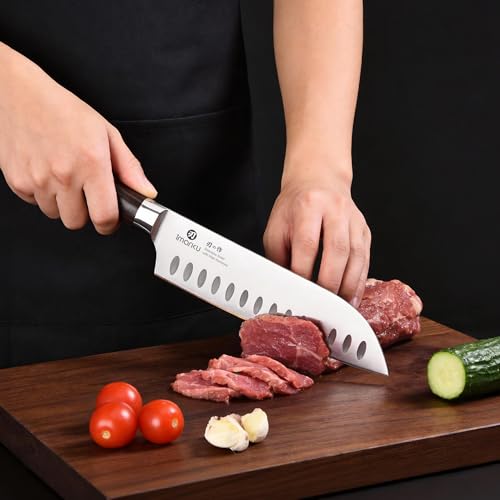
TL;DR — A santoku warps when the thin, hard blade is stressed unevenly, usually by heat, impact, or bad sharpening. Thermal shock from hot water or a stove is the most common cause: the steel expands and contracts unequally and takes a set bend. Prying, twisting, dropping, or grinding one side harder than the other on a stone also bends the blade. Minor warps in thinner blades can sometimes be carefully bent back or corrected on a whetstone; severe warps in hard steel risk snapping and are often permanent. Prevent it with hand-washing, gentle drying, straight cuts, and a light touch. For a flatter replacement, see our best santoku knife guide.
The HomeWhisk editorial team researches kitchen equipment by analyzing manufacturer specifications, heat-treatment behavior, and aggregated user reviews from major retailers and communities like Reddit r/chefknives and r/TrueChefKnives. Warping is one of the most frustrating knife problems because a bent blade rocks on the board, cuts crooked, and never sits flat again. Here is why it happens and what can actually be done.
A warped santoku is not the same as a dull or chipped one. The steel has physically bent out of plane, either along its length or across its width, so the edge no longer sits true on the cutting board. Because Japanese santokus are ground thin and hardened to a high, somewhat brittle hardness, they are more prone to bending and cracking under stress than a thick, soft Western blade. Understanding the specific stress that bent yours tells you whether it can be saved. If not, our best santoku knife and best chef knife guides cover well-tempered, flat-ground options.
Thermal Shock: The Number-One Cause
Heat is the most common reason a santoku warps. Steel expands when heated and contracts when cooled, and it does so unevenly if one part of the blade changes temperature faster than another. When that uneven expansion exceeds the steel’s elastic limit, the blade takes a permanent set, a warp.
The classic mistakes: rinsing a knife under very hot water, leaving it resting against a hot pan or on a warm stovetop, or, worst of all, the dishwasher, where the hot wash and heated dry cycles repeatedly heat and cool the thin blade while it is unsupported. A thin santoku heats and cools fast and unevenly, so it is especially vulnerable. This is a major reason every knife maker warns against dishwashing. Keep the blade at room temperature, wash in warm (not scalding) water, and dry it gently.
Impact, Prying, and Lateral Force
Santokus are designed for straight, vertical push-and-pull cuts through soft and medium ingredients. They are not pry bars or cleavers. Warping and bending from mechanical force happens when the blade is stressed sideways:
- Prying and twisting — using the tip to lever open a squash, popping food off the board with a twist, or separating frozen items bends the blade laterally because the thin cross-section has little resistance to sideways force.
- Cutting hard or frozen food — bones, frozen meat, hard squash, and stone fruit pits shock the edge and can bend or chip a thin, hard santoku that was never meant for them.
- Dropping the knife — a fall onto a hard floor can bend the blade or, more often, snap the brittle tip.
- Storing it loose in a drawer — knives knocking against other utensils can bend a thin tip over time.
Because harder steel (60+ HRC) is more brittle, these forces are more likely to chip or crack a santoku than gently bend it, but a bent tip or a bowed blade is a frequent result on thinner, slightly softer blades.
Uneven Sharpening and Manufacturing Stress
Sharpening can introduce a warp. If you grind much more aggressively on one side of the blade than the other, especially on a powered grinder that also heats the steel, you remove material and induce stress unevenly, which can pull the blade out of true. Overheating the edge on a bench grinder is a double hit: it both thins one side and thermally stresses the steel.
Some warps are baked in from the factory. Heat treatment (quenching and tempering) involves rapid cooling that can leave a blade slightly bent if the process was imperfect; this is more common on inexpensive knives. A brand-new knife that rocks on the board or shows light through a straightedge was likely warped in manufacturing, and that is a warranty issue, not something you caused. If you suspect a factory defect, our best santoku knife and best knife sets guides favor makers with consistent quality control.
Can a Warped Santoku Be Fixed?
Sometimes, with realistic expectations. The outcome depends on how thin and how hard the blade is and how severe the bend is.
1. Assess the warp. Lay the blade on a flat surface or sight down the spine against a straightedge to see whether the bend is along the length (a bow) or a bent tip, and how far off true it is. A slight bow is more fixable than a sharp kink. 2. Try gentle hand pressure for minor bends. On a thinner, more flexible blade, place it on a firm flat surface and apply slow, steady pressure with the heel of your hand to the high side, bending slightly past straight since steel springs back a little. Work in small increments and re-check often. Do not force it. 3. Use a whetstone to correct a warped edge. If the warp is near the edge, controlled sharpening that removes a touch more steel from the high side can bring the cutting edge back to true. Go slowly with consistent angle and pressure; this is a job for patience, not power tools. 4. Know when to stop. Hard Japanese steel (VG10, SG2, carbon cores) at 60+ HRC is brittle and can snap rather than bend. If the blade resists or you hear any cracking, stop. A severe warp in hard steel is often permanent, and forcing it risks a broken knife. 5. Consider a professional. A skilled sharpener or the manufacturer can sometimes straighten a blade with proper tooling, and a factory-warped knife may be covered under warranty.
For badly warped blades that cannot be trusted, replacement is the safe choice. Our best santoku knife, best chef knife, and best knife sets guides cover durable options.
How to Prevent Warping
Prevention comes down to avoiding heat and lateral stress. Hand-wash only, in warm water, and never use the dishwasher. Keep the blade off hot pans and stovetops. Cut with straight up-and-down or push-pull motions and let the sharp edge do the work; do not pry, twist, or lever with the blade. Do not cut bones, frozen food, or hard squash with a thin santoku; reach for a heavier knife or cleaver. Sharpen with even, controlled strokes and avoid overheating the edge on powered grinders. Store the knife in a block, on a magnetic strip, or in an edge guard so it cannot knock against other tools. Treat the thin blade as the precision instrument it is and it will stay flat. A complementary best boning knife or best bread knife keeps you from abusing the santoku on the wrong tasks.
Frequently Asked Questions
Can heat really warp a kitchen knife?
Yes, and it is the most common cause. Steel expands when heated and contracts when cooled, and if one part of a thin blade changes temperature faster than the rest, the uneven stress can exceed the steel’s elastic limit and leave a permanent bend. Rinsing under very hot water, resting the blade on a hot pan, and especially the dishwasher’s hot wash-and-dry cycles are the usual offenders. A thin santoku heats and cools quickly and unevenly, making it particularly vulnerable. Keep the blade near room temperature.
Is a warped santoku still usable?
It depends on the severity. A slight warp mainly causes the blade to rock on the board and cut slightly crooked, and many cooks keep using such a knife for rough work. A significant warp makes precise, flat cuts difficult and can be unsafe if the blade skates. It does not affect food safety, only performance. If the warp bothers you and gentle correction does not fix it, it is worth repairing professionally or replacing, since a flat blade is central to a santoku’s clean, controlled cuts.
Why do Japanese knives warp or crack more than German knives?
Japanese santokus are ground thin and hardened to a high hardness, often 60 HRC or above, to hold a fine, long-lasting edge. That hardness comes with brittleness and a thin cross-section that has little resistance to sideways force or thermal stress, so they bend or crack more readily under abuse. German knives use softer steel around 56 HRC and thicker blades, which flex and absorb shock better but dull faster. The Japanese design trades toughness for sharpness, which is why gentle handling matters more.
How do I straighten a warped knife blade?
For a minor bend on a thinner blade, lay it on a firm flat surface and apply slow, steady pressure with your palm to the high side, bending just slightly past straight to account for spring-back, then re-check. Work in small increments. If the warp is at the edge, careful whetstone sharpening that removes a little extra from the high side can true it up. Stop immediately if the steel resists or you hear cracking; hard Japanese steel can snap. Severe warps often need a professional or replacement.
Does the dishwasher warp knives?
Yes, the dishwasher is one of the worst things for a knife and a leading cause of warping. The hot wash cycle and heated drying cycle repeatedly heat and cool the thin, unsupported blade, inducing thermal stress that can bend it. On top of that, detergents strip protective oxide layers and promote corrosion, and the knife rattling against racks and other steel can bend the tip and chip the edge. Always hand-wash a good santoku and dry it right away.
Can uneven sharpening cause a warp?
It can. Removing significantly more steel from one side of the blade than the other, especially on a powered grinder that also heats the steel, induces uneven stress that can pull the blade out of true. Overheating the edge compounds the problem with thermal stress. To avoid it, sharpen with even, matched pressure on both sides, keep a consistent angle, and use hand whetstones rather than fast power grinders, which are hard to control and generate heat. Consistent technique keeps the blade straight.
The Bottom Line
A warping santoku is the price of its thin, hard, precision design being pushed past what it tolerates. Thermal shock from hot water, hot pans, and the dishwasher is the leading cause, followed by lateral force from prying, twisting, hard-food cutting, and drops, with uneven sharpening and factory defects rounding out the list. Minor warps in thinner blades can sometimes be coaxed back by hand or on a whetstone, but hard steel can snap, and severe warps are often permanent. Prevent it by keeping the blade cool, cutting straight, sharpening evenly, and storing it protected. If yours is beyond saving, our best santoku knife, best chef knife, and best knife sets guides cover reliable replacements.
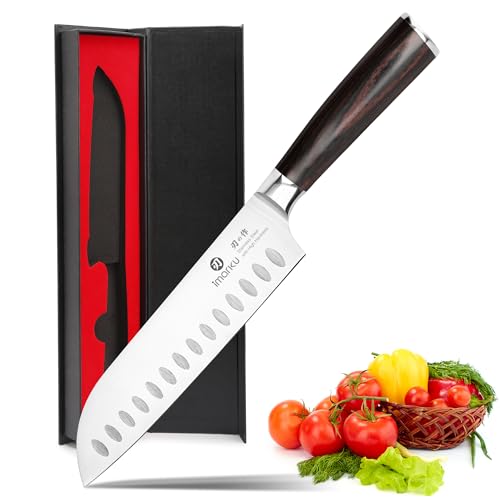
imarku
7-Inch Santoku Knife for Precision Slicing, Dicing & Mincing – High Carbon Japanese Steel with Pakkawood Handle
The imarku 7-inch Santoku knife combines a hollow scalloped edge and 15-18 degree hand-polished bevel to reduce drag and prevent food from sticking during high-volume prep work. Home cooks and apartment dwellers who want a restaurant-capable knife without the steep price will find it covers meat, vegetables, and bread with a single blade.
Pros and Cons
Pros
- The 2.5mm blade thickness paired with the hollow edge design handles both delicate julienne cuts and heavier chopping without flexing or wedging.
- Pakkawood handle construction offers a more sanitary and dimensionally stable grip than standard composite or natural wood handles.
- The 15-18 degree edge angle matches professional Japanese knife geometry, giving it a noticeably sharper out-of-box performance than German-style knives at this price.
- Versatile enough for meat, vegetables, fruit, and bread, making it a practical single-knife solution for small kitchens with limited storage.
Cons
- With zero verified reviews available, long-term edge retention and handle durability under daily use remain unconfirmed by real buyers.
- The 3-month refund window is shorter than the lifetime guarantees offered by competing brands at the same price point.

Zwilling
Henckels Santoku Knife 7-inch Hollow Edge German Stainless Steel
This 7-inch Santoku excels at mincing, slicing, and dicing with its hollow-edge blade that prevents food sticking during prep. Buy it if you want a durable, balanced Japanese-style knife that handles everyday vegetable work without the premium price tag.
Pros and Cons
Pros
- Hollow-edge grantons genuinely prevent cucumber and tomato slices from sticking to the blade mid-cut.
- German stainless steel holds its edge through repeated use on harder vegetables like carrots and beets.
- Fully forged construction creates noticeable weight and balance that makes repetitive dicing feel controlled and effortless.
Cons
- At 7 inches, it's smaller than Western chef's knives, requiring more frequent repositioning on larger vegetables.
- Dishwasher safe, but hand washing extends blade life and prevents potential handle loosening over time.

HOSHANHO
7-Inch Japanese Santoku Chef Knife | HOSHANHO High Carbon Stainless Steel
This 7-inch santoku slices vegetables, meat, and fish with a 15-degree blade angle that delivers thinner, more precise cuts than standard chef knives. Home cooks and professional chefs alike benefit from the triple-layer laminated steel construction that stays sharp longer and resists corrosion.
Pros and Cons
Pros
- The triple-layer laminated steel with 10Cr15CoMoV Japanese steel reaches 62HRC hardness, delivering edge retention that outlasts standard stainless blades.
- Ergonomic pakkawood handle provides secure grip and control without hand fatigue during extended prep sessions.
- 15-degree blade angle and hand-sharpened edge produce cleaner cuts through delicate vegetables and proteins compared to wider blade angles.
Cons
- Hand-washing required; dishwasher use will degrade the blade edge and handle finish over time.
- Requires regular honing to maintain the 15-degree angle; the initial sharpness will gradually diminish with normal kitchen use.

MercerCulinary
Mercer Genesis 7-Inch Santoku Knife: Professional Slicing & Mincing
This fully forged German steel santoku delivers razor-sharp precision for slicing vegetables and mincing herbs with its Granton edge that releases food cleanly. Buy it if you prep vegetables daily and want a professional-grade knife that won't require constant sharpening.
Pros and Cons
Pros
- Granton edge prevents food from sticking to the blade, making thin slicing of cucumbers, tomatoes, and fish noticeably faster than standard chef's knives.
- Ergonomic handle with substantial bolster reduces wrist strain during extended prep sessions and feels secure even when wet.
- Professional-grade construction at under $50 delivers the same German steel and forging process used in culinary schools.
Cons
- Requires hand-washing only; dishwasher use will damage the blade and handle, adding a maintenance step most busy cooks dislike.
- Santoku's shorter blade length and rectangular shape take practice if you're accustomed to Western chef's knives, requiring a learning curve.

Henckels Forged Accent 2-Piece Santoku Knife Set | German Stainless Steel
This 2-piece santoku set delivers razor-sharp German engineering for mincing, slicing, and dicing with effortless precision and lasting edge retention. Buy it if you prep vegetables daily and want knives that stay sharp without constant maintenance.
Pros and Cons
Pros
- Forged bolster transitions seamlessly from blade to handle, eliminating weak points that cause blade wobble during cutting.
- Satin-finished blade holds its edge noticeably longer than stamped knives, reducing the need for frequent sharpening.
- Two-knife set covers both precision work and larger prep tasks without requiring a full block of specialty knives.
Cons
- Santoku blade shape has a steeper learning curve than traditional chef's knives if you're accustomed to rocking motions.
- German stainless steel requires hand-washing to maintain edge longevity, despite being dishwasher-safe.
imarku 7-Inch Santoku Knife for Precision Slicing, Dicing & Mincing – High Carbon Japanese Steel with Pakkawood Handle
imarku
7-Inch Santoku Knife for Precision Slicing, Dicing & Mincing – High Carbon Japanese Steel with Pakkawood Handle
The imarku 7-inch Santoku knife combines a hollow scalloped edge and 15-18 degree hand-polished bevel to reduce drag and prevent food from sticking during high-volume prep work. Home cooks and apartment dwellers who want a restaurant-capable knife without the steep price will find it covers meat, vegetables, and bread with a single blade.
$39.99 at AmazonEditors' Favorite
Color: Brown and Silver Size: 7" Dimensions: 12 x 3 x 1 inches Weight: 0.43 pounds Product Group: Kitchen Binding: Kitchen
Shop NowZwilling Henckels Santoku Knife 7-inch Hollow Edge German Stainless Steel
Zwilling
Henckels Santoku Knife 7-inch Hollow Edge German Stainless Steel
This 7-inch Santoku excels at mincing, slicing, and dicing with its hollow-edge blade that prevents food sticking during prep. Buy it if you want a durable, balanced Japanese-style knife that handles everyday vegetable work without the premium price tag.
$79.95 at AmazonGreat Value
Brand Name: ZWILLING J.A. Henckels Manufacturer: ZWILLING UPC: 035886185930 Global Trade Identification Number: 00035886185930 Model Number: 31170-181 Manufacturer Part Number: 31170-181 -OPEN BOX Manufacturer Warranty Description: Lifetime Warranty Against Manufacturer'S Defects Item Type Name: Hollow Edge Santoku Knife Unit Count: 1.0 Count Included Components: Hollow Edge Santoku Knife Best Sellers Rank: #92,282 in Kitchen & Dining (See Top 100 in Kitchen & Dining) #244 in Bread Knives ASIN: B00068J2A0 Customer Reviews: 4.6 4.6 out of 5 stars (1,418) 4.6 out of 5 stars Blade Material Type: Stainless Steel Handle Material: Stainless Steel,Steel Is the item dishwasher safe?: No Material Type: ZWILLING Carbon No Stain Steel BladeLength: 7 Inches Item Weight: 6.4 ounces Item Length: 16 Inches Size: 7" Color: Stainless Steel Blade Color: Silver Blade Edge: Hollow Ground Construction Type: Forged Blade Material: Stainless Steel Brand: ZWILLING J.A. Henckels
Shop NowHOSHANHO 7-Inch Japanese Santoku Chef Knife | HOSHANHO High Carbon Stainless Steel
HOSHANHO
7-Inch Japanese Santoku Chef Knife | HOSHANHO High Carbon Stainless Steel
This 7-inch santoku slices vegetables, meat, and fish with a 15-degree blade angle that delivers thinner, more precise cuts than standard chef knives. Home cooks and professional chefs alike benefit from the triple-layer laminated steel construction that stays sharp longer and resists corrosion.
$52.99 at AmazonBrand Name: HOSHANHO Manufacturer: HOSHANHO UPC: 714757571477 Model Number: 7 inch Santoku Knife Manufacturer Part Number: HSHES-2022-002 Item Type Name: 7 inch Santoku Chef Knife Unit Count: 1.0 Count Included Components: 7 inch Santoku Knife Best Sellers Rank: #13,746 in Kitchen & Dining (See Top 100 in Kitchen & Dining) #29 in Chef's Knives ASIN: B0C1BQTQKL Customer Reviews: 4.7 4.7 out of 5 stars (1,742) 4.7 out of 5 stars Blade Edge: Plain Construction Type: Forged Blade Material Type: High Carbon Stainless Steel Handle Material: Pakkawood Is the item dishwasher safe?: No Material Type: High Carbon Stainless Steel BladeLength: 7 Inches Item Weight: 11.2 ounces Item Length: 7 Inches Size: 7" Color: Silver Blade Color: Silver Blade Material: High Carbon Stainless Steel Brand: HOSHANHO
Shop NowMercerCulinary Mercer Genesis 7-Inch Santoku Knife: Professional Slicing & Mincing
MercerCulinary
Mercer Genesis 7-Inch Santoku Knife: Professional Slicing & Mincing
This fully forged German steel santoku delivers razor-sharp precision for slicing vegetables and mincing herbs with its Granton edge that releases food cleanly. Buy it if you prep vegetables daily and want a professional-grade knife that won't require constant sharpening.
$39.95 at AmazonBrand Name: Mercer Culinary Manufacturer: Mercer Tool Corp. UPC: 749628445519 765301903244 Global Trade Identification Number: 00765301903244 Model Number: M20707 Manufacturer Part Number: M20707 Manufacturer Warranty Description: Lifetime limited manufacturer's warranty Item Type Name: Genesis Unit Count: 1.0 Count Included Components: Mercer Culinary Genesis 7-Inch Forged Santoku Knife Best Sellers Rank: #3,706 in Kitchen & Dining (See Top 100 in Kitchen & Dining) #15 in Santoku Knives ASIN: B000IBVD4I Customer Reviews: 4.8 4.8 out of 5 stars (1,577) 4.8 out of 5 stars Blade Material Type: High Carbon Steel Handle Material: Santoprene Is the item dishwasher safe?: No Material Type: Stainless steel and manmade BladeLength: 7 Inches Item Weight: 2.99 ounces Item Length: 14.05 Inches Size: 7" Color: Black Blade Color: Silver Blade Edge: Plain Construction Type: Forged Blade Material: High Carbon Steel Brand: Mercer Culinary
Shop NowHenckels Forged Accent 2-Piece Santoku Knife Set | German Stainless Steel
Henckels Forged Accent 2-Piece Santoku Knife Set | German Stainless Steel
This 2-piece santoku set delivers razor-sharp German engineering for mincing, slicing, and dicing with effortless precision and lasting edge retention. Buy it if you prep vegetables daily and want knives that stay sharp without constant maintenance.
$49.95 at AmazonBrand Name: HENCKELS Manufacturer: Henckels UPC: 035886649906 Model Number: 1021241 Manufacturer Part Number: 1021241 Item Type Name: Asian Knife Set Unit Count: 2.0 Count Included Components: 5" HE Santoku, 7" HE Santoku Best Sellers Rank: #41,522 in Kitchen & Dining (See Top 100 in Kitchen & Dining) #14 in Santoku Knives ASIN: B09RTDZ14W Customer Reviews: 4.6 4.6 out of 5 stars (284) 4.6 out of 5 stars Blade Edge: Plain Construction Type: Forged Blade Material Type: Stainless Steel Handle Material: Stainless Steel Is the item dishwasher safe?: Yes Material Type: Stainless Steel BladeLength: 5 Inches Item Weight: 9.07 g Item Length: 5 Inches Size: 2-pc Color: Black Blade Color: Silver Blade Material: Stainless Steel Brand: HENCKELS
Shop Now


Write Your Review
No reviews yet. Be the first to share your experience!