

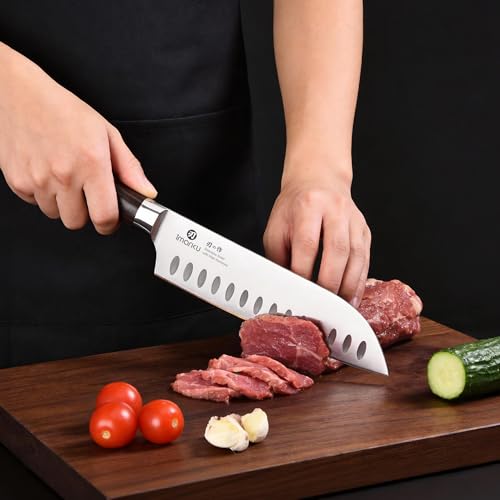
TL;DR — Your santoku is rusting because moisture is sitting on the blade steel. Even “stainless” santokus rust if they are made from a high-carbon Japanese steel like VG10 or AUS-10, or a clad blade with a reactive carbon-steel core, because these prize edge retention over corrosion resistance. Leaving the knife wet, running it through the dishwasher, cutting acidic foods, or storing it damp all trigger iron oxide. Dry it immediately after each use, hand-wash only, and remove existing rust with a vinegar soak or baking-soda paste. For a replacement blade, see our best santoku knife guide.
The HomeWhisk editorial team researches kitchen equipment by analyzing manufacturer specifications, steel metallurgy, and aggregated user reviews from major retailers and communities like Reddit r/chefknives and r/TrueChefKnives. What follows is a mechanism-level explanation of why santoku blades corrode and exactly how to stop it.
Rust on a knife you paid good money for is alarming, but it is almost always a maintenance issue rather than a defect. Japanese santoku knives in particular are engineered around a trade-off: harder, more corrosion-prone steels are used because they hold a screaming-sharp edge far longer than soft, rust-proof stainless. Understanding that trade-off is the key to keeping the blade clean. If yours is beyond saving, our best santoku knife and best chef knife guides cover corrosion-resistant options.
The Chemistry: What Rust Actually Is
Rust is iron oxide. It forms when the iron in your blade steel reacts with oxygen in the presence of water, an electrochemical process called oxidation. Water acts as an electrolyte, letting iron atoms give up electrons; those iron ions then bond with oxygen to form the flaky, reddish-brown compound we call rust.
The critical point for knife owners: every steel blade contains iron, so every steel blade can rust. What varies is how much chromium the steel contains. Chromium reacts with oxygen to form an invisible, self-healing passive layer of chromium oxide that shields the iron underneath. Steels with roughly 11 percent chromium or more earn the “stainless” label. But “stainless” means stain-resistant, not stain-proof, and the passive layer can be breached by chlorides (salt), acids, or physical abrasion. Once it is, the iron beneath corrodes freely.
Why Even “Stainless” Santokus Rust
Many santokus are marketed as stainless yet still develop spots. There are three common reasons.
First, high-carbon Japanese cutlery steels such as VG10, AUS-10, and SG2/R2 are technically stainless but sit at the low end of practical corrosion resistance. They pack in carbon and hardening elements to reach 60+ HRC hardness for edge retention, which leaves less chromium free to protect the iron. They resist rust far better than plain carbon steel but far worse than a soft German stainless.
Second, many premium santokus are san-mai (clad) blades: a hard, reactive core steel sandwiched between softer stainless cladding. If the core is a true carbon steel like White (Shirogami) or Blue (Aogami) steel, the exposed cutting edge will patina and rust readily even though the sides look stainless.
Third, pitting corrosion. Tiny chloride ions from salt or tap water penetrate weak points in the passive layer and start localized pits. These show up as small dark or rust-colored spots and are the most common complaint on otherwise stainless blades left wet.
The Everyday Habits That Cause Rust
Chemistry explains the “how”; daily habits explain the “why yours.” The usual culprits:
- Leaving the knife wet or letting it air-dry. Standing water is the single biggest cause. A blade left in the sink or on a wet cutting board is rusting the whole time.
- The dishwasher. This is the worst offender by far. Dishwasher detergents are highly alkaline and abrasive, the wash cycle blasts the blade with hot chloride-laden water for an hour, and the heated dry cycle bakes in damage. Detergent strips the passive layer, and the knife rattling against other steel scratches it. Never put a good santoku in the dishwasher.
- Cutting acidic foods and leaving residue. Tomatoes, citrus, onions, and vinegar-based marinades lower the surface pH and accelerate oxidation, especially on carbon-core blades. The acid itself is not the enemy; leaving the juice sitting on the blade is.
- Damp storage. A knife stored in a closed, humid drawer or a wet knife block traps moisture against the steel. Wooden blocks that never dry out are a frequent, hidden source of rust at the heel.
- Salt exposure. Salt is a chloride source that directly attacks the passive layer, so seasoning meat or cutting brined foods without a prompt wipe invites pitting.
If your worry is whether the steel itself is a health concern, the answer is no; the fix is almost always technique, not the blade. Compare corrosion-resistant alternatives in our best santoku knife roundup.
Is Rust on a Knife Dangerous?
A light surface rust that you clean off is not a health hazard. Iron oxide is not toxic, and the food-safety risk of trace rust is negligible. The real dangers are practical. Rust is porous and can harbor bacteria in its pits, so a heavily corroded blade is genuinely unhygienic. More importantly, corrosion eats into the steel, roughening the edge, creating weak spots that can chip, and permanently pitting the surface. Left long enough, pitting can compromise the thin cutting edge that makes a santoku worth owning. Clean rust promptly and it is a non-issue; ignore it and it becomes structural.
How to Remove Rust From a Santoku
Existing rust comes off with household materials and patience. Work from gentlest to most aggressive.
1. White vinegar soak. Fill a tall container with plain white vinegar and submerge only the blade, keeping wood or pakka handles out of the acid. Soak 5 to 10 minutes. The mild acetic acid dissolves the iron oxide and loosens it. 2. Scrub with baking soda. Make a thick paste of baking soda and a little water. Using a wine cork, a soft cloth, or the soft side of a sponge, rub the paste along the blade in the direction of the edge, never across it. Baking soda is a mild abrasive that lifts loosened rust without deeply scratching the steel. 3. Step up to a rust eraser if needed. For stubborn pitting, a purpose-made rust eraser (a rubber block impregnated with fine abrasive) or 1000-grit-and-up wet sandpaper works. Use light pressure and go with the length of the blade. Avoid coarse steel wool, which leaves scratches that invite new rust. 4. The potato trick for spots. Cut a raw potato in half, dip the cut face in baking soda or a little dish soap, and rub it over rust spots. Potatoes contain oxalic acid, a mild rust-dissolving agent, and the technique is gentle enough for a finished blade. 5. Rinse, dry, and re-establish the edge. Wash off all residue, dry the blade completely, and if the corrosion reached the edge, touch it up on a whetstone. A rusted edge is rarely still sharp. 6. Oil for storage. Wipe a thin film of food-safe mineral oil (or camellia/tsubaki oil, the traditional Japanese choice) onto carbon-core blades before storing. It seals out moisture.
For step-up tools once your santoku is clean, our best knife sets and best chef knife guides cover full setups.
How to Prevent Rust for Good
Prevention is trivial once it is a habit. Wash the knife by hand with mild dish soap immediately after use; do not let it sit in the sink. Dry it completely with a towel the moment it is washed; do not let it air-dry. After cutting acidic or salty foods, give it a quick wipe mid-task. Store it in a knife strip, a saya (blade sheath), an edge guard, or a block that is fully dry, never loose in a damp drawer. For carbon-core or high-carbon Japanese blades, keep a light coat of mineral oil on the steel. Do these five things and even a reactive VG10 or carbon-clad santoku will stay clean for years. When you are ready to expand the kit, our best boning knife and best fillet knife guides pair well with a santoku.
Frequently Asked Questions
Do stainless steel knives rust?
Yes, they can. “Stainless” means the steel contains enough chromium (roughly 11 percent or more) to form a self-healing passive oxide layer that resists corrosion, but that layer can be breached by salt, acid, abrasion, or prolonged moisture. Once it is, the iron underneath rusts like any steel. Softer Western stainless resists rust well; harder Japanese stainless such as VG10 or AUS-10 trades some corrosion resistance for edge retention, so it spots more easily if left wet. No steel knife is truly rust-proof.
Why do Japanese santoku knives rust more than my German knife?
Japanese santokus are typically made from harder, higher-carbon steels hardened to 60 HRC or above so they hold a fine edge. Achieving that hardness ties up chromium in carbides, leaving less free to protect the iron, so corrosion resistance drops. Many are also clad blades with a reactive carbon-steel core exposed at the edge. German knives use softer stainless around 56 HRC with more free chromium, which resists rust better but dulls faster. It is a deliberate trade-off, not a defect.
Can I use a Miyabi or other high-end santoku without it rusting?
Yes, absolutely. High-end blades like Miyabi often use FC61 or SG2/MC63 steels that are quite corrosion-resistant, but they still require basic care. Owners who report rust on premium knives almost always left them wet, used the dishwasher, or stored them damp. Hand-wash, dry immediately, and keep the blade away from standing water and the problem disappears. The pricier the knife, the more worthwhile these 30-second habits are.
Is a little rust on my knife dangerous to eat off of?
Trace surface rust is not toxic, and iron oxide poses a negligible health risk from a knife you clean before use. The genuine concerns are hygiene and structure: rust is porous and can harbor bacteria, and corrosion pits the steel, weakening the edge and creating spots that chip. Remove any rust promptly with vinegar or baking soda, dry the blade, and it is safe to use. Do not ignore spreading corrosion.
What is pitting corrosion and why does it look like tiny dark spots?
Pitting is localized corrosion where chloride ions, mostly from salt and tap water, punch through weak points in the steel’s passive layer and eat downward into small cavities. Because the attack is concentrated, it appears as small dark or rust-colored pinpoints rather than an even film. Pitting is the most common corrosion on otherwise stainless santokus left wet. Catch it early with a vinegar soak and light abrasive; deep pits are permanent.
Should I oil my santoku knife?
For high-carbon or carbon-clad santokus, yes. A thin film of food-safe mineral oil or traditional camellia (tsubaki) oil seals moisture off the steel between uses and is the single best rust-prevention step for reactive blades. Fully stainless santokus generally do not need oiling if you dry them properly, but a light coat does no harm and helps if you live somewhere humid. Apply sparingly with a cloth, covering the whole blade, and wipe off the excess.
The Bottom Line
A rusting santoku is a maintenance problem, not a lost cause. The steels that make Japanese knives so sharp, high-carbon stainless like VG10 and AUS-10 or clad carbon cores, sacrifice some corrosion resistance for that edge, so they punish neglect. Standing water, the dishwasher, acidic residue, salt, and damp storage are the triggers; hand-washing, immediate drying, dry storage, and a wipe of oil are the cure. Existing rust lifts off with vinegar and baking soda. This knife is worth caring for. If yours is too far gone, our best santoku knife guide covers durable replacements, and our best chef knife and best knife sets guides round out the kit.
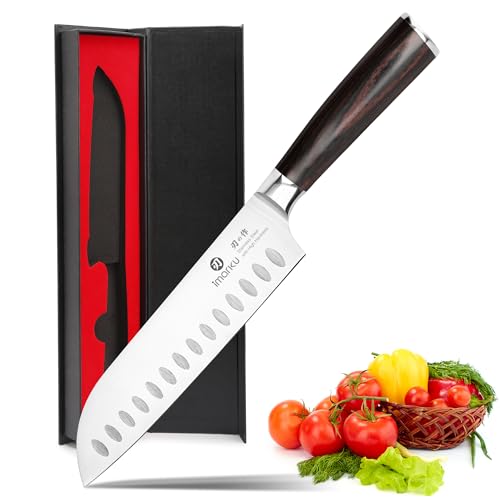
imarku
7-Inch Santoku Knife for Precision Slicing, Dicing & Mincing – High Carbon Japanese Steel with Pakkawood Handle
The imarku 7-inch Santoku knife combines a hollow scalloped edge and 15-18 degree hand-polished bevel to reduce drag and prevent food from sticking during high-volume prep work. Home cooks and apartment dwellers who want a restaurant-capable knife without the steep price will find it covers meat, vegetables, and bread with a single blade.
Pros and Cons
Pros
- The 2.5mm blade thickness paired with the hollow edge design handles both delicate julienne cuts and heavier chopping without flexing or wedging.
- Pakkawood handle construction offers a more sanitary and dimensionally stable grip than standard composite or natural wood handles.
- The 15-18 degree edge angle matches professional Japanese knife geometry, giving it a noticeably sharper out-of-box performance than German-style knives at this price.
- Versatile enough for meat, vegetables, fruit, and bread, making it a practical single-knife solution for small kitchens with limited storage.
Cons
- With zero verified reviews available, long-term edge retention and handle durability under daily use remain unconfirmed by real buyers.
- The 3-month refund window is shorter than the lifetime guarantees offered by competing brands at the same price point.

Zwilling
Henckels Santoku Knife 7-inch Hollow Edge German Stainless Steel
This 7-inch Santoku excels at mincing, slicing, and dicing with its hollow-edge blade that prevents food sticking during prep. Buy it if you want a durable, balanced Japanese-style knife that handles everyday vegetable work without the premium price tag.
Pros and Cons
Pros
- Hollow-edge grantons genuinely prevent cucumber and tomato slices from sticking to the blade mid-cut.
- German stainless steel holds its edge through repeated use on harder vegetables like carrots and beets.
- Fully forged construction creates noticeable weight and balance that makes repetitive dicing feel controlled and effortless.
Cons
- At 7 inches, it's smaller than Western chef's knives, requiring more frequent repositioning on larger vegetables.
- Dishwasher safe, but hand washing extends blade life and prevents potential handle loosening over time.

HOSHANHO
7-Inch Japanese Santoku Chef Knife | HOSHANHO High Carbon Stainless Steel
This 7-inch santoku slices vegetables, meat, and fish with a 15-degree blade angle that delivers thinner, more precise cuts than standard chef knives. Home cooks and professional chefs alike benefit from the triple-layer laminated steel construction that stays sharp longer and resists corrosion.
Pros and Cons
Pros
- The triple-layer laminated steel with 10Cr15CoMoV Japanese steel reaches 62HRC hardness, delivering edge retention that outlasts standard stainless blades.
- Ergonomic pakkawood handle provides secure grip and control without hand fatigue during extended prep sessions.
- 15-degree blade angle and hand-sharpened edge produce cleaner cuts through delicate vegetables and proteins compared to wider blade angles.
Cons
- Hand-washing required; dishwasher use will degrade the blade edge and handle finish over time.
- Requires regular honing to maintain the 15-degree angle; the initial sharpness will gradually diminish with normal kitchen use.

MercerCulinary
Mercer Genesis 7-Inch Santoku Knife: Professional Slicing & Mincing
This fully forged German steel santoku delivers razor-sharp precision for slicing vegetables and mincing herbs with its Granton edge that releases food cleanly. Buy it if you prep vegetables daily and want a professional-grade knife that won't require constant sharpening.
Pros and Cons
Pros
- Granton edge prevents food from sticking to the blade, making thin slicing of cucumbers, tomatoes, and fish noticeably faster than standard chef's knives.
- Ergonomic handle with substantial bolster reduces wrist strain during extended prep sessions and feels secure even when wet.
- Professional-grade construction at under $50 delivers the same German steel and forging process used in culinary schools.
Cons
- Requires hand-washing only; dishwasher use will damage the blade and handle, adding a maintenance step most busy cooks dislike.
- Santoku's shorter blade length and rectangular shape take practice if you're accustomed to Western chef's knives, requiring a learning curve.

Henckels Forged Accent 2-Piece Santoku Knife Set | German Stainless Steel
This 2-piece santoku set delivers razor-sharp German engineering for mincing, slicing, and dicing with effortless precision and lasting edge retention. Buy it if you prep vegetables daily and want knives that stay sharp without constant maintenance.
Pros and Cons
Pros
- Forged bolster transitions seamlessly from blade to handle, eliminating weak points that cause blade wobble during cutting.
- Satin-finished blade holds its edge noticeably longer than stamped knives, reducing the need for frequent sharpening.
- Two-knife set covers both precision work and larger prep tasks without requiring a full block of specialty knives.
Cons
- Santoku blade shape has a steeper learning curve than traditional chef's knives if you're accustomed to rocking motions.
- German stainless steel requires hand-washing to maintain edge longevity, despite being dishwasher-safe.
imarku 7-Inch Santoku Knife for Precision Slicing, Dicing & Mincing – High Carbon Japanese Steel with Pakkawood Handle
imarku
7-Inch Santoku Knife for Precision Slicing, Dicing & Mincing – High Carbon Japanese Steel with Pakkawood Handle
The imarku 7-inch Santoku knife combines a hollow scalloped edge and 15-18 degree hand-polished bevel to reduce drag and prevent food from sticking during high-volume prep work. Home cooks and apartment dwellers who want a restaurant-capable knife without the steep price will find it covers meat, vegetables, and bread with a single blade.
$39.99 at AmazonEditors' Favorite
Color: Brown and Silver Size: 7" Dimensions: 12 x 3 x 1 inches Weight: 0.43 pounds Product Group: Kitchen Binding: Kitchen
Shop NowZwilling Henckels Santoku Knife 7-inch Hollow Edge German Stainless Steel
Zwilling
Henckels Santoku Knife 7-inch Hollow Edge German Stainless Steel
This 7-inch Santoku excels at mincing, slicing, and dicing with its hollow-edge blade that prevents food sticking during prep. Buy it if you want a durable, balanced Japanese-style knife that handles everyday vegetable work without the premium price tag.
$79.95 at AmazonGreat Value
Brand Name: ZWILLING J.A. Henckels Manufacturer: ZWILLING UPC: 035886185930 Global Trade Identification Number: 00035886185930 Model Number: 31170-181 Manufacturer Part Number: 31170-181 -OPEN BOX Manufacturer Warranty Description: Lifetime Warranty Against Manufacturer'S Defects Item Type Name: Hollow Edge Santoku Knife Unit Count: 1.0 Count Included Components: Hollow Edge Santoku Knife Best Sellers Rank: #92,282 in Kitchen & Dining (See Top 100 in Kitchen & Dining) #244 in Bread Knives ASIN: B00068J2A0 Customer Reviews: 4.6 4.6 out of 5 stars (1,418) 4.6 out of 5 stars Blade Material Type: Stainless Steel Handle Material: Stainless Steel,Steel Is the item dishwasher safe?: No Material Type: ZWILLING Carbon No Stain Steel BladeLength: 7 Inches Item Weight: 6.4 ounces Item Length: 16 Inches Size: 7" Color: Stainless Steel Blade Color: Silver Blade Edge: Hollow Ground Construction Type: Forged Blade Material: Stainless Steel Brand: ZWILLING J.A. Henckels
Shop NowHOSHANHO 7-Inch Japanese Santoku Chef Knife | HOSHANHO High Carbon Stainless Steel
HOSHANHO
7-Inch Japanese Santoku Chef Knife | HOSHANHO High Carbon Stainless Steel
This 7-inch santoku slices vegetables, meat, and fish with a 15-degree blade angle that delivers thinner, more precise cuts than standard chef knives. Home cooks and professional chefs alike benefit from the triple-layer laminated steel construction that stays sharp longer and resists corrosion.
$52.99 at AmazonBrand Name: HOSHANHO Manufacturer: HOSHANHO UPC: 714757571477 Model Number: 7 inch Santoku Knife Manufacturer Part Number: HSHES-2022-002 Item Type Name: 7 inch Santoku Chef Knife Unit Count: 1.0 Count Included Components: 7 inch Santoku Knife Best Sellers Rank: #13,746 in Kitchen & Dining (See Top 100 in Kitchen & Dining) #29 in Chef's Knives ASIN: B0C1BQTQKL Customer Reviews: 4.7 4.7 out of 5 stars (1,742) 4.7 out of 5 stars Blade Edge: Plain Construction Type: Forged Blade Material Type: High Carbon Stainless Steel Handle Material: Pakkawood Is the item dishwasher safe?: No Material Type: High Carbon Stainless Steel BladeLength: 7 Inches Item Weight: 11.2 ounces Item Length: 7 Inches Size: 7" Color: Silver Blade Color: Silver Blade Material: High Carbon Stainless Steel Brand: HOSHANHO
Shop NowMercerCulinary Mercer Genesis 7-Inch Santoku Knife: Professional Slicing & Mincing
MercerCulinary
Mercer Genesis 7-Inch Santoku Knife: Professional Slicing & Mincing
This fully forged German steel santoku delivers razor-sharp precision for slicing vegetables and mincing herbs with its Granton edge that releases food cleanly. Buy it if you prep vegetables daily and want a professional-grade knife that won't require constant sharpening.
$39.95 at AmazonBrand Name: Mercer Culinary Manufacturer: Mercer Tool Corp. UPC: 749628445519 765301903244 Global Trade Identification Number: 00765301903244 Model Number: M20707 Manufacturer Part Number: M20707 Manufacturer Warranty Description: Lifetime limited manufacturer's warranty Item Type Name: Genesis Unit Count: 1.0 Count Included Components: Mercer Culinary Genesis 7-Inch Forged Santoku Knife Best Sellers Rank: #3,706 in Kitchen & Dining (See Top 100 in Kitchen & Dining) #15 in Santoku Knives ASIN: B000IBVD4I Customer Reviews: 4.8 4.8 out of 5 stars (1,577) 4.8 out of 5 stars Blade Material Type: High Carbon Steel Handle Material: Santoprene Is the item dishwasher safe?: No Material Type: Stainless steel and manmade BladeLength: 7 Inches Item Weight: 2.99 ounces Item Length: 14.05 Inches Size: 7" Color: Black Blade Color: Silver Blade Edge: Plain Construction Type: Forged Blade Material: High Carbon Steel Brand: Mercer Culinary
Shop NowHenckels Forged Accent 2-Piece Santoku Knife Set | German Stainless Steel
Henckels Forged Accent 2-Piece Santoku Knife Set | German Stainless Steel
This 2-piece santoku set delivers razor-sharp German engineering for mincing, slicing, and dicing with effortless precision and lasting edge retention. Buy it if you prep vegetables daily and want knives that stay sharp without constant maintenance.
$49.95 at AmazonBrand Name: HENCKELS Manufacturer: Henckels UPC: 035886649906 Model Number: 1021241 Manufacturer Part Number: 1021241 Item Type Name: Asian Knife Set Unit Count: 2.0 Count Included Components: 5" HE Santoku, 7" HE Santoku Best Sellers Rank: #41,522 in Kitchen & Dining (See Top 100 in Kitchen & Dining) #14 in Santoku Knives ASIN: B09RTDZ14W Customer Reviews: 4.6 4.6 out of 5 stars (284) 4.6 out of 5 stars Blade Edge: Plain Construction Type: Forged Blade Material Type: Stainless Steel Handle Material: Stainless Steel Is the item dishwasher safe?: Yes Material Type: Stainless Steel BladeLength: 5 Inches Item Weight: 9.07 g Item Length: 5 Inches Size: 2-pc Color: Black Blade Color: Silver Blade Material: Stainless Steel Brand: HENCKELS
Shop Now


Write Your Review
No reviews yet. Be the first to share your experience!