

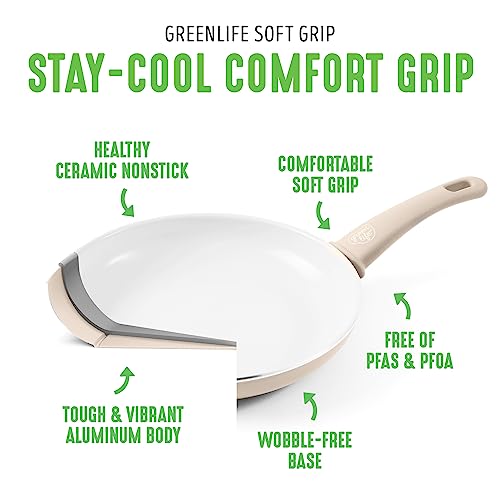
TL;DR — Yes, ceramic cookware is one of the safest nonstick options for everyday cooking. Most “ceramic” pans are metal pans finished with a silica-based (sol-gel) coating that contains no PTFE, PFOA, or other PFAS “forever chemicals,” so there is nothing to off-gas or flake into food the way a degraded traditional nonstick can. The two real caveats are quality and lifespan: cheap ceramic coatings wear out in a year or two, and you should buy from brands that publish lead and cadmium safety testing. Cook on medium heat, use soft tools, and hand-wash. For picks, see our best ceramic cookware set non toxic guide.
The HomeWhisk editorial team researches kitchen equipment by analyzing manufacturer specifications, coating chemistry, and aggregated user reviews from major retailers and cooking communities like Reddit’s r/Cooking and r/CookwareResale. This guide explains what “ceramic” actually means, because the word covers two very different things.

Ceramic cookware has surged in popularity as buyers move away from traditional nonstick over PFAS concerns. But “ceramic” is a loose marketing term, and whether a set is safe depends heavily on which type you are holding and who made it. Sorting out the chemistry is the key to a confident answer. If you want a shortlist first, our best ceramic cookware set non toxic guide covers vetted options.
Granitestone
20-Piece Nonstick Cookware and Bakeware Starter Set: Granitestone Ceraluxe Ceramic Pots, Pans and Baking Trays
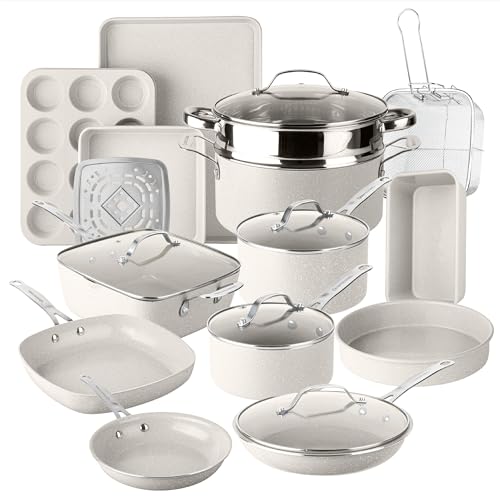
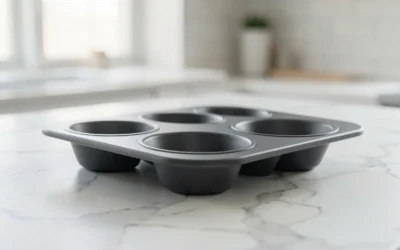
This 20-piece Granitestone Ceraluxe set covers stovetop and oven cooking in one box, pairing a triple-coated diamond-reinforced ceramic nonstick surface with aluminum bodies that release food without added oil or butter. It suits anyone outfitting a first kitchen or replacing worn mismatched pans, since the fry pans, casserole, steamer insert, frying basket, cookie sheet, loaf pan, and muffin pan arrive matched and dishwasher safe.
Pros and Cons
Pros
- The bundle spans both cookware and bakeware, including an XL cookie sheet, muffin pan, loaf pan, and round baking pan that most pot-and-pan sets leave out.
- The stainless steel steamer rack, steamer insert, and frying basket add steaming and frying functions without buying separate accessories.
- Ceramic nonstick paired with dishwasher-safe pieces makes daily cleanup a wipe-down rather than a soak.
- Aluminum construction keeps individual pieces light enough to lift and pour one-handed.
Cons
- The set is not induction compatible, so it works only on gas, electric, halogen, and ceramic stovetops.
- Ceramic nonstick coatings wear faster than hard-anodized or stainless surfaces, especially under high heat or metal utensils.

GreenLife
16-Piece Ceramic Nonstick Cookware Set – PFAS-Free Pots & Pans with Utensils and Glass Lids
The GreenLife 16-Piece Set covers every stovetop task from frying to steaming with a toxin-free ceramic nonstick coating that releases food effortlessly and wipes clean without scrubbing. Home cooks who want a complete, health-conscious kitchen setup without paying over $100 will find this set covers daily cooking needs in one purchase.
Pros and Cons
Pros
- The PFAS, PFOA, lead, and cadmium-free ceramic coating makes this a safer daily-use option than traditional nonstick pans.
- At 16 pieces including a steamer, sauté pan, two saucepans, and four utensils, the set replaces multiple separate purchases for a new or restocked kitchen.
- Dishwasher-safe construction lowers the maintenance burden, though hand washing is recommended to extend the coating's lifespan.
- Oven-safe up to 350°F adds flexibility for dishes that start on the stovetop and finish in the oven.
Cons
- Not compatible with induction stovetops, which rules it out for a growing share of modern kitchens.
- The 350°F oven limit is lower than many competing cookware sets, restricting use for high-heat roasting or broiling finishes.
Blue Diamond
Everyday Nonstick Cooking Set: Blue Diamond 10-Piece Ceramic Pots & Pans, Blue
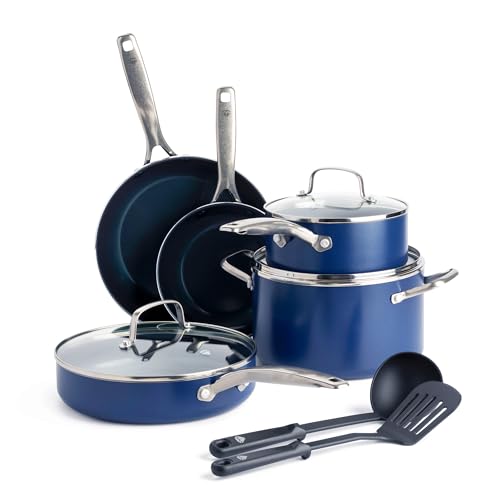
This 10-piece cookware set handles frying, sautéing, simmering, and boiling, with diamond-infused ceramic nonstick that heats quickly and evenly. It suits home cooks replacing core cookware who want PFAS-free cooking, simple cleanup, and oven-safe versatility.
Pros and Cons
Pros
- The PFAS-free ceramic coating provides a nonstick cooking surface for buyers avoiding PFAS-based coatings.
- Dishwasher-safe construction reduces cleanup time after everyday meals.
- Metal-utensil-safe coating and riveted stainless steel handles support frequent kitchen use.
- Tempered glass lids retain heat and moisture while letting cooks monitor food without lifting the lid.
Cons
- The cookware is not compatible with induction stovetops.
- Only the saucepan, sauté pan, and stockpot include lids, so the frying pans remain uncovered.
Granitestone 20-Piece Nonstick Cookware and Bakeware Starter Set: Granitestone Ceraluxe Ceramic Pots, Pans and Baking Trays
Granitestone
20-Piece Nonstick Cookware and Bakeware Starter Set: Granitestone Ceraluxe Ceramic Pots, Pans and Baking Trays
This 20-piece Granitestone Ceraluxe set covers stovetop and oven cooking in one box, pairing a triple-coated diamond-reinforced ceramic nonstick surface with aluminum bodies that release food without added oil or butter. It suits anyone outfitting a first kitchen or replacing worn mismatched pans, since the fry pans, casserole, steamer insert, frying basket, cookie sheet, loaf pan, and muffin pan arrive matched and dishwasher safe.
Check price on AmazonA 20-piece cookware and bakeware bundle for kitchens that need everything at once: two fry pans, a lidded skillet, square shallow and deep casserole pans, steamer rack and insert, frying basket, and six bakeware pieces.
The ceramic nonstick surface is coated three times and reinforced with diamonds, so eggs, fish, and cheese slide free without added oil. A spiralized aluminum base moves heat evenly across the pan floor.
Pieces are aluminum, keeping them light to handle, and all are oven safe and dishwasher safe. Sizes run from an 8.5-inch fry pan to an XL cookie sheet.
The set does not work on induction cooktops, so confirm your range type before buying. A 10-year limited warranty applies.
Best for first-apartment cooks, new homeowners, or anyone replacing a full kitchen of worn pans in one purchase.
GreenLife 16-Piece Ceramic Nonstick Cookware Set – PFAS-Free Pots & Pans with Utensils and Glass Lids
GreenLife
16-Piece Ceramic Nonstick Cookware Set – PFAS-Free Pots & Pans with Utensils and Glass Lids
The GreenLife 16-Piece Set covers every stovetop task from frying to steaming with a toxin-free ceramic nonstick coating that releases food effortlessly and wipes clean without scrubbing. Home cooks who want a complete, health-conscious kitchen setup without paying over $100 will find this set covers daily cooking needs in one purchase.
Check price on AmazonThis 16-piece set addresses the common problem of mismatched cookware by delivering every core pot, pan, and utensil in one cohesive package with a uniform ceramic nonstick finish.
The ceramic coating provides consistent food release across all pieces, and the wobble-free bases ensure even heat distribution, which directly prevents scorched sauces and unevenly cooked proteins.
Vessels are made from a minimum of 65% recycled aluminum, keeping the set lightweight for daily handling. The soft-grip Bakelite handles add control without adding heat transfer to your hand.
The 350°F oven limit and lack of induction compatibility are real constraints buyers on those stovetops or with high-heat cooking habits should weigh before purchasing.
Best for home cooks setting up or replacing a full kitchen who prioritize non-toxic materials and easy cleanup over high-heat or induction performance.
Caraway 16-Piece Deluxe Non-Stick Ceramic Cookware Set

Blue Diamond Everyday Nonstick Cooking Set: Blue Diamond 10-Piece Ceramic Pots & Pans, Blue
Blue Diamond
Everyday Nonstick Cooking Set: Blue Diamond 10-Piece Ceramic Pots & Pans, Blue
This 10-piece cookware set handles frying, sautéing, simmering, and boiling, with diamond-infused ceramic nonstick that heats quickly and evenly. It suits home cooks replacing core cookware who want PFAS-free cooking, simple cleanup, and oven-safe versatility.
Check price on AmazonThis 10-piece Blue Diamond set replaces core frying, sautéing, simmering, and boiling cookware while reducing food sticking and cleanup effort.
Its diamond-infused ceramic coating transfers heat quickly and evenly, helping prevent uneven browning caused by hot or cold spots.
The set includes 7-inch and 9-inch frying pans, 2-quart and 2.5-quart covered pans, a covered 5-quart stockpot, stainless steel handles, and two nylon utensils.
It works on most stovetops but is not compatible with induction, an important limitation for induction-kitchen owners.
Best for home cooks seeking a versatile PFAS-free nonstick set with dishwasher cleanup and high-temperature oven capability.
Two Very Different Things Called “Ceramic”
The single most important distinction is this:
- Ceramic-coated cookware is a metal pan — usually aluminum — sprayed with a thin silica-based coating applied through a sol-gel process and cured. This is what the overwhelming majority of “ceramic cookware sets” on the market are. It is prized because the coating is nonstick without using any fluoropolymers.
- 100% ceramic (solid ceramic) cookware, like Xtrema, is made entirely of fired clay and glaze with no metal core and no coating at all. It is inert and extremely heat-tolerant, but heavier, more fragile, and slower to heat.
When people ask “is ceramic cookware safe,” they are almost always talking about the coated kind, so that is the main focus here. Both are generally safe, but they wear, perform, and cost very differently. Our best ceramic cookware set non toxic guide is built around the coated sets most people actually buy.
The Chemistry: Why Ceramic Is Considered Non-Toxic
To understand ceramic’s safety appeal, it helps to know the acronyms it avoids:
- PFAS are per- and polyfluoroalkyl substances, the broad family of “forever chemicals” that persist in the environment and the body.
- PTFE is the specific fluoropolymer behind traditional Teflon-style nonstick. It belongs to the PFAS family.
- PFOA was a processing chemical used to make PTFE; it was phased out of cookware years ago.
A genuine ceramic coating is silica-based (essentially derived from sand), not fluoropolymer-based, so it contains none of these compounds. That is the core of its non-toxic reputation. Traditional PTFE nonstick is safe at normal cooking temperatures but can begin to break down and release fumes if overheated well past normal ranges, and a scratched PTFE surface sheds coating into food. Ceramic sidesteps both mechanisms: there is no fluoropolymer to off-gas, and the silica coating is inert. For anyone specifically avoiding PFAS across their kitchen, ceramic pairs naturally with choices like a stainless best instant pot insert or a coating-free best moka pot.
The Real Caveat: Lead, Cadmium, and Quality Control
Ceramic itself is inert, but ceramic glazes and colorants have historically been a route for lead and cadmium contamination, especially in cheaply produced or imported ware. This is the legitimate safety question with ceramic, and it is why brand matters more here than with almost any other cookware.
Reputable ceramic cookware makers test their products against food-safety standards for heavy-metal leaching and will state that testing publicly. The takeaway for buyers:
- Choose brands that explicitly publish lead-free and cadmium-free testing or certification.
- Be cautious with unbranded, unusually cheap, or decorative-first ceramic ware, where glaze safety is unverified.
- Regulations in markets like the US and EU set limits on leachable lead and cadmium, so cookware from compliant, transparent brands is the safe path.
This is not a reason to avoid ceramic; it is a reason to buy it from a manufacturer that documents its safety. Our best ceramic cookware set non toxic guide prioritizes exactly that kind of transparency.
The Trade-Off: Durability and Lifespan
Ceramic’s honest weakness is not toxicity but longevity. The silica coating is harder than PTFE in some respects but more brittle, and it loses its nonstick performance faster. Aggregated owner reviews consistently report that budget ceramic pans go from slick to sticky within one to two years of regular use, while a well-treated traditional nonstick often lasts longer, and stainless or cast iron last essentially forever.
Several factors accelerate ceramic wear, and avoiding them is the whole game:
- High heat degrades the coating. Ceramic performs best on low to medium heat, which is also all most cooking needs.
- Thermal shock, like running a hot pan under cold water, can micro-crack the surface.
- Metal utensils and abrasive scrubbers scratch it. Use silicone, wood, or nylon.
- Cooking sprays leave a residue that bakes on and kills nonstick performance; use a little oil or butter instead.
Treated gently, a quality ceramic pan holds its release far longer. Treated like an indestructible stainless pan, it will disappoint. If maximum lifespan matters more than a PFAS-free surface, the sets in our best cookware sets and best copper cookware guides offer longer-lived alternatives.
Where Ceramic Fits in Your Kitchen
Ceramic excels at delicate, low-and-slow tasks: eggs, omelets, fish, pancakes, and anything you want to release cleanly without a lot of fat. It is induction-compatible when the pan has a magnetic base layer, and it heats evenly thanks to the aluminum core.
It is not the tool for high-heat searing or aggressive browning, where the heat needed to build a good crust also shortens the coating’s life. For that work, stainless steel, cast iron, or carbon steel are better suited. Many cooks land on a hybrid kitchen: a ceramic pan or two for eggs and gentle cooking, plus a stainless or cast-iron piece for searing. That mix, rather than a single do-everything set, is what most experienced owners recommend, and it is reflected across our best cookware sets, best moka pot, and best camping cookware guides.
Frequently Asked Questions
Is ceramic cookware actually non-toxic?
Genuine ceramic-coated cookware uses a silica-based (sol-gel) coating with no PTFE, PFOA, or other PFAS, so there is no fluoropolymer to off-gas when heated or flake into food when scratched. That is the basis of its non-toxic reputation, and it is well founded for coated pans from reputable makers. The one thing to verify is that the brand tests for lead and cadmium in its glaze, since those heavy metals, not the coating chemistry, are the real safety variable with ceramic.
How long does a ceramic cookware set last?
Honestly, less than most other cookware. Budget ceramic pans commonly lose their nonstick performance within one to two years of regular use, while better-made sets last longer if treated carefully. The coating is more brittle than traditional nonstick and degrades with high heat, thermal shock, metal utensils, and cooking sprays. Keeping heat at medium or below, using soft tools, and hand-washing meaningfully extends the life. If you want decades of service, stainless steel or cast iron outlasts any ceramic coating.
Are scratched ceramic pans safe to use?
A lightly scratched ceramic pan is generally less hazardous than a scratched PTFE pan, because the silica coating contains no fluoropolymers to shed into food. However, once the coating is scratched or worn through, food starts sticking and the exposed aluminum base can react with acidic foods, so performance falls off and it is time to replace the pan. Deep chips or flaking are a sign the pan has reached the end of its useful life.
Is 100% ceramic cookware better than ceramic-coated?
It depends on your priorities. Solid 100% ceramic, like Xtrema, is completely inert, extremely heat-tolerant, and has no coating to wear out, which appeals to buyers focused purely on non-toxicity. The trade-offs are significant: it is heavy, fragile if dropped, slow to heat, and not truly nonstick, so it needs oil and care. Ceramic-coated cookware is lighter, heats faster, and releases food more easily, at the cost of a coating that eventually wears. Most home cooks prefer coated for daily use.
Can you use ceramic cookware on induction?
Yes, if the pan is built for it. Because ceramic coatings sit on an aluminum body and aluminum is not magnetic, an induction-compatible ceramic pan must include a magnetic stainless steel base layer. Manufacturers label induction compatibility clearly, so check the specification. A pan without a magnetic base will not work on an induction cooktop. Solid 100% ceramic generally is not induction-compatible for the same reason, so ceramic-coated sets are the induction-friendly option.
What should you not do with ceramic cookware?
Do not use high heat, which is the fastest way to degrade the coating; medium is plenty for almost everything ceramic is good at. Avoid thermal shock like rinsing a hot pan with cold water, skip metal utensils and abrasive scrubbers, and do not use aerosol cooking sprays, which leave a residue that ruins the nonstick surface. Do not sear or blacken food in it, and hand-wash rather than relying on the dishwasher. These habits are the difference between a ceramic pan that lasts and one that fails in a year.
The Bottom Line
A ceramic cookware set is safe, and for buyers avoiding PFAS it is one of the strongest choices available: the silica-based coating contains no PTFE, PFOA, or other forever chemicals, so there is nothing to off-gas or flake into food. The genuine caveats are lifespan and sourcing. Ceramic coatings wear faster than most alternatives, so buy quality and treat it gently with medium heat, soft tools, and hand-washing. And because glazes can carry lead or cadmium, choose a brand that publishes its heavy-metal testing. Ceramic shines for eggs and delicate, low-heat cooking rather than hard searing. To compare vetted, transparent options and round out your kitchen, see our best ceramic cookware set non toxic, best cookware sets, and best instant pot guides.




Write Your Review
No reviews yet. Be the first to share your experience!