

TL;DR — A nonstick air fryer is safe for everyday cooking as long as the coating stays intact and you avoid overheating an empty basket. Modern PTFE (Teflon) coatings are inert and do not release meaningful fumes below about 260°C (500°F), and PFOA has been banned from manufacturing since around 2013. The real risks are a scratched, flaking coating and, separately, acrylamide formed when starchy foods are cooked too dark. If you want to skip coatings entirely, choose a stainless steel or ceramic-lined basket. For picks, see our best air fryer guide.
The HomeWhisk editorial team researches kitchen equipment by analyzing manufacturer specifications, coating chemistry, food-safety guidance, and aggregated owner reviews from major retailers and communities like Reddit. This guide separates the genuine concerns about nonstick air fryers from the marketing scare-language around “toxic” appliances.

Air fryers took over countertops fast, and almost all of the popular basket models line that basket with a nonstick coating so food releases cleanly and cleanup is quick. That coating is exactly what worries people: is superheated air blowing across Teflon safe to eat from? The honest answer is nuanced. The coating chemistry is well understood and generally safe within normal use, but there are specific conditions — overheating, physical damage, and cooking food too dark — where the caution is warranted. Here is what actually matters.
Chefman
Fast Single-Serve Meals: Chefman 2 Qt Mini Digital Air Fryer
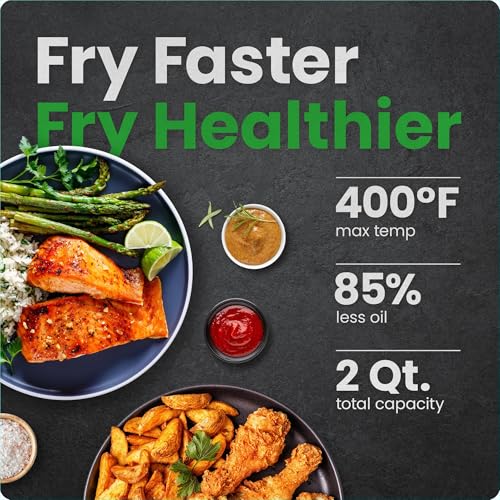
The Chefman 2 Qt Mini Air Fryer cooks meals up to three times faster than an oven while using little to no oil. It suits one or two people who need a compact appliance with digital controls, shake reminders, and dishwasher-safe parts.
Pros and Cons
Pros
- The digital touch display lets you customize cooking time and temperature up to 400°F.
- The square basket makes better use of the 2-quart capacity than a narrow round basket.
- The shake reminder helps redistribute food during cooking for more even crisping.
- cETL approval, automatic shutoff, and a 1-year assurance add practical ownership support.
Cons
- The 2-quart capacity is limited to meals for one or two people.
- The supplied product data does not list the appliance's weight.
GWY
Replacement Grill Pan for Power XL 5QT Air Fryer, GWY 8.7" Non-Stick Crisper Plate with Handle, Dishwasher Safe
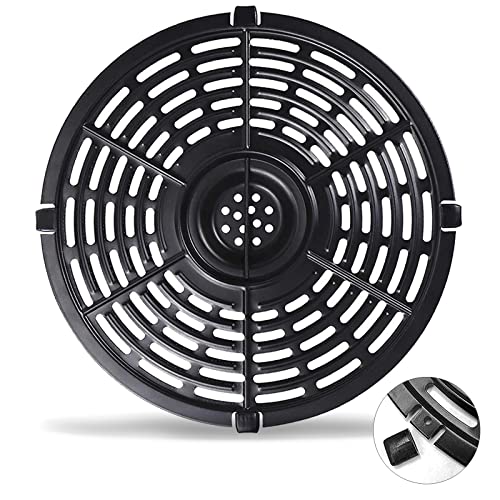
This 8.74-inch enameled crisper plate drops into a Power XL 5QT air fryer basket to replace a scratched or warped original, with a built-in handle that lets you lift hot food out without tipping the basket. Buy it if you own that specific 5QT model and want a food-grade stainless base you can put straight in the dishwasher instead of scrubbing burnt-on residue.
Pros and Cons
Pros
- Exact 8.74-inch round footprint is cut for the Power XL 5QT basket, so it sits flat without rattling.
- Enamel over stainless holds up to repeated high-heat cycles better than thin coated aluminum trays.
- Handle design solves the common problem of burning your knuckles reaching into a hot basket.
- Bundled bumpers and cloth cover the two accessories most owners end up buying separately.
Cons
- Fits only the Power XL 5QT, so measure your basket before ordering as it will not work in other models or capacities.
- Non-stick enamel needs silicone or wooden utensils; metal tongs will eventually chip the coating.
Chefman Fast Single-Serve Meals: Chefman 2 Qt Mini Digital Air Fryer
Chefman
Fast Single-Serve Meals: Chefman 2 Qt Mini Digital Air Fryer
The Chefman 2 Qt Mini Air Fryer cooks meals up to three times faster than an oven while using little to no oil. It suits one or two people who need a compact appliance with digital controls, shake reminders, and dishwasher-safe parts.
Check price on AmazonThe Chefman 2 Qt Mini Air Fryer handles quick meals for one or two people while solving limited-counter and cabinet-storage problems.
Its digital touch controls reach 400°F, and the audible shake reminder helps food crisp more evenly without constant monitoring.
The square, narrow design uses a nonstick 2-quart basket and rack that are both dishwasher safe. Weight is not listed in the supplied data.
Its small capacity limits batch size, so larger households may need multiple cooking cycles.
Verdict: best for solo cooks, couples, dorm rooms, and small kitchens needing compact countertop cooking.
GWY Replacement Grill Pan for Power XL 5QT Air Fryer, GWY 8.7" Non-Stick Crisper Plate with Handle, Dishwasher Safe
GWY
Replacement Grill Pan for Power XL 5QT Air Fryer, GWY 8.7" Non-Stick Crisper Plate with Handle, Dishwasher Safe
This 8.74-inch enameled crisper plate drops into a Power XL 5QT air fryer basket to replace a scratched or warped original, with a built-in handle that lets you lift hot food out without tipping the basket. Buy it if you own that specific 5QT model and want a food-grade stainless base you can put straight in the dishwasher instead of scrubbing burnt-on residue.
Check price on AmazonA round replacement crisper plate for the Power XL 5QT air fryer, for owners whose original tray has warped, chipped, or lost its non-stick surface.
The integrated handle lets you lift the plate and food out in one motion, useful when draining wings or transferring salmon without breaking the fillet.
Built from food-grade stainless steel with a double-sprayed enamel coating, measuring 8.74 by 8.74 inches to match the basket floor exactly.
The tight fit is the tradeoff: it is cut for one model only and will not seat correctly in other air fryers.
Best for Power XL 5QT owners replacing a worn plate rather than buying a whole new fryer.
What the Nonstick Coating Is Made Of
The slick surface on most air fryer baskets is PTFE (polytetrafluoroethylene), the fluoropolymer sold under brand names like Teflon. PTFE is prized because it is chemically inert — it does not react with food, acids, or oils — and because almost nothing sticks to it. In an air fryer it lets you cook with little or no oil and wipe the basket clean afterward.
The historical concern was PFOA (perfluorooctanoic acid), a processing chemical once used to manufacture PTFE and linked to health issues. PFOA was phased out of nonstick manufacturing by around 2013, and reputable cookware today is made PFOA-free. It is worth separating two things people conflate: PFOA (the old processing aid, now gone) and PFAS (the broad chemical family PTFE belongs to). PTFE itself is a large, stable polymer that is not absorbed by the body if a flake is swallowed — it passes through inert. The environmental PFAS debate is real, but it is a manufacturing and disposal issue more than an at-the-table one. For coating-free options, our best nonstick cookware and best nonstick cookware set guides also cover ceramic alternatives.
When Nonstick Actually Becomes a Problem: Heat
The one genuine kitchen risk with PTFE is overheating. When PTFE is heated past roughly 260°C (500°F) it begins to degrade, and past about 350°C (662°F) it can release fumes that cause temporary flu-like symptoms known as “polymer fume fever” (the effect behind reports of Teflon killing pet birds, which have very sensitive respiratory systems).
Here is why this rarely happens in an air fryer: most air fryers top out around 200–230°C (400–450°F), below the degradation threshold. The danger scenario is running the appliance empty or nearly empty, where the heating element can drive the basket surface hotter than the food would normally allow, since food and moisture keep the surface temperature down. The practical rule is simple: do not preheat an empty basket for long periods, keep the temperature within the manufacturer’s range, and make sure the room has some ventilation. Under normal use with food in the basket, you stay comfortably below the point where the coating breaks down.
The Bigger, Overlooked Issue: Damaged Coatings
For most owners, the realistic concern is not fumes — it is a scratched or flaking coating. Once PTFE is gouged by metal tongs, abrasive scrubbers, or stacking baskets, it starts to chip, and those flakes end up in your food. Swallowing an occasional PTFE flake is not considered dangerous (it passes through inert), but a degrading coating is a sign the basket is at end of life and should be replaced.
Protect the coating and it lasts for years:
- Use silicone, wood, or nylon utensils, never metal, and never cut food in the basket.
- Wash by hand with a soft sponge; harsh dishwasher detergents and abrasive pads wear coatings down faster.
- Avoid cooking sprays with propellants and additives — they leave a sticky residue that bakes onto nonstick and degrades it. Brush on a little oil instead.
- Replace the basket, or the whole unit, once the coating is visibly worn or peeling.
If you cook aggressively with metal tools and want to stop worrying about coatings altogether, a stainless steel or ceramic-lined air fryer sidesteps the whole issue, at the cost of slightly stickier release.
Coating-Free Alternatives: Stainless, Ceramic, and Glass
If you would rather not own a PTFE basket at all, three routes exist, each with trade-offs:
- Stainless steel baskets — durable, metal-utensil-safe, and coating-free, but food sticks more, so you use more oil and scrub harder. Some models are hybrid oven-style air fryers with stainless racks.
- Ceramic-coated baskets — a mineral-based nonstick (not PTFE) that is free of fluoropolymers. Ceramic releases food well when new but tends to lose its nonstick property faster than PTFE over a year or two of use.
- Glass-bowl air fryers — the food chamber is glass with a heating lid, keeping food away from any coated metal, though capacity and even browning can suffer.
None of these is automatically “safer” than a well-maintained PTFE basket within normal temperatures — they mainly appeal to buyers who want to remove the variable entirely. If you also fry the traditional way, our best deep fryer guide compares oil frying, and for multi-cookers our best instant pot guide covers pressure and slow cooking. A high-powered best blender rounds out a from-scratch kitchen if you want to control ingredients directly.
Acrylamide: The Food-Safety Issue That Is Not About the Coating
There is a real air fryer safety topic that has nothing to do with nonstick: acrylamide. This compound forms naturally when starchy foods — potatoes, bread, anything high in the amino acid asparagine — are cooked at high, dry heat, through the same Maillard browning that creates that crispy exterior. Acrylamide is classified as a probable human carcinogen, and because air frying uses intense dry heat, it can form readily on very dark fries and chips.
You reduce it the same way regardless of appliance: cook starchy foods to a golden yellow, not deep brown; soak cut potatoes in water before cooking; and do not over-crisp. This is a food-chemistry issue you control with technique, not a defect of the machine. It is worth knowing because “is my air fryer safe” answers often ignore the one hazard that is genuinely within the cook’s control.
Frequently Asked Questions
Is the Ninja air fryer coating non-toxic?
Ninja baskets use a PTFE nonstick coating that is PFOA-free, consistent with industry standards since PFOA was phased out around 2013. Within the appliance’s normal temperature range and with the coating intact, it is considered safe for everyday cooking. As with any PTFE basket, the cautions are to avoid running it empty at high heat and to replace it if the coating scratches or flakes. If you prefer no fluoropolymer at all, look at stainless or ceramic-lined models in our best air fryer guide.
At what temperature does an air fryer coating become dangerous?
PTFE starts to degrade at roughly 260°C (500°F) and can release fumes above about 350°C (662°F). Most air fryers max out near 200–230°C (400–450°F), so with food in the basket you stay well below the risk zone. The realistic way to overheat one is running it empty, since food and moisture normally keep the surface cooler. Keep it within the manufacturer’s temperature settings and do not preheat an empty basket for long stretches, and the coating stays stable.
Are ceramic air fryers safer than Teflon ones?
Ceramic coatings are fluoropolymer-free, which appeals to people who want to avoid PTFE and PFAS entirely, and they perform well when new. In practice, a well-maintained PTFE basket used within normal temperatures is also safe, and ceramic coatings often lose their nonstick performance faster over a year or two. So “safer” depends on your priority: ceramic removes the fluoropolymer variable, while PTFE lasts longer if you treat it gently. Neither is unsafe in normal use; the bigger factor is keeping any coating intact.
Can you use a nonstick air fryer without oil?
Yes — that is one of the main appeals. A nonstick basket releases food with little or no added oil, which is why air fryers are marketed as a lighter alternative to deep frying. A light brush or spray of oil improves browning and crispness on some foods, but avoid aerosol cooking sprays with propellants, which leave a gummy residue that degrades the coating over time. Use a refillable oil mister or brush a small amount directly onto the food instead of the basket.
Is it safe if the air fryer coating is scratched or peeling?
A scratched coating is not an emergency — swallowed PTFE flakes pass through the body inert — but it is a clear signal the basket has reached the end of its useful life. Once the coating chips, it will keep flaking and the exposed metal loses its easy-release benefit. Replace the basket (many models sell them separately) or the unit. To prevent it, use silicone or wood utensils, hand-wash gently, and never cut or scrape food inside the basket.
Do air fryers cause acrylamide, and is that dangerous?
Air fryers can form acrylamide, but so can any high-heat dry cooking method — it is chemistry, not a machine defect. Acrylamide develops when starchy foods brown at high heat, and it is a probable carcinogen, so it is worth limiting. Cook fries, chips, and potatoes to a light golden color rather than deep brown, soak cut potatoes before cooking, and avoid over-crisping. This is fully within your control and is arguably the most actionable air fryer safety step, independent of what the basket is coated with.
The Bottom Line
A nonstick air fryer is safe for the vast majority of home cooks who use it normally: the PTFE coating is inert, modern baskets are PFOA-free, and typical air fryer temperatures stay below the point where the coating breaks down. The genuine cautions are narrow and easy to manage — do not run the basket empty at high heat, protect the coating from scratches and replace it when worn, and skip aerosol sprays. If you would rather avoid fluoropolymers entirely, stainless steel or ceramic-lined baskets do that, with a small hit to easy release. And do not overlook acrylamide: cooking starchy foods to golden rather than dark is the safety habit that matters most. For our researched picks across coating types, see the best air fryer guide.



Write Your Review
No reviews yet. Be the first to share your experience!