

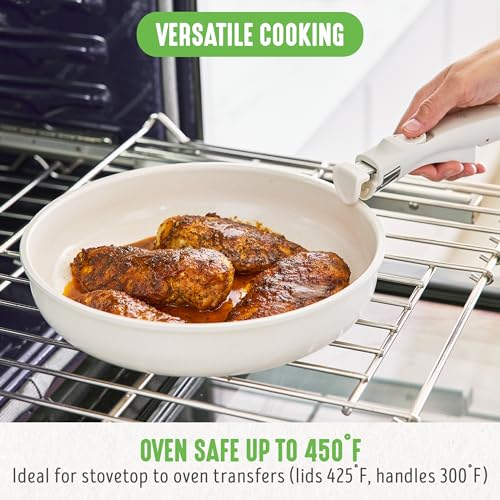
TL;DR — Sometimes. A cookware set is worth it when you’re starting from nothing or replacing a whole mismatched kitchen, because buying a matched multi-piece set costs far less per pan than buying the same pieces individually. But most sets pad the piece count with lids and small pans you’ll rarely use, and a curated set of three or four core pieces you actually cook with usually beats a big box. Buy a set for the value and the essentials; buy individual specialty pans for everything else. For matched options, see our best cookware sets guide.
The HomeWhisk editorial team researches kitchen equipment by analyzing manufacturer specifications, material construction, heat behavior, and aggregated user reviews from major retailers and communities like Reddit r/cooking. Our conclusions reflect what the cookware actually delivers, not how many pieces the marketing counts.

“Is a cookware set worth it?” is really two questions: is a set better value than buying pans one at a time, and do you actually need all the pieces? The answer hinges on how the “piece count” is calculated and which materials you’re getting. Below is how to tell a genuine value set from an inflated one, what to look for in construction, and when a set beats individual pans. For matched picks, see our best cookware sets and best nonstick cookware guides.
GreenLife
Space-Saving Induction Cookware Set with Detachable Handles, GreenLife 10-Piece Ceramic Nonstick Pots and Pans
This GreenLife cookware set handles frying, simmering, serving, and storage with PFAS-free ceramic nonstick surfaces and detachable handles that save cabinet space. It suits cooks who need induction-ready pans for compact kitchens, easy transfers, and quick hand washing.
Pros and Cons
Pros
- PFAS-, PFOA-, lead-, and cadmium-free ceramic nonstick coating supports worry-free everyday cooking.
- The set includes three frypans, three saucepans, two detachable handles, and two glass lids.
- Stay-cool handles lock tightly for a secure grip while cooking and transferring pans.
- Quick and even heating supports consistent results across multiple cooktops.
Cons
- Only the 8-inch and 11-inch pans include glass lids, so the other cookware pieces cook uncovered.
- The pans require hand washing, and the detachable handles must be removed for compact storage.

Redchef
Space-Saving Ceramic Cookware for RV Kitchens: Redchef Detachable Handle 5-Piece Set
The Redchef ceramic cookware set handles everyday stovetop, oven, grill, and fridge tasks while its detachable handle and stackable design save cabinet space. It suits small kitchens, RVs, and campers that need versatile cookware with PFAS, PFOA, and PTFE-free ceramic coating.
Pros and Cons
Pros
- The ceramic coating avoids Teflon, PFAS, PTFE, PFOA, lead, and cadmium.
- The detachable handle and stackable design are useful when cabinet or RV storage is limited.
- The set is compatible with gas, electric, and induction stovetops.
- The included glass lid has a visible silicone rim for covered cooking.
Cons
- Only one detachable handle is included, so switching between pans may require moving it during meal preparation.
- The set includes just one saucepan, two frying pans, and one lid, which may not cover larger meal-preparation needs.
The Best Deals This Week*
-
Space-Saving Induction Cookware Set
$79.99
($90.99)Save $11.00 -
Space-Saving Ceramic Cookware for RV Kitchens
$39.99
($59.99)Save $20.00
*Deals are selected by our commerce team
GreenLife Space-Saving Induction Cookware Set with Detachable Handles, GreenLife 10-Piece Ceramic Nonstick Pots and Pans
GreenLife
Space-Saving Induction Cookware Set with Detachable Handles, GreenLife 10-Piece Ceramic Nonstick Pots and Pans
This GreenLife cookware set handles frying, simmering, serving, and storage with PFAS-free ceramic nonstick surfaces and detachable handles that save cabinet space. It suits cooks who need induction-ready pans for compact kitchens, easy transfers, and quick hand washing.
Check price on AmazonThis 10-piece set combines frypans, saucepans, detachable handles, and glass lids for cooking, transferring, serving, and storing with fewer cabinet demands.
The ceramic nonstick coating supports easy food release, while the induction base heats evenly across induction, gas, electric, halogen, and ceramic cooktops.
Its aluminum-style heavy-duty construction is described as quick heating, with glass lids and silicone rims for covered cooking and visibility.
Only two lids are included, and the cookware is designed for hand washing rather than dishwasher cleaning.
Best for space-conscious cooks who need versatile induction-ready cookware with removable handles.
Redchef Space-Saving Ceramic Cookware for RV Kitchens: Redchef Detachable Handle 5-Piece Set
Redchef
Space-Saving Ceramic Cookware for RV Kitchens: Redchef Detachable Handle 5-Piece Set
The Redchef ceramic cookware set handles everyday stovetop, oven, grill, and fridge tasks while its detachable handle and stackable design save cabinet space. It suits small kitchens, RVs, and campers that need versatile cookware with PFAS, PFOA, and PTFE-free ceramic coating.
Check price on AmazonThe Redchef set combines a saucepan and two frying pans with one detachable handle to reduce clutter in compact kitchens, RVs, and campers.
Its handle moves cookware from stovetop to oven, grill, fridge, and table, while dual-sided ceramic coating simplifies food release and cleanup.
The set includes a 2.5-quart saucepan, 8-inch frying pan, 10-inch frying pan, glass lid, and detachable handle. It works on gas, electric, and induction stovetops.
One handle must be transferred between pieces, and the compact five-piece selection may be limiting for large households.
Best for RV owners, campers, and small-kitchen cooks who prioritize flexible storage.
What “Piece Count” Really Means
The first trap is the number on the box. A “12-piece set” is not twelve pans.
Lids, and sometimes utensils, are counted as pieces. A typical 10-piece set might be five pans plus five lids. Some sets inflate further by counting steamer inserts, plastic storage covers, or nylon spatulas as pieces. So a headline 14-piece set can contain the same six or seven actual cooking vessels as a leaner 10-piece set. When comparing sets, count only the pans and pots — that’s the real value.
The pieces that matter for most cooks are a 10- or 12-inch skillet, a 2–3 quart saucepan, and a larger 6–8 quart stockpot or Dutch oven. A saute pan with straight sides is a strong fourth. Beyond that, the extra small saucepans and second skillets in a big set often sit in the cupboard. This is why a focused four-piece set frequently delivers more real value than an inflated twelve-piece one, a point our best cookware sets guide weighs for each pick.
The Real Value Case for a Set
When a set is genuinely worth it, it comes down to cost-per-pan and consistency.
Matched sets are cheaper per piece. Manufacturers price sets below the sum of their parts to win the whole-kitchen purchase. If you’re outfitting a first apartment or replacing warped, flaking pans across the board, a good stainless set can cost less than buying an equivalent skillet, saucepan, and stockpot separately. You also get a consistent handle feel, matching lids, and cookware engineered to the same standard — a coherence that piecemeal buying rarely achieves.
A set also removes decision fatigue. For someone who just wants a complete, reliable kitchen without researching every pan, a well-reviewed stainless set from a reputable maker is a sound one-and-done choice. That said, if you already own a decent skillet and just need one more pot, a set is poor value — buy the single piece. Our best cookware sets guide flags which sets are true value and which are padded.
Materials: What Actually Cooks Well
A set is only worth it if the material suits your cooking. The main choices behave very differently.
- Stainless steel (clad): The workhorse. Good stainless is “clad” — a layer of aluminum or copper bonded between stainless layers — because stainless alone conducts heat poorly. Fully clad (aluminum through the whole body) heats more evenly than disc-bottom (a plate only on the base). Stainless browns and sears beautifully, is oven- and dishwasher-safe, and lasts decades, but food sticks if you don’t preheat and use enough fat.
- Nonstick: Easiest for eggs, pancakes, and low-fat cooking, and simplest to clean. The tradeoff is a limited lifespan — the coating wears out in a few years and the pan gets replaced. Best bought as one or two individual pans rather than a whole set, so you’re not replacing the entire set when the coating fails. See our best nonstick cookware guide.
- Copper: Prized for the fastest, most responsive heat control, favored for delicate sauces and candy work. It’s expensive, needs polishing, and is usually a specialty addition rather than a full set. Our best copper cookware guide covers where it earns its price.
- Cast iron / enameled cast iron: Exceptional heat retention for searing and braising, but heavy and slow to heat; typically bought as standalone pieces rather than sets.
For a first set, fully clad stainless is the most versatile and durable core, with a nonstick skillet added on the side.
The Made In Question: Direct-to-Consumer Sets
Related searches around “Made In cookware” reflect a broader shift: direct-to-consumer brands (Made In, and similar) sell fully clad stainless at lower prices than legacy names by skipping retail markup.
Aggregated reviews of these brands are broadly positive on cooking performance — the clad stainless construction is genuinely comparable to established premium makers, and owners report even heating and durability. Common complaints are more about service and expectations than the pans: occasional discoloration or “rainbow” staining on stainless (cosmetic and removable), handles that run hot, and customer-service or shipping frustrations. There is no substantiated safety issue with quality clad stainless from reputable direct-to-consumer brands. The takeaway: a well-reviewed direct-to-consumer stainless set can be excellent value, but judge it on construction (fully clad vs disc-bottom) and reviews, not on the brand’s newness. Our best cookware sets guide compares direct-to-consumer and legacy sets side by side.
When to Skip the Set
A set isn’t always the answer. Skip it and buy individually if:
- You already own good core pans. Adding a matched set duplicates what you have. Buy the one missing piece instead.
- You cook in a specialized way. A dedicated home barista wants a best moka pot for stovetop espresso, not a saucepan set; a batch cook may get more use from a best instant pot than from three sizes of pot. Match the spend to how you actually cook.
- You want the best possible single pan. A standalone premium skillet or a specialist best copper cookware piece will outperform the equivalent pan buried in a value set.
- You cook outdoors. Home sets aren’t built for camp stoves and fire; best camping cookware is lighter, nesting, and abuse-tolerant.
The honest rule: a set wins on breadth and value; individual pieces win on quality and fit.
Frequently Asked Questions
Is a cookware set worth it, or should I buy pans individually?
It depends on your starting point. If you’re building a kitchen from scratch or replacing everything, a matched set is usually better value — you pay less per pan and get consistent construction. If you already own decent core pans, buying the specific piece you’re missing is smarter than duplicating with a set. The best middle path is a focused set of the three or four pieces you’ll actually use, then individual specialty pans as needed. See our best cookware sets guide.
Should you buy a nonstick cookware set?
Usually not as your only set. Nonstick coatings wear out in a few years, so a full nonstick set means replacing everything at once when the coating degrades. It’s smarter to build around durable clad stainless and add one or two individual nonstick skillets for eggs and delicate foods — those are the tasks nonstick truly excels at. When the coating wears, you replace one pan, not a set. Our best nonstick cookware guide covers standalone picks worth buying.
How many pieces do I actually need in a cookware set?
Far fewer than most sets contain. A 10-inch and 12-inch skillet, a 2–3 quart saucepan, and a 6–8 quart stockpot or Dutch oven cover the vast majority of home cooking; a straight-sided saute pan is a strong addition. Ignore the headline piece count, which includes lids and sometimes utensils. A focused four-to-six-pan set almost always delivers more usable value than an inflated twelve-piece box. Our best cookware sets guide notes the real cooking-piece count for each set.
Can you put stainless steel cookware in the dishwasher?
Most fully clad stainless is dishwasher-safe, and manufacturer specs usually confirm it, but hand washing is gentler and preserves appearance. Dishwasher detergents are abrasive and can dull the finish or cause spotting and discoloration over time. Any rainbow staining or white mineral haze is cosmetic and removable with a stainless cleaner or a little vinegar. Pans with nonstick coatings or riveted plastic parts should generally be hand washed. Cast iron and most copper must never go in the dishwasher.
Is direct-to-consumer cookware like Made In worth it?
For clad stainless, it can be strong value. These brands sell fully clad construction comparable to legacy premium makers at lower prices by skipping retail markup, and aggregated owner reviews are broadly positive on cooking performance and durability. The common complaints — cosmetic staining, handles heating up, occasional service issues — are minor relative to the cooking quality. Judge any set on whether it’s fully clad versus disc-bottom and on its review history, not on brand recognition. Compare options in our best cookware sets guide.
What’s the best material for a first cookware set?
Fully clad stainless steel is the most versatile and durable core for a first set. It sears and browns well, is oven-safe, handles any cooktop including induction (check the base), and lasts decades. “Fully clad” means the conductive aluminum or copper layer runs through the whole pan body, giving more even heat than a disc only on the bottom. Add a single nonstick skillet for eggs. Specialty materials like copper or cast iron are better bought individually as your cooking grows. See our best cookware sets and best copper cookware guides.
The Bottom Line
Is a cookware set worth it? Yes, when you’re outfitting or overhauling a whole kitchen — a matched set costs less per pan than buying the same pieces individually and gives you a coherent, reliable lineup in one purchase. It’s not worth it when the piece count is padded with lids and pans you’ll never use, or when you already own good core pans and just need one more. Look past the headline number, count the actual pots and pans, favor fully clad stainless as your durable base, and add a nonstick skillet and specialty pieces individually. For most cooks, a focused set plus a few standalone pans beats a giant box. For matched picks, see our best cookware sets and best nonstick cookware guides.




Write Your Review
No reviews yet. Be the first to share your experience!