

TL;DR — A hand mixer is cheap, compact, and fine for occasional light jobs (whipping cream, cake batter, mashed potatoes); a stand mixer is powerful, hands-free, and worth it if you bake often or knead bread dough. The HomeWhisk team compared the two on power, convenience, capacity, and cost. The honest test: if you bake weekly or make bread, a stand mixer earns its price and space; if you bake occasionally, a hand mixer does the job for far less. Don’t buy an aspirational stand mixer that ends up idle. This guide helps you choose realistically.
The HomeWhisk editorial team researches kitchen equipment by analyzing manufacturer specifications, power data, and aggregated user reviews from major retailers and cooking communities. Our recommendations are based on what the products actually deliver, not what brands promise.
For this comparison, we analyzed power, convenience, capacity, and real-world feedback from home bakers. Here’s how stand mixers and hand mixers differ, and which fits your baking. For picks, see our best stand mixer and best hand mixer guides.
Two Tools for the Same Basic Jobs
Both mixers do the same fundamental tasks — the difference is power, effort, and scale. Here’s the basic split.
A hand mixer is a small handheld device with two beaters, which you hold and move around the bowl yourself. It’s lightweight, plugs in, and stores in a drawer. You control it by hand, which means you’re actively involved throughout mixing. It’s designed for light-to-medium tasks in modest quantities.
A stand mixer is a heavy countertop machine with a bowl that locks in and a mixing head that does the work hands-free. You attach a tool (paddle, whisk, or dough hook), turn it on, and walk away while it mixes. Its powerful motor handles heavy tasks — like kneading stiff bread dough — that a hand mixer can’t, and larger quantities.
The overlap and the difference: both can whip cream, beat egg whites, mix cake batter, and cream butter and sugar. But the stand mixer does these hands-free, in larger batches, and with more power, plus it kneads dough (a hand mixer can’t). The hand mixer does the lighter versions of the same jobs while you hold it, for less money and space. The question is whether you need the stand mixer’s power, capacity, and hands-free operation — or whether the hand mixer’s lighter capability is enough.
Where the Stand Mixer Wins
The stand mixer’s advantages matter most to frequent and serious bakers. Here’s what it does that a hand mixer can’t (or can’t do well).
Kneading bread dough is the biggest one. A stand mixer’s dough hook and powerful motor knead stiff yeast doughs — bread, pizza, rolls — hands-free, a task that’s exhausting by hand and impossible for most hand mixers (they strain and can burn out on stiff dough). If you make bread, this alone justifies a stand mixer.
Hands-free operation frees you to do other things while it mixes — measure the next ingredient, prep pans — instead of standing there holding a hand mixer. For multi-step baking, this is a real convenience.
Power and endurance: the strong motor handles thick cookie doughs, double batches, and long mixing (like whipping meringue or extended creaming) without straining. A hand mixer can bog down or overheat on heavy or prolonged tasks.
Capacity: the large bowl handles big batches — a double batch of cookies, a large cake, or several loaves of dough — that would overflow a hand mixer’s bowl.
Durability and attachments: quality stand mixers last decades, and many have attachment hubs that power pasta rollers, grinders, and more, extending their value beyond mixing.
For weekly bakers, bread makers, and anyone who values hands-free power, the stand mixer is worth it. See our best stand mixer guide.
Where the Hand Mixer Wins
The hand mixer’s strengths are practical and matter to casual bakers and small kitchens.
Cost: a hand mixer is a fraction of a stand mixer’s price. For occasional use, the savings are substantial and hard to justify overspending on.
Storage and size: it tucks into a drawer, while a stand mixer permanently occupies significant counter space (or is too heavy to move in and out of a cabinet easily). For small kitchens, this is decisive.
Light and quick jobs: for whipping cream, beating a few egg whites, mixing a single cake or batch of cookies, or mashing potatoes, a hand mixer does the job quickly with less to clean and set up. Pulling out a stand mixer for a small task can feel like overkill.
Maneuverability: you can move it to any bowl, pot, or container — whip cream in a small bowl, beat eggs in a pot for custard. It’s not tied to one bowl.
Simplicity: nothing to lock in, minimal setup, easy cleanup (just the beaters).
For occasional bakers, small kitchens, and light tasks, the hand mixer is the sensible, economical choice. See our best hand mixer guide.
Which Should You Buy?
The decision hinges on how often you bake and what you make — be honest about this to avoid wasting money either way.
Buy a stand mixer if you bake regularly (weekly or more), make bread or pizza dough (kneading is its killer feature), make large batches, or want hands-free convenience and a durable appliance that lasts decades. It’s a real upgrade for committed bakers and worth the price and space. Start with our best stand mixer guide.
Buy a hand mixer if you bake occasionally, make mostly light mixtures (whipped cream, cake batter, frosting), have limited storage, or want to spend far less. It covers the common light jobs perfectly well for a small fraction of the cost and space. See our best hand mixer guide.
The honest caution: the stand mixer is one of the most common aspirational kitchen purchases — bought imagining frequent baking, then left idle on the counter. If you’re not sure you’ll bake often, start with a hand mixer; you can always upgrade if you find yourself baking more. Conversely, if you already bake weekly and knead bread by hand, a stand mixer will transform your baking and you’ll wonder how you managed without it.
Do you need both? Some bakers keep a hand mixer for quick small jobs alongside a stand mixer for big ones, since the hand mixer is cheap and grabbing it beats setting up the stand mixer for a small task. But it’s a nice-to-have, not a necessity.
Frequently Asked Questions
Is a stand mixer or hand mixer better?
Neither is universally better — it depends on how much you bake. A stand mixer is more powerful, works hands-free, handles bread dough and large batches, and lasts decades, making it better for frequent and serious bakers. A hand mixer is cheaper, more compact, and fine for occasional light jobs like whipping cream and cake batter. Choose a stand mixer if you bake often or make bread; a hand mixer if you bake occasionally and want to save money and space.
Can a hand mixer knead bread dough?
Generally no — most hand mixers can’t handle stiff yeast dough. Their motors are designed for light-to-medium tasks and will strain, overheat, or burn out on heavy bread dough, and their beaters aren’t shaped for kneading. Some hand mixers include dough hooks for light doughs, but for real bread kneading, a stand mixer with a dough hook (or hand-kneading) is necessary. If you make bread regularly, this limitation alone points you toward a stand mixer.
Is a stand mixer worth it if I bake occasionally?
Probably not. A stand mixer is expensive, large, and most rewarding for frequent bakers who make bread or large batches. If you bake only occasionally and make light mixtures, a hand mixer does the job for a fraction of the cost and space. The stand mixer is a famously common aspirational purchase that ends up idle. Start with a hand mixer if you’re unsure, and upgrade to a stand mixer only if you find yourself baking often.
What can a stand mixer do that a hand mixer can’t?
Knead stiff bread and pizza dough (hands-free, with a dough hook), handle large batches and thick cookie doughs without straining, mix for long periods (extended creaming, meringue) without overheating, and operate hands-free so you can do other tasks. Many also have attachment hubs for pasta making and grinding. A hand mixer handles lighter versions of mixing and whipping but can’t knead bread dough or match the stand mixer’s power, capacity, and endurance.
Do I need both a stand mixer and a hand mixer?
Not necessarily. Many bakers are happy with just one — a stand mixer if they bake seriously, a hand mixer if occasionally. Some keep both because a hand mixer is cheap and convenient for quick small jobs (whipping a little cream) where setting up the stand mixer feels excessive. It’s a nice-to-have combination, not a necessity. If you own a stand mixer, an inexpensive hand mixer for small tasks is a reasonable, low-cost addition but optional.
Which is easier to store and clean?
The hand mixer, easily. It’s small and tucks into a drawer, while a stand mixer permanently occupies counter space and is heavy to move. For cleaning, the hand mixer has just two beaters to wash, versus the stand mixer’s bowl and attachments (though those are often dishwasher-safe). If storage space and quick cleanup are priorities — especially in a small kitchen — the hand mixer is far more convenient. The stand mixer trades that convenience for power and capacity.
Related buying guides: best air fryer, best blender and best instant pot.
The Bottom Line
Stand mixers and hand mixers do the same basic jobs at different scales. The stand mixer wins on power, hands-free operation, large batches, and — crucially — kneading bread dough, making it worth the price and space for frequent and serious bakers. The hand mixer wins on cost, compact storage, and quick light jobs, ideal for occasional bakers and small kitchens. Be honest about how often you bake: buy a stand mixer if it’s weekly or you make bread, a hand mixer if it’s occasional. Don’t buy an aspirational stand mixer that sits idle. See our best stand mixer and best hand mixer guides.

Save $120.04
Pros & Cons
Pros
- Durable all-metal construction means this mixer can run for 20-plus years of regular use without motor failure or gear stripping.
- The 5-quart capacity handles both small everyday batches and large holiday baking without needing a second bowl size.
- Dishwasher-safe bowl and accessories save 10 minutes of cleanup per baking session compared to hand-wash-only competitors.
Cons
- At 22.8 pounds, this mixer stays on the counter because moving it in and out of storage multiple times per week becomes a workout.
- The tilt-head mechanism can feel loose after years of heavy use, requiring occasional adjustment to maintain a secure lock during mixing.
Details
This is a 325-watt tilt-head stand mixer designed for home bakers who make multiple batches of cookies, bread, or whipped cream weekly. It solves the arm fatigue and inconsistent results that come from hand mixing or underpowered budget mixers.
The 10-speed motor runs from a slow stir that folds in chocolate chips without breaking them to speed 8 that whips egg whites into stiff peaks in under 3 minutes. The planetary mixing action rotates the beater in one direction while spinning it around the bowl in the other, hitting all 59 touchpoints so you don’t need to stop and scrape constantly.
The body is die-cast metal, not plastic, and the 5-quart polished stainless steel bowl has a comfortable handle. It measures 13.9 inches tall and 8.7 inches wide, fitting under most cabinets but taking up permanent counter space due to its 22.8-pound weight.
The included pouring shield blocks splatter but adds an extra piece to wash. The C-shaped dough hook can struggle with very stiff bread doughs over 3 pounds, requiring you to knead the final minute by hand.
Best for frequent bakers who make large batches and want a machine that will outlast cheaper models by a decade or more.
How to Use
Tilt the head back until it locks, then slide the bowl onto the base and twist clockwise to secure. Attach your beater or whisk by sliding it up the shaft and turning a quarter turn. Lower the head and push until you hear the click.
Start every recipe on speed 1 or 2 to incorporate dry ingredients without creating a flour storm, then increase speed gradually. The pouring shield snaps onto the bowl rim and lets you add ingredients through the chute while mixing. Stop the mixer and raise the head to scrape down the bowl halfway through thick batters.
After use, hand-wash attachments immediately or run them through the dishwasher. Wipe the motor housing with a damp cloth but never submerge the base. Store beaters and whisk in the bowl to keep all parts together.
Save $100.04
Pros & Cons
Pros
- The tilt-head design locks in place during mixing but lifts up easily so you can add ingredients or swap attachments without reaching around the motor.
- Reviewers confirm the motor powers through stiff cookie dough and dense bread recipes that burn out weaker mixers.
- The bowl capacity works for family-size batches without taking up the counter space of 5-quart or larger models.
Cons
- The 4.5-quart bowl is too small if you regularly double recipes or bake for gatherings of 8 or more people.
- The flat beater does not scrape the bowl edges completely, so you may need to stop and manually scrape down thick batters.
Details
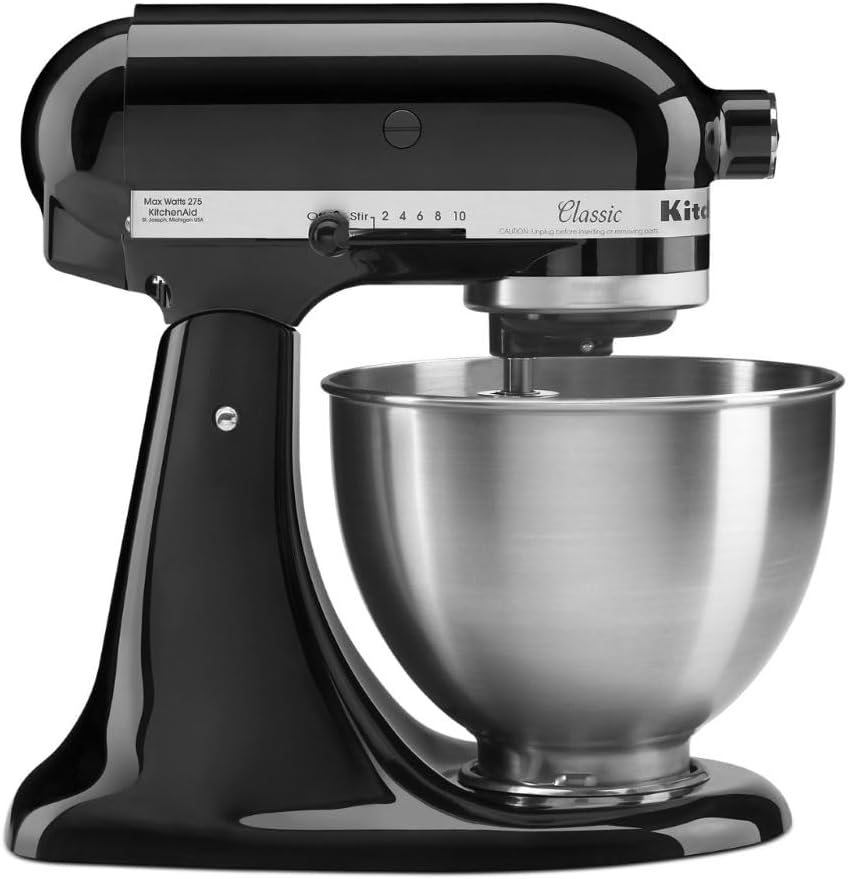
The KitchenAid K45SS is a 4.5-quart tilt-head stand mixer built for home bakers who make standard recipes several times a week. It solves the arm fatigue and inconsistent results that come from hand-mixing bread dough, cookie batters, and whipped toppings.
The 10-speed motor gives you control from slow stirring that keeps flour in the bowl to high-speed whipping for meringues. The 59-point planetary mixing action means the beater touches 59 spots per rotation, so ingredients blend evenly without you stopping to scrape.
The body is metal, not plastic, so it stays planted on the counter when kneading dense dough. It weighs 22 pounds and measures 13.9 inches tall. The brushed stainless steel bowl holds enough for 6 dozen cookies or 6 pounds of mashed potatoes.
The bowl does not have a handle, and the flat beater leaves a small unmixed ring at the bowl edge with very thick batters. You may need to scrape manually once or twice per recipe.
Best for home bakers who make bread, cookies, and cakes weekly and want a mixer that will last 10-plus years without replacing the motor.
How to Use
Tilt the motor head back until it locks, then slide the bowl onto the base and twist to secure. Attach the flat beater for most batters, the dough hook for bread, or the wire whip for cream and eggs.
Start on speed 2 when combining dry and wet ingredients to avoid flour clouds. Once incorporated, increase to speed 4-6 for cookie dough or speed 8-10 for whipping cream to stiff peaks. The mixer will reach all areas of the bowl automatically.
For bread dough, knead on speed 2 for 4-6 minutes until the dough pulls away from the bowl sides and becomes smooth. Tilt the head back to remove the bowl without reaching under the motor.
Save $90.00
Pros & Cons
Pros
- Strong enough for bread dough but precise enough for delicate meringues across 12 speeds.
- The included splash guard with pour spout stops flour from escaping and lets you add liquids without stopping the mixer.
- Optional attachments turn this into a pasta maker or meat grinder using the same motor.
Cons
- The 5.5-quart bowl is smaller than some competitors, limiting batch sizes for large families.
- Attachments are sold separately and add to the total investment if you want the pasta or grinding functions.
Details
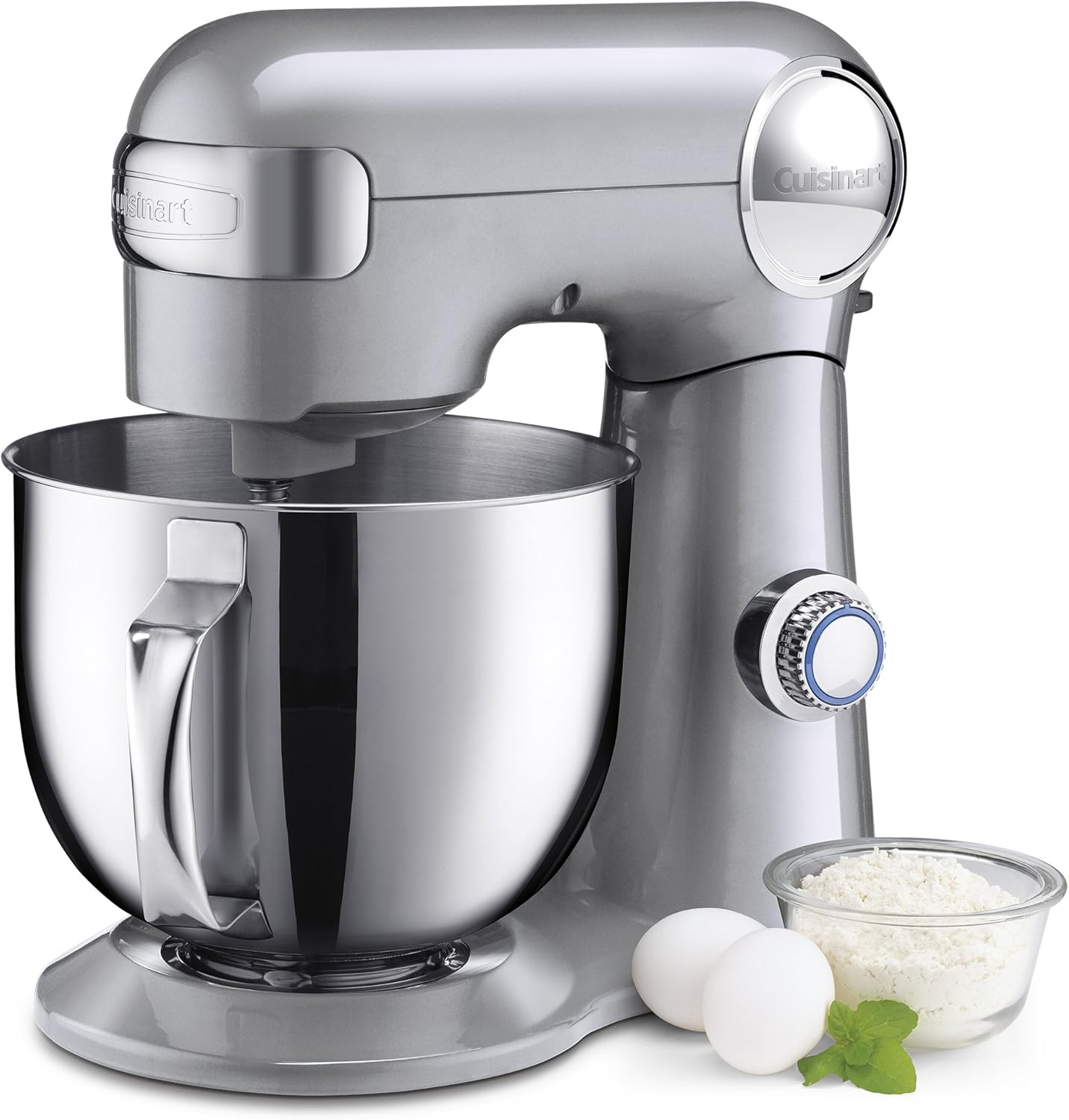
This stand mixer replaces hand mixing and underpowered models that stall on thick dough. The 500-watt motor and metal gears handle bread, pizza dough, and dense batters without overheating.
Twelve speeds give you control: start at 1 to fold in flour without clouds, use 6 for creaming butter, and hit 12 for stiff peaks in egg whites. The tilt-back head locks securely and lifts with one hand for easy bowl access.
Die-cast metal housing keeps it stable during kneading. The 5.5-quart polished stainless steel bowl holds enough for most recipes but may feel small if you regularly double batches. Weighs enough to stay put but light enough to move for storage.
The power outlet limits you to one attachment at a time, and you need to buy those separately. The splash guard helps but does not seal completely at high speeds with thin liquids.
Best for home bakers who mix weekly and want the option to add pasta or grinding tools later without cluttering the kitchen with separate machines.
How to Use
Tilt the head back, lock the bowl into the base with a twist, and attach the tool you need: the flat paddle for most batters, the whisk for eggs and cream, or the dough hook for bread. Start on speed 1 when adding dry ingredients to avoid mess.
Use the splash guard when mixing liquids or powders. The pour spout lets you add oil or milk without removing the guard or stopping the motor. Gradually increase speed once ingredients combine.
After mixing, tilt the head back and lift the bowl off. The bowl, paddle, whisk, and hook all go in the dishwasher. Wipe the motor housing and head with a damp cloth, never submerge the base.

Pros & Cons
Pros
- Spiral mixing technology delivers noticeably better dough structure compared to traditional stand mixers, especially for high-hydration recipes.
- The removable breaker bar transforms this from a specialty dough mixer into a multi-purpose baking tool.
- Precise speed control across 58 settings gives experienced bakers granular control over gluten development and ingredient incorporation.
Cons
- At $799, this costs significantly more than standard stand mixers and only justifies the price if you regularly make artisan dough.
- The 7.3 quart capacity and countertop footprint require dedicated storage space in smaller kitchens.
Details
The Ooni Halo Pro brings commercial spiral mixing technology to home kitchens, solving the problem of underwhelming dough texture from conventional planetary mixers. Spiral mixers keep the hook stationary while rotating the bowl, creating superior gluten development without overheating the dough.
The dual-kneading system with removable breaker bar handles everything from stiff bagel dough to 80% hydration ciabatta. The rotating bowl moves at different speeds than commercial units to fit the 7.3 quart capacity, while 58 speed settings let you start slow for dry ingredient incorporation and ramp up for gluten development.
The mixer weighs enough to stay stable during heavy kneading and comes with a splash guard featuring a pour spout. The charcoal grey housing resists fingerprints better than stainless but takes up roughly 14 inches of counter depth when assembled.
The breaker bar must be removed when switching to the flexible beater or geared whisk, adding an extra step compared to lift-bowl mixers. This takes about 30 seconds but interrupts workflow if you frequently alternate between dough and batter.
Best for home bakers who make pizza or bread weekly and want results that match their favorite bakery, not casual bakers who occasionally need a stand mixer.
How to Use
Start with the spiral dough hook and breaker bar installed for any yeast dough. Add dry ingredients first, start at the lowest speeds to combine, then increase gradually as the dough forms. The spiral action requires less intervention than planetary mixers since the bowl rotation naturally folds ingredients together.
For cakes or batters, remove the breaker bar by lifting it straight up, then attach the flexible beater. Use mid-range speeds for creaming butter and sugar, stopping to scrape sides only once. The geared whisk handles whipped cream and meringues at higher speeds without splattering when you use the splash guard.
Clean attachments immediately after use since dried dough in the spiral hook grooves requires soaking. The bowl and splash guard are dishwasher safe, but hand-washing the breaker bar prevents wear on the connection point.

Pros & Cons
Pros
- The stand-to-hand conversion works smoothly and the hand mixer locks securely back into the base, making it genuinely useful as two tools instead of a gimmick.
- The side-shifting bowl mechanism reduces the need to stop and scrape, especially when mixing thick batters or doughs with dry pockets.
- All attachments and the stainless steel bowl are dishwasher safe, cutting cleanup time after messy baking sessions.
Cons
- The 290-watt motor handles most home recipes but may struggle with very stiff doughs like bagels or dense whole-grain breads compared to higher-wattage stand mixers.
- The 4-quart bowl is smaller than typical stand mixer bowls, so large-batch baking (triple recipes or holiday cookie marathons) requires mixing in stages.
Details
The Hamilton Beach 64654 is a dual-function mixer that works as a stand mixer for hands-free mixing and a hand mixer when you need portability. It solves the problem of needing two mixers without sacrificing counter or storage space.
The Shift and Stir lever moves the bowl horizontally while the beaters spin, forcing ingredients from the bowl edges into the mixing path. The 290-watt motor provides enough torque for cookie dough, bread dough, and meringue without overheating.
The 4-quart stainless steel bowl resists staining and denting. The mixer weighs enough to stay stable during stand use but light enough to lift when detached. Attachments lock into place with a simple twist.
The bowl capacity limits you to smaller batches compared to 5- or 6-quart stand mixers, and the motor is not designed for extended kneading of very heavy doughs.
Best for home bakers who want stand mixer convenience for regular recipes but also need the flexibility of a hand mixer for small jobs or scraping bowls.
How to Use
Lock the hand mixer into the stand base before adding ingredients. Start on speed 1 when incorporating dry ingredients to prevent flour clouds, then increase speed as the mixture comes together. Use the Shift and Stir lever during mixing to move the bowl left and right.
For the hand mixer function, unlock it from the base by pressing the release button. The beaters stay attached. Use it directly in pots, bowls, or measuring cups for gravies, dressings, or small batches. The bowl rest feature on the hand mixer lets you set it on the edge of a bowl without it tipping.
Attach dough hooks for bread or pizza dough, traditional beaters for cake and cookie batter, and the whisk for egg whites or cream. Wash all attachments and the bowl in the dishwasher or by hand after each use to prevent residue buildup.
How We Evaluated These Picks
This guide is research-based, not a hands-on test. We did not buy, cook with, or measure the products above. What we did compare: manufacturer specifications, materials and construction, capacities and wattages, and the patterns that repeat across large volumes of verified owner reviews — especially the complaints that only surface after weeks of use, like coatings failing, motors weakening, controls drifting, or a design proving awkward to clean and store.
Where this page describes how something performs, it is reporting what the specifications state and what owners consistently report — not a result we produced ourselves. Prices and availability change constantly, so check the current listing before buying. We earn a commission on purchases made through links on this page, which never affects which products we include or how we rank them.


Write Your Review
No reviews yet. Be the first to share your experience!