

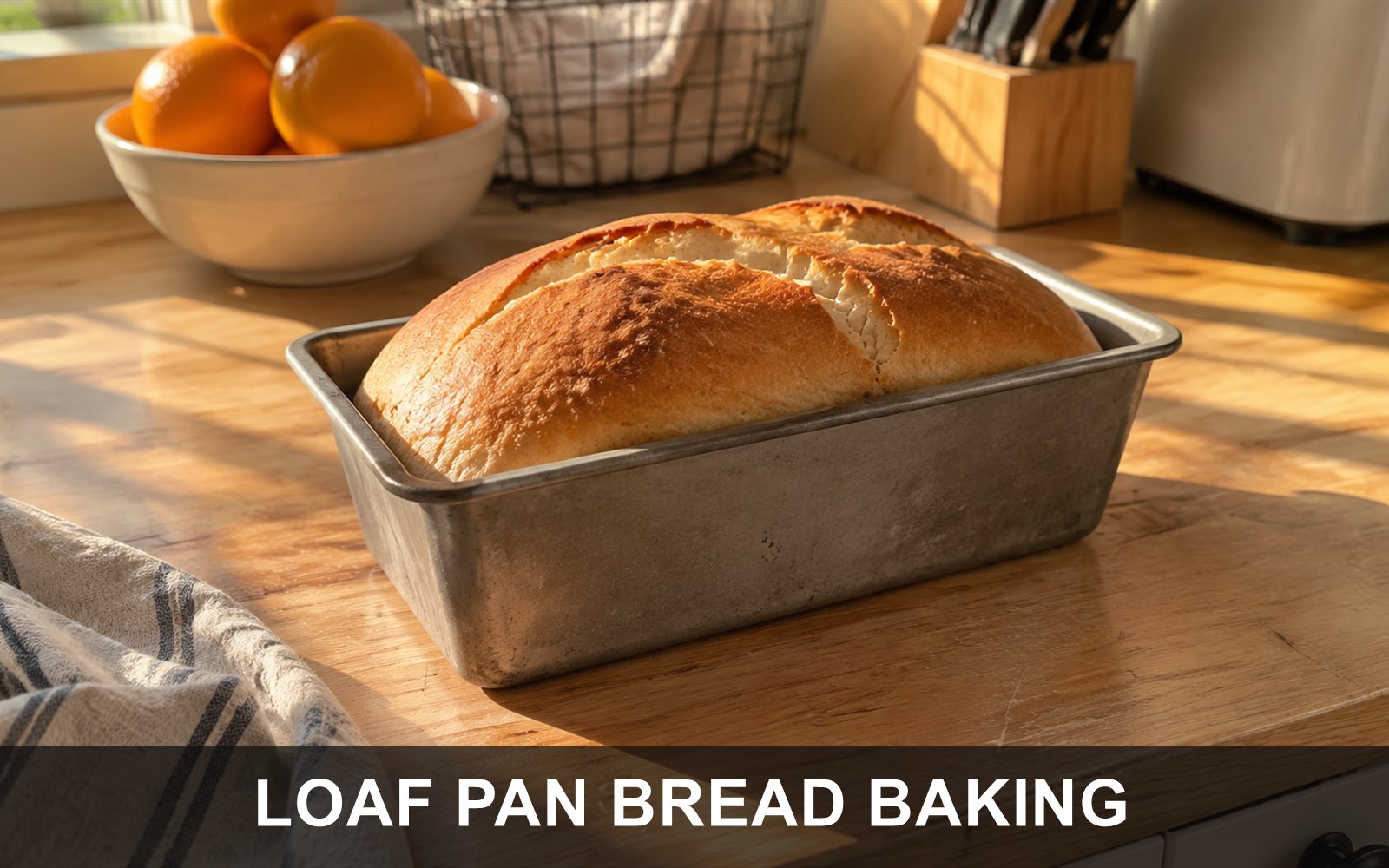
A loaf pan is more than a metal box. It’s a heat-transfer tool that controls three physical processes: conduction from the oven into dough, radiant heat bouncing off walls, and moisture escape through the top surface. Material thickness dictates how fast energy flows into batter. Dark finishes absorb more infrared radiation than reflective ones. Pan geometry—specifically the angle of the walls and the ratio of surface area to volume—determines whether you get a pale, soft-sided sandwich loaf or a dark-crusted artisan shape. Understanding these principles makes the difference between guessing and choosing a pan that matches your actual baking goals.
Most home bakers inherit a loaf pan or grab the cheapest one at a big-box store, then wonder why their banana bread sticks or their sandwich loaf browns unevenly. The physics haven’t changed, but the materials and manufacturing quality vary wildly. Aluminized steel conducts differently than cast aluminum. A 9×5-inch pan holds 25% more volume than an 8.5×4.5-inch version, which changes bake time and crust-to-crumb ratio. This guide walks through the engineering trade-offs, then identifies which pans deliver predictable results without requiring a materials-science degree.
How Material and Thickness Control Crust Development
Aluminized steel is thin, light, and cheap. It heats fast, which sounds good until you pull out a loaf with dark edges and a gummy center. Thin walls can’t hold enough thermal mass to smooth out oven temperature swings, so hot spots translate directly into burnt corners. Cast aluminum is thicker and heavier. It absorbs heat more slowly, then radiates it steadily into the dough. This buffer effect produces more uniform browning and reduces the risk of over-baking the perimeter before the core sets.
Ceramic and stoneware fall into a separate thermal category. They’re slow to heat and slow to cool, which extends effective baking time even after you turn off the oven. That residual heat can be an asset for crusty European-style loaves, but it also means you need to pull the pan earlier than the recipe suggests or accept a thicker, darker crust. Glass behaves similarly but is more prone to thermal shock if you move it from a hot oven to a cold counter.
Non-stick coatings add a chemical layer that changes surface emissivity. Dark PTFE coatings absorb more radiant heat than bare aluminum, so they brown faster. Silicone coatings are lighter in color and produce a softer crust. If you want maximum crust color and chew, uncoated aluminum or carbon steel (which darkens with seasoning) is the better choice. If you prioritize easy release and minimal cleanup, ceramic-reinforced non-stick or silicone offers a trade-off: slightly less browning, significantly less scrubbing.
Why Pan Geometry Matters More Than You Think
A standard 9×5×2.75-inch loaf pan holds roughly eight cups of batter. An 8.5×4.5×2.75-inch pan holds six. That two-cup difference changes hydration ratios, bake time, and final texture. Recipes written for the larger pan will overflow the smaller one or bake into a dense brick because the extra height restricts oven spring. Conversely, under-filling a large pan produces a flat, wide loaf with too much crust relative to crumb.
Wall angle is subtler but equally important. Straight-sided pans (90-degree walls) maximize volume and create a uniform cross-section, which is ideal for sandwich bread. Tapered walls (85–88 degrees) make the loaf easier to unmold because gravity helps it slide out, but they also reduce the footprint of the bottom crust, which concentrates heat and can lead to a thicker, harder base. If you bake primarily quick breads like banana or zucchini, a slight taper is forgiving. If you bake yeast doughs that need a strong base to support vertical rise, straight walls are better.
Rolled rims versus wire-reinforced edges affect durability, not thermal performance. Rolled rims are a single layer of metal folded over itself, which adds rigidity without extra material. Wire-reinforced edges use a steel wire crimped into the fold, which resists warping under repeated thermal cycling. Cheap pans skip both and rely on gauge alone, so they twist after a dozen uses and no longer sit flat on an oven rack. This creates uneven contact and uneven heat, compounding any material limitations.
Surface Finish and Release Performance
Bare aluminum oxidizes into a gray patina that improves release over time as oils polymerize into a natural non-stick layer. This is the same principle behind cast-iron seasoning, but aluminum’s lower thermal mass makes it less durable. Scrubbing with soap strips the patina, so you’re back to square one. If you want the browning benefits of bare metal but don’t want to baby the pan, hard-anodized aluminum is a middle path. Anodizing creates a microscopically rough oxide layer that’s harder than PTFE and doesn’t flake, though it still requires greasing.
Silicone pans are non-stick by nature, but their flexibility is a double-edged sword. You can twist them to pop out a loaf without tools, but they also require a rigid baking sheet underneath for support during transfer. Silicone’s low thermal conductivity means slower browning and a softer crust, so they’re better suited to cakes and quick breads than yeasted loaves. They also retain odors—one batch of lemon-poppy-seed bread can haunt your next banana loaf unless you soak the pan in baking soda between uses.
Glass and ceramic offer visual feedback: you can see the bottom crust through the pan and pull the loaf at exactly the right color. This eliminates guesswork but introduces a new problem. Both materials are poor conductors, so the center of the loaf lags behind the edges. You’ll often need to tent the top with foil to prevent over-browning while the core finishes. This adds a step and increases the risk of uneven texture, especially in high-sugar batters that caramelize quickly.
Durability, Maintenance, and Long-Term Value
Thin stamped-steel pans warp after a year of regular use. The corners lift, the base bows, and the pan rocks on the oven rack. This isn’t a cosmetic issue—uneven contact with the rack creates hot and cold zones that translate directly into baking failures. Heavier cast or forged aluminum resists warping but costs three to five times as much. The price difference feels steep until you calculate cost per loaf over five years. A $40 pan that lasts a decade is cheaper than a $12 pan you replace annually.
Non-stick coatings degrade under high heat and abrasion. PTFE begins to break down above 500°F, which is hotter than most bread recipes require but well within range for pizza or roasted vegetables if you repurpose the pan. Ceramic coatings are more heat-stable but chip more easily if you stack pans without padding. Once the coating fails, the pan becomes harder to clean than bare metal because the remaining patches create release inconsistencies. Silicone doesn’t chip, but it does tear if you cut into the loaf while it’s still in the pan.
Dishwasher compatibility is listed on most product pages but rarely explained. The high-pH detergents and 160°F rinse cycle strip seasoning from bare aluminum, dull anodized finishes, and accelerate non-stick degradation. Aluminized steel rusts if water sits in seams. Glass and ceramic are genuinely dishwasher-safe, but rapid temperature changes between the hot cycle and air-dry phase can cause micro-cracks that propagate into full breaks. Hand-washing with warm water and a non-abrasive sponge is the only method that preserves all materials equally, but it’s also the least convenient.
Storage matters more than most bakers realize. Nesting pans without separators scratches non-stick coatings and dents rolled rims. Stacking heavy cast-aluminum pans on top of thin steel ones deforms the lighter pan. Silicone pans fold for compact storage but develop permanent creases if stored folded for months. The ideal setup is a vertical rack or drawer dividers that keep each pan isolated, but that requires dedicated cabinet space most kitchens lack. If you must nest, use silicone pan liners or cloth towels as buffers.
What size loaf pan is standard for most bread recipes?
Most American bread recipes assume a 9×5-inch pan with 2.75-inch walls, which holds eight cups of batter. Older recipes and European sources often call for 8.5×4.5-inch pans, which hold six cups. Check the volume your recipe yields before buying—filling a pan more than two-thirds full causes overflow, while under-filling produces flat, over-crusted loaves.
Do I need to grease a non-stick loaf pan?
Yes, even non-stick pans benefit from a thin layer of butter or oil, especially for high-sugar batters that caramelize and bond to any surface. Non-stick coatings reduce sticking but don’t eliminate it. Parchment slings—strips of paper that line the pan with overhang on two sides—make removal foolproof and protect the coating from metal utensils.
Can I use a glass loaf pan at the same temperature as a metal one?
Glass and ceramic pans heat more slowly but retain heat longer, so most bakers reduce oven temperature by 25°F to prevent over-browning. Start checking for doneness five minutes earlier than the recipe suggests. A glass pan also requires a longer preheat—place it in the cold oven and add the extra warm-up time to your total bake, or preheat it separately and risk thermal shock when you add cold batter.

Articasting
Sourdough Baking Pan with Lid: Articasting Pre-Seasoned 9x5 Cast Iron Loaf Pan
The Articasting 9x5 cast iron loaf pan with lid creates a moisture-sealed baking environment for crispy-crusted sourdough with a tender interior. It suits home bakers who want durable, even heat retention and an oven design tailored to homemade bread.
Pros and Cons
Pros
- The lid locks in moisture and heat during baking.
- Cast iron provides durable construction and steady heat retention.
- The 9x5-inch size is designed specifically for sourdough loaves.
- The pre-seasoned finish allows the pan to be used for baking immediately.
Cons
- The listing does not provide the pan's weight, so portability is unclear.
- Its enclosed design is focused on bread baking rather than broad loaf-pan versatility.

Leonyo
Non-Toxic Stainless Steel Bread Loaf Pan 9x5 IN, Leonyo 6 Pack for Baking Bread
This Leonyo loaf pan bakes bread in food-grade stainless steel with no toxic coating, giving even heat distribution across its 2.5-inch deep sides. Buy the 6-pack if you bake bread in batches and want a coating-free, dishwasher-safe alternative to aluminum and nonstick pans.
Pros and Cons
Pros
- Coating-free stainless steel avoids the health concerns of nonstick and aluminum pans.
- Rolled edges give a secure grip for moving hot pans in and out of the oven.
- Oven safe up to 450°F and safe to run through the dishwasher.
- Stackable design stores six pans compactly in a cabinet or drawer.
Cons
- Uncoated stainless steel is not naturally nonstick, so loaves need greasing or parchment to release cleanly.
- Six pans may be more than a casual home baker needs for occasional loaves.

LIANYU
9x5-Inch 8-Pack Stainless Steel Loaf Pans for Homemade Bread and Meatloaf
This eight-pack of 9x5-inch stainless steel loaf pans supports even baking across the bottom and sides while avoiding chemical coatings. It suits home bakers who want to bake multiple loaves at once and store stackable pans in limited cabinet space.
Pros and Cons
Pros
- Heavy-duty food-grade stainless steel avoids peeling and harmful coating concerns at high temperatures.
- Reinforced rolled edges help resist warping during repeated baking.
- Smooth surfaces and rounded edges provide a more comfortable grip and easier handling.
- The 9x5x2.5-inch size accommodates banana bread, pumpkin bread, zucchini bread, sourdough, and meatloaf.
Cons
- The listing does not provide the individual pan weight, so buyers cannot assess how substantial each pan feels before purchase.
- Stainless steel can encourage sticking, making grease or parchment paper advisable.

BAKKENMASTER
Bake Bread and Cakes with the BAKKENMASTER Swiss Loaf Pan Set 4-Piece Nonstick Carbon Steel Bakeware
The BAKKENMASTER Swiss Loaf Pan Set provides four nonstick carbon steel pans for baking breads and cakes, with sizes from mini to large as its biggest advantage. Home bakers should buy it when they need versatile loaf sizes, stackable storage, and easier release from a single set.
Pros and Cons
Pros
- The four-size assortment handles mini loaves through larger breads and cakes.
- The nonstick coating supports easier food release and cleaner-looking baked results.
- Stackable construction keeps the set organized in compact kitchen storage.
- Carbon steel construction is designed for professional-grade home baking use.
Cons
- Hand-washing is recommended even though the pans are dishwasher safe to help preserve their stain-resistant properties.
- The product data does not provide the exact dimensions or weight of each pan.
Articasting Sourdough Baking Pan with Lid: Articasting Pre-Seasoned 9x5 Cast Iron Loaf Pan
Articasting
Sourdough Baking Pan with Lid: Articasting Pre-Seasoned 9x5 Cast Iron Loaf Pan
The Articasting 9x5 cast iron loaf pan with lid creates a moisture-sealed baking environment for crispy-crusted sourdough with a tender interior. It suits home bakers who want durable, even heat retention and an oven design tailored to homemade bread.
$29.99 at AmazonEditors' Favorite
Color: Black Size: 9x5 Inch Dimensions: 14.4 x 5.8 x 6.9 inches Product Group: Kitchen
Shop NowLeonyo Non-Toxic Stainless Steel Bread Loaf Pan 9x5 IN, Leonyo 6 Pack for Baking Bread
Leonyo
Non-Toxic Stainless Steel Bread Loaf Pan 9x5 IN, Leonyo 6 Pack for Baking Bread
This Leonyo loaf pan bakes bread in food-grade stainless steel with no toxic coating, giving even heat distribution across its 2.5-inch deep sides. Buy the 6-pack if you bake bread in batches and want a coating-free, dishwasher-safe alternative to aluminum and nonstick pans.
$27.49 at AmazonGreat Value
Color: Silver Size: Medium Dimensions: 5 x 9 x 2.5 Inches Weight: 4.0344593946 pounds Product Group: Kitchen Binding: Kitchen
Shop NowLIANYU 9x5-Inch 8-Pack Stainless Steel Loaf Pans for Homemade Bread and Meatloaf
LIANYU
9x5-Inch 8-Pack Stainless Steel Loaf Pans for Homemade Bread and Meatloaf
This eight-pack of 9x5-inch stainless steel loaf pans supports even baking across the bottom and sides while avoiding chemical coatings. It suits home bakers who want to bake multiple loaves at once and store stackable pans in limited cabinet space.
$31.99 at AmazonColor: Silver Size: Medium Dimensions: 10 x 10 x 5.7 inches Weight: 1.54984970186 pounds Product Group: Kitchen Binding: Unknown Binding
Shop NowGoodCook Set of 2 Extra Large 13" x 5" Nonstick Steel Bread Loaf Pans, Gray - Set of Two Loaf Pans, Even Heat Distribution, Scratch-Resistant Nonstick Coating, Durable Construction, Easy to Clean

GoodCook
Set of 2 Extra Large 13" x 5" Nonstick Steel Bread Loaf Pans, Gray - Set of Two Loaf Pans, Even Heat Distribution, Scratch-Resistant Nonstick Coating, Durable Construction, Easy to Clean
$16.99 at AmazonColor: Gray Size: 13 x 5-Inch (Set of 2) Dimensions: 6.5354330642 x 7.3228346382 x 11.9685039248 inches Weight: 1.5498497 Pounds Product Group: Kitchen Binding: Kitchen
Shop NowBAKKENMASTER Bake Bread and Cakes with the BAKKENMASTER Swiss Loaf Pan Set 4-Piece Nonstick Carbon Steel Bakeware
BAKKENMASTER
Bake Bread and Cakes with the BAKKENMASTER Swiss Loaf Pan Set 4-Piece Nonstick Carbon Steel Bakeware
The BAKKENMASTER Swiss Loaf Pan Set provides four nonstick carbon steel pans for baking breads and cakes, with sizes from mini to large as its biggest advantage. Home bakers should buy it when they need versatile loaf sizes, stackable storage, and easier release from a single set.
$15.99 at AmazonColor: Gray Size: 4 Pack Dimensions: 10 x 10 x 10 inches Weight: 1 pounds Product Group: Kitchen Binding: Kitchen
Shop Now


Write Your Review
No reviews yet. Be the first to share your experience!