

To clean a measuring cups set with vinegar, mix equal parts white distilled vinegar and warm water, soak the cups for 15 to 30 minutes, scrub gently, then rinse well and air dry. That’s the whole method. It cuts through cloudy mineral film, greasy residue and lingering smells without harsh chemicals.
This guide walks through the full process for plastic, silicone and stainless-handled cups. You’ll also see which mistakes ruin printed markings, how to handle stubborn odors, and when a cup is worn out enough to replace.
Step 1: Mix the vinegar solution
Use plain white distilled vinegar, which is typically about 5 percent acetic acid. Skip apple cider vinegar, since its color and sugars can leave a faint film behind. Combine one part vinegar with one part warm water in a bowl or a clean sink basin. Warm, not boiling. Very hot water can warp thin plastic cups and soften silicone handles.
For a single cup, one cup of each liquid is plenty. For a whole nesting set, fill a basin deep enough to cover the bowls of every cup. Spoons can go in the same bath.
Small plastic cups with a handle are the easiest to start with, because they fit in almost any bowl. A good example is the NaNaPaly 1 Cup (250ml) Measuring Cup, a small plastic cup with laser-etched oz, cup, mL and Tbsp markings. Etched markings don’t wear off like printed ones, but they can still collect residue in the grooves, which is exactly what a vinegar soak loosens.

NaNaPaly
1 Cup Liquid Measuring Cup for Baking and Kitchen Prep, NaNaPaly 250ml Laser-Etched oz/cup/mL/Tbsp Plastic Cup with Handle
This 250ml plastic cup measures small liquid amounts in oz, cups, mL and tablespoons, with laser-etched markings that will not fade or peel off the way printed lines do. Buy it if you regularly measure under a cup of milk, oil or syrup and are tired of squinting at worn scales on an oversized pitcher.
Pros and Cons
Pros
- Etched markings cannot peel, smear or wash away like the printed scales on most budget cups.
- Tablespoon graduations remove the need to dirty a separate measuring spoon for small liquid amounts.
- Food-grade plastic keeps it safe for milk, oil and sauces while staying light enough for one-handed pouring.
- Handles hot and cold liquids across a wide temperature range, including warm syrups and melted mixtures.
Cons
- One cup capacity is limiting for batch cooking or anything requiring larger liquid volumes.
- Etched lines are clear rather than colored, so they read easiest with liquid in the cup or under good light.
NaNaPaly 1 Cup Liquid Measuring Cup for Baking and Kitchen Prep, NaNaPaly 250ml Laser-Etched oz/cup/mL/Tbsp Plastic Cup with Handle
NaNaPaly
1 Cup Liquid Measuring Cup for Baking and Kitchen Prep, NaNaPaly 250ml Laser-Etched oz/cup/mL/Tbsp Plastic Cup with Handle
This 250ml plastic cup measures small liquid amounts in oz, cups, mL and tablespoons, with laser-etched markings that will not fade or peel off the way printed lines do. Buy it if you regularly measure under a cup of milk, oil or syrup and are tired of squinting at worn scales on an oversized pitcher.
$7.66 at AmazonEditors' Favorite
Color: Clear Size: 01 - 8 fl oz (1 Cup) Dimensions: 6.7 x 4 x 5 inches Weight: 0.13007273458 Pounds Product Group: Kitchen
Shop NowStep 2: Soak, then scrub gently
Submerge the cups so the liquid covers every marking. Let them sit 15 minutes for light buildup and up to 30 minutes for cloudy or sticky cups. Don’t leave them overnight. A long soak doesn’t add much and can dull some finishes.
After soaking, scrub with a soft sponge or a bottle brush. Work the sponge into the molded lines and around the pour spout. Skip steel wool and scouring pads. They scratch plastic, and scratches trap grease and bacteria later.
Cleaning the markings
Run a soft toothbrush along the measurement lines. Laser-etched or molded lines hold onto oils, so brush along them rather than across. Printed lines need an even lighter touch. Press softly and rinse.
Cleaning handles and rims
The spot where a handle meets the cup is where gunk collects. A cotton swab dipped in the vinegar mix reaches it easily. Stainless handles can go through the soak, but rinse them promptly so the acid doesn’t sit on the metal.
Step 3: Rinse, dry and check the smell
Rinse every cup under running water until the vinegar smell is gone. If you still catch a sharp whiff, rinse once more. Vinegar fades fast, but trapped liquid in a handle can hold the scent.
Air dry the cups upside down on a rack, or wipe them with a clean towel. Damp cups stored in a drawer pick up odors. If you measure sticky ingredients like honey or oil, this step matters even more.
Silicone needs a special note. It grabs onto oils and smells more than plastic does. The OXO Good Grips Mini Squeeze and Pour Silicone Measuring Cup is a small silicone cup built to squeeze and pour, and silicone like this benefits from a vinegar soak when it starts to feel slick or smell like old oil. Squeeze the sides while it’s in the bath so the liquid reaches the pour spout fold.
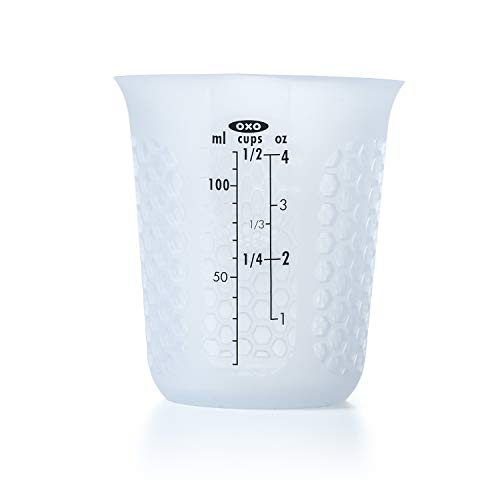
OXO
Melt Butter and Chocolate Without a Double Boiler: OXO Good Grips Mini Squeeze & Pour Silicone Measuring Cup
This flexible silicone cup goes straight into the microwave to melt butter or chocolate, then squeezes into a spout so you can pour into tight spots like a stand mixer bowl. Buy it if you bake often and want one vessel that handles melting, measuring, and pouring without transferring between dishes.
Pros and Cons
Pros
- Handles melting, measuring, and pouring in a single vessel, which speeds up prep and reduces cleanup.
- Heat-shielding honeycomb exterior makes it safe to grab without a towel or mitt.
- Flexible spout reaches into hard-to-access mixing bowls that rigid glass cups cannot pour into cleanly.
- Dishwasher-safe construction with a nonstick silicone surface that sheds sticky residue.
Cons
- The mini size limits it to small batches, so larger melting jobs still need a full-size bowl.
- Flexible silicone walls can flex under a heavy pour, making the markings harder to read precisely than on a rigid cup.
OXO Melt Butter and Chocolate Without a Double Boiler: OXO Good Grips Mini Squeeze & Pour Silicone Measuring Cup
OXO
Melt Butter and Chocolate Without a Double Boiler: OXO Good Grips Mini Squeeze & Pour Silicone Measuring Cup
This flexible silicone cup goes straight into the microwave to melt butter or chocolate, then squeezes into a spout so you can pour into tight spots like a stand mixer bowl. Buy it if you bake often and want one vessel that handles melting, measuring, and pouring without transferring between dishes.
$8.95 at AmazonEditors' Favorite
Color: Clear Size: Mini Dimensions: 1.49999999847 x 5.49999999439 x 10.70078739066 Inches Weight: 0.14 pounds Product Group: Kitchen Binding: Kitchen
Shop NowDealing with stubborn problems
Not every cup comes clean after one soak. Here’s how to handle the usual troublemakers.
White cloudy film
That haze is usually mineral deposits from hard water. Vinegar dissolves it well. If the film stays after the first soak, repeat the process with a fresh batch rather than making the solution stronger.
Greasy or oily residue
Vinegar helps, but grease responds best to dish soap first. Wash with warm soapy water, then follow with the vinegar soak to remove leftover film. Doing it in that order saves a second round.
Lingering odors
Garlic, onion and spice smells cling to plastic and silicone. Soak for the full 30 minutes. If a smell survives, a paste of baking soda and water scrubbed on afterward usually finishes the job. Don’t mix baking soda and vinegar in the same container, though. They cancel each other out.
Stuck-on baking mess
Dried batter or sugar softens in the warm mix. Let it sit, then lift it with a soft sponge instead of scraping.
Cleaning a full set with spoons
A nesting set takes a bit more care because the cups stack and trap moisture between them. Separate every piece before soaking. Larger sets with stainless handles, like the BLEWAY Easy to Read Measuring Cups and Spoons Set, include stackable nesting cups with large-print markings and stainless steel handles. Large print is easy to read, but the raised numbers and handle joints still hold residue.
Soak the cups and spoons together, then scrub the handle joints with a brush. Rinse every piece and dry each one before nesting them again. Stacking wet cups invites mildew and that musty smell you’ll notice a week later.

BLEWAY
Large Print Measuring Cups and Spoons for Low Vision Cooks - BLEWAY 8-Piece Stackable Set with Stainless Steel Handles
This 8-piece set covers everything from 1 cup down to 1/2 teaspoon with oversized high-contrast markings that stay readable in dim kitchen light. It suits home cooks with macular degeneration or other vision loss, plus anyone tired of squinting at faded engraved numbers on standard metal cups.
Pros and Cons
Pros
- Markings are legible in low light, which solves the main frustration with stamped stainless measuring cups.
- Mixed-material build pairs a rigid steel handle with a lightweight plastic scoop for durability without heft.
- Full 8-piece range means no gaps between common recipe measurements.
- Dishwasher-safe construction removes hand-washing from cleanup.
Cons
- Plastic scoop heads can stain or absorb odor from turmeric, tomato paste, and vanilla over time.
- Cups measure dry ingredients well but lack a pour spout, making liquid transfers drip-prone.
BLEWAY Large Print Measuring Cups and Spoons for Low Vision Cooks - BLEWAY 8-Piece Stackable Set with Stainless Steel Handles
BLEWAY
Large Print Measuring Cups and Spoons for Low Vision Cooks - BLEWAY 8-Piece Stackable Set with Stainless Steel Handles
This 8-piece set covers everything from 1 cup down to 1/2 teaspoon with oversized high-contrast markings that stay readable in dim kitchen light. It suits home cooks with macular degeneration or other vision loss, plus anyone tired of squinting at faded engraved numbers on standard metal cups.
$14.99 at AmazonEditors' Favorite
Color: Blue Size: Normal Weight: 0.35 pounds Product Group: Kitchen Binding: Kitchen
Shop NowCommon mistakes to avoid
Most damage comes from trying too hard. A few things to skip:
Using full-strength vinegar. It isn’t any more effective on everyday film, and it’s rougher on rubber and silicone seals. Equal parts is enough.
Scrubbing hard on printed markings. Printed numbers can fade with abrasion. If you can’t read the lines anymore, the cup isn’t accurate any longer.
Soaking too long. Past an hour you gain little and risk dulling finishes.
Mixing vinegar with bleach. Never do this. The combination releases toxic gas. Use one or the other, and rinse thoroughly between them.
Putting damp cups away. Always dry first.
How often to give cups a vinegar soak
You don’t need a vinegar bath after every use. Daily washing with dish soap and warm water handles most messes. Save the soak for a monthly refresh, or sooner if you notice a cloudy look, a sticky feel or a smell that soap doesn’t remove.
Cups used for oils, syrups and nut butters collect residue faster, so those may need a soak every couple of weeks. Cups used only for dry goods like flour and sugar can go longer. If you’ve got hard water, expect to soak a little more often, since mineral film builds up with every rinse and every dry cycle.
A quick habit helps. Rinse right after measuring something sticky, before it hardens. Warm water takes seconds and saves you the scrubbing later. Keep the cups on an open rack instead of a closed drawer while they dry, and they’ll stay fresher between deep cleans.
Dishwasher use varies by cup. Some plastic and silicone cups are listed as dishwasher safe and some aren’t, so check the product page or packaging before you rely on it. Handwashing with the vinegar method is the safer choice when you’re not sure.
When to replace your measuring cups
Vinegar restores a cup. It can’t fix a damaged one. Replace a cup if the markings have worn away, if the plastic has warped or cracked, or if the cup stays cloudy and stained after two soaks. An inaccurate cup throws off baking, where an extra tablespoon of flour changes the result.
If you’re shopping for a replacement, our research roundups can help narrow things down. Start with the best measuring cups guide, or check the best value measuring cups if budget matters. Fans of one brand can look at the best OXO measuring cups, the best Pyrex measuring cups or the best KitchenAid measuring cups. For precision, there’s also the best Escali measuring cups list.
FAQ
Can you clean measuring cups with vinegar?
Yes. A 1:1 mix of white distilled vinegar and warm water removes mineral film, light grease and odors from most plastic, silicone and stainless measuring cups. Rinse well afterward.
How long should measuring cups soak in vinegar?
Fifteen minutes handles light buildup. Go up to 30 minutes for cloudy or smelly cups. Longer soaks rarely help and may dull some finishes.
Will vinegar remove the markings on measuring cups?
Etched and molded markings hold up to a short soak. Printed markings can fade if you scrub hard, so use a soft sponge and light pressure. Don’t use abrasive pads.
Is vinegar safe for silicone measuring cups?
Yes, diluted white vinegar is a common way to remove oily film and smells from silicone. Rinse it thoroughly and let the cup dry fully before storing it.
Can I put vinegar and baking soda together to clean measuring cups?
Use them one after the other, not at once. Mixing them in the same container neutralizes both, so you lose the cleaning power. Soak in vinegar first, rinse, then scrub with a baking soda paste if a smell remains.



Write Your Review
No reviews yet. Be the first to share your experience!